


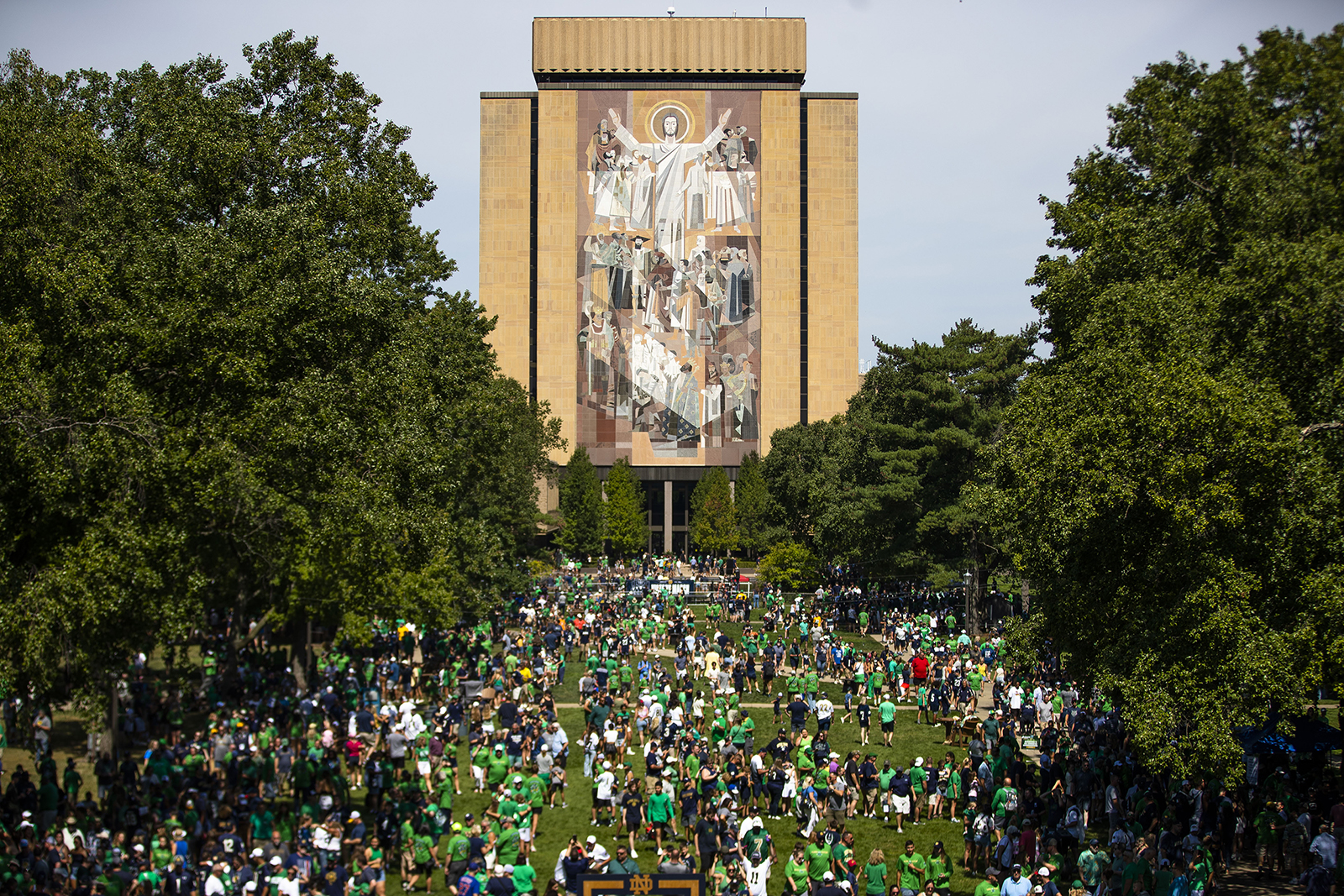


(RNS) — In August, when the University of Notre Dame renamed its Center for Diversity, Equity and Inclusion for Sister Thea Bowman, a sainthood candidate and Franciscan Sister of Perpetual Adoration who was the first African American to receive the university’s prestigious Laetare Medal, there was no fanfare, not even a press release.
The name change, though welcomed by Bowman’s congregation, seemed to have as much to do with attempts by President Donald Trump’s administration to eliminate DEI in higher education as it did honoring the mid-20th-century educator, writer and evangelizer.
The FSPA sisters’ president, Sister Sue Ernster, celebrated the choice, saying Bowman was “a prophetic voice for racial justice and Gospel joy” and “continues to inspire the Church to be more inclusive, courageous and compassionate.” The Bowman Center still offers multicultural student programs and services and still houses the gender relations center, the office of student enrichment, the diversity council and PrismND, the LGBTQ+ student organization.
But the congregation told Religion News Service it was not involved in the name change and only heard of the renaming after the fact.
(Erin Blasko, a Notre Dame spokesperson, told RNS, “Our efforts to build a Notre Dame community where everyone feels a sense of belonging are deeply rooted in our Catholic mission.”)
Notre Dame is just one school trying to stay under the administration’s radar while continuing its work with marginalized students, which many Catholic colleges and universities consider part of their Catholic identities.
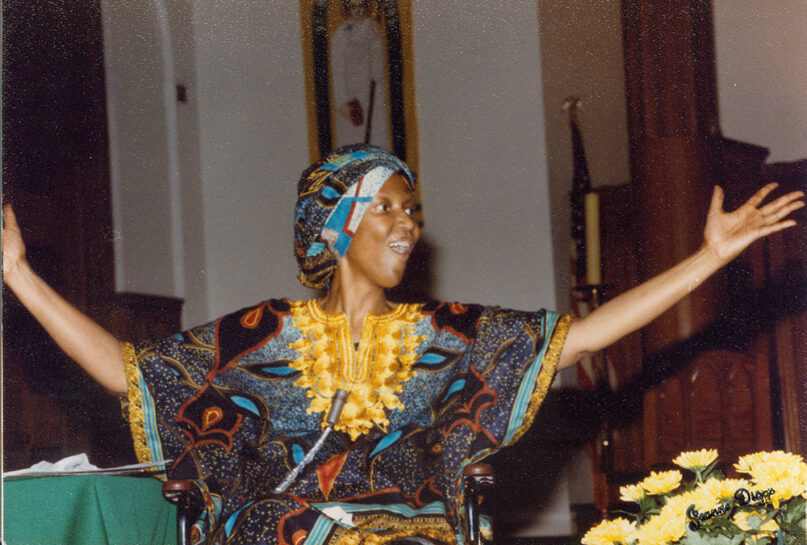
Sister Thea Bowman in 1988. (Photo courtesy of Franciscan Sisters of Perpetual Adoration/FSPA.org/theabowman)
RELATED: Catholics argue university anti-union efforts go against religious teachings
Donna Carroll, president of the Association of Catholic Colleges and Universities, said that each institution has differing ability to push back against the Trump administration based on the institution’s location and “financial flexibility,” but “what we share in common is this strong foundational understanding that diversity, equity and inclusion is an expression of the Catholic mission of the institution.”
“ The dignity of each individual is foundational to the Catholic culture,” Carroll said.
In March, Georgetown Law School Dean William Treanor invoked the First Amendment and Georgetown’s Catholic identity in defending the school after an interim U.S. attorney appointed by the Trump White House sent an accusatory letter about the school’s use of DEI.
Cecilia González-Andrieu, president of the Academy of Catholic Hispanic Theologians of the United States, said Catholic commitment to “the most vulnerable,” sometimes known as “the preferential option for the poor,” has a “very long history,” tracing the concept back to Hebrew and Christian Scriptures and papal teachings.
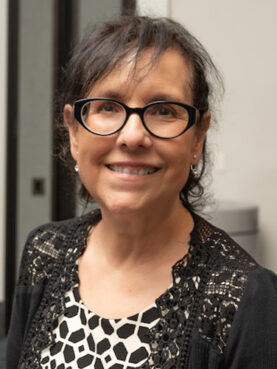
Cecilia González-Andrieu. (Photo © Zsuzsi Photography)
“ What we have come to call, in corporate speak, DEI, for Christians is doing as Jesus did and being as Jesus was. And we can’t claim to be following Jesus and not take that seriously,” said González-Andrieu, also a theology professor at Loyola Marymount University.
Despite many leaders saying they are commited to continuing equity-related work, the administration’s push has created a climate of caution in Catholic higher education. Several Catholic campus officials declined to speak for this story, citing fear of retribution.
Catholic higher education leaders have also been relatively quiet about the administration’s biggest impact on their communities — the withholding or termination of grant funds, including for programs meant to serve marginalized and vulnerable students.
RELATED: Black faith leaders march on Wall Street to denounce anti-DEI campaign
In February, the Department of Education sent out a memo saying that federal law prohibits the use of race “in decisions pertaining to admissions, hiring, promotion, compensation, financial aid, scholarships, prizes, administrative support, discipline, housing, graduation ceremonies, and all other aspects of student, academic, and campus life.”
In March, the Department of Education said it was investigating Notre Dame for race-based discrimination because of the university’s partnership with the PhD Project, which supported historically underrepresented groups in business doctoral programs.
Last month, U.S. District Judge Stephanie Gallagher found the February guidance violated the law by failing to comply with procedural requirements.
“What hasn’t changed since January is the law,” Michael Pillera, who served as a senior civil rights attorney in the Department of Education’s Office for Civil Rights from 2015 to March 2025, told RNS.
“The Department of Justice, Department of Education, can’t make law,” said Pillera, now director of the education opportunities project at Lawyers’ Committee for Civil Rights Under Law. “When litigated, much of this stuff has lost,” Pillera said of the Trump administration’s anti-DEI campaign.
But even if they win in court, universities have faced steep consequences. In mid-April, the administration froze $2.2 billion of federal research funding for Harvard University after the university rejected the administration’s demands to end its DEI programs. It took almost five months for a federal judge to rule that freezing was illegal, and the Trump administration plans to appeal the decision.
Harvard’s legal fight is likely quite costly, and its resources far surpass those of most Catholic colleges.
The president of Sacred Heart University in Connecticut, John Petillo, cited the threat of losing federal funding in an Aug. 8 letter explaining his decision to close Sacred Heart’s Office of Inclusive Excellence, which contained multicultural and sexuality and gender equity centers, calling the change “unavoidable.”
Instead, the university will open an Agape Center for Human Dignity, which will empower students “to encounter each other with integrity, gain knowledge and practice the key skills of intentional reflection and courageous civil discourse” and offer programs open to all, he wrote.
When pressed about what that programming will look like, a university spokesperson declined to share more details. Petillo’s letter does specify that Sacred Heart’s unity clubs, which are formed around various identities, will continue to be supported by the center.
Other leaders have chosen to fight. Patricia McGuire, president of Trinity Washington University and a forceful champion for DEI, said the administration’s anti-DEI strictures are “a way for this administration to satisfy the extremist views that Black people in particular, immigrants in particular, should not have a place and a space in our culture, certainly not in our universities.”
At Trinity, 56% of the student body is Black and 30% is Hispanic. About 70% of its students are eligible for Pell grants and about 10% are eligible for the Deferred Action for Childhood Arrivals program.
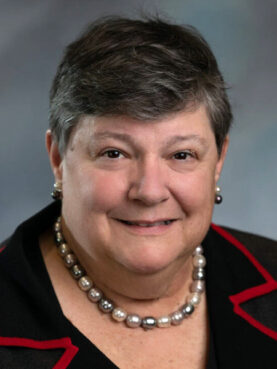
Patricia McGuire. (Photo courtesy of Trinity Washington University)
McGuire, a former law professor, advised other presidents to ensure they’re complying with long-standing anti-discrimination law but not to back off their DEI programs, even if, like Notre Dame, they choose to rename them. “ Too many universities are rushing to comply with administration orders without having evidence that there’s any wrongdoing going on,” McGuire said. “ There is nothing fundamentally illegal about an institution caring about principles of diversity, equity and inclusion.”
McGuire urged presidents to help students feel “welcome, included and safe” and to “realize that they have opportunities that they never dreamed possible.” She said: “You will save their lives. You will save your own soul, and you will steer clear of legal trouble.”
Some Catholic leaders have backed Trump’s campaign. Recently, Winona-Rochester, Minnesota, Bishop Robert Barron, whom the president named to the White House’s Religious Freedom Commission, joined prominent conservatives such as Christopher Rufo, Jordan Peterson and Ben Shapiro in signing a letter from the Manhattan Institute that called on Trump to revoke funding and accreditation from any university that doesn’t “adhere to the principle of colorblind equality, by abolishing DEI bureaucracies” and making other policy changes.
McGuire said it is an oxymoron that Barron would call himself pro-life while saying “universities should be punished for the ways they try to make Black and Hispanic students feel welcome and included.” McGuire said he is not “ an effective leader for our fundamental issues in Catholic social teaching.”
The U.S. bishops are not of one voice on DEI. On Sept. 8, the U.S. Conference of Catholic Bishops published an essay on its website by Washington Auxiliary Bishop Roy Campbell, then-chair of its subcommittee on African American Affairs, titled “DEI means God.”
“The current government administration that we have is working to separate us from one another,” Campbell wrote, according to the Black Catholic Messenger, saying people of color “have been denied for far too long, equal opportunities in education, social recognition, and economic growth, truly denying the DIGNITY OF EVERY HUMAN BEING!”
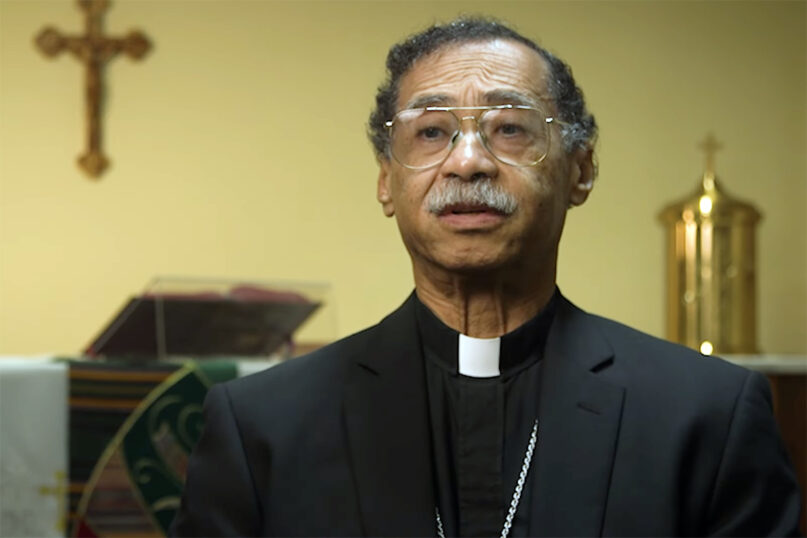
Washington Auxiliary Bishop Roy Campbell. (Video screen grab)
But in the face of conservative backlash, the conference removed the essay from its website, telling Catholic outlets the essay was posted without going through the normal review process.
Campbell declined to be interviewed about the incident.
Before the incident, Trenton, New Jersey, Bishop David O’Connell, chair of the U.S. bishops’ conference committee on Catholic education, and retired Chicago Auxiliary Bishop Joseph Perry, then-chair of the conference’s ad hoc committee against racism, both declined to be interviewed. Barron’s office did not respond to a request for comment.
González-Andrieu said, “ It’s a lie to say that all students from the moment that they’re born, all children, have the same opportunities.
“ This is part of the Catholic practice. First, take stock of what we have done wrong and then say, wow, we’re sorry that we did that thing wrong, and then resolve to not do it wrong again and to do the right thing,” González-Andrieu said of the United States’ history “of racism and classism and sexism.”
McGuire credited the focus of Trinity, her university, on welcoming students “ who historically have not been welcomed” with transforming lives in her region. The school, she said, is expanding educational opportunities, helping more students of color achieve success in nursing and earning top journalism awards.
“ The story of students becoming wildly successful because of a care for diversity, equity and inclusion — that story’s not being told right now,” McGuire said.