


JERUSALEM (RNS) The Israeli cabinet passed a controversial resolution Sunday (Nov. 2) designed to make it easier for prospective converts to convert to Judaism by largely bypassing the Chief Rabbinate.
The landmark resolution, which has the weight of a law but could be overturned more easily by future governments, will enable municipal rabbis to perform conversions by establishing their own government-funded conversion courts. Since the religiously stringent Chief Rabbinate took over this role 20 years ago the standards for conversion have become impossibly high, according to many conversion-rights advocates.

A group of ultra-Orthodox Jews in the Jewish Quarter of Jerusalem’s Old City look out onto the Al-Aqsa Mosque on September 13, 2012. RNS photo by Neri Zilber
“We need this law because the Chief Rabbinate has had an absolute monopoly on the conversion process,” said Rabbi Seth Farber, whose organization, ITIM, lobbied for the resolution. “There are many approaches to conversion according to Jewish law, but only one has been in practice.”
Farber said the resolution should enable many of the estimated 364,000 Israelis who are not Jewish according to Jewish law and have no other religion to find Orthodox rabbis more welcoming than the 33 rabbis picked by the rabbinate to head conversion courts.
The vast majority of those Israelis moved to Israel from the former Soviet Union under the country’s Law of Return, which allows people who can prove they had at least one Jewish grandparent to immigrate.
Rabbi David Stav, founder and president of Tzohar, an Orthodox rabbinical group that championed the resolution, called it “nothing short of historic for the future of Jewish identity in Israel.”
“Had this reform not have been accepted, we would have been witness to an irreversible path of assimilation not unlike that which exists in Jewish communities throughout the Diaspora,” he said.
Whether the Chief Rabbinate will eventually accept the conversions carried out under the resolution’s guidelines is uncertain.
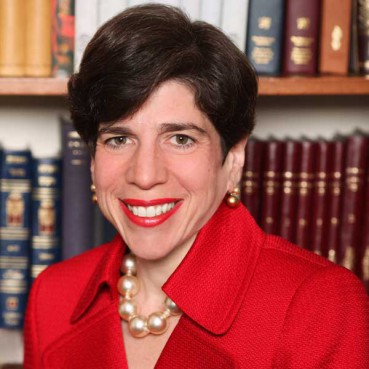
Rabbi Julie Schonfeld is executive vice president of the Rabbinical Assembly, the rabbinical arm of the Conservative Jewish movement. Photo courtesy of Rabbinical Assembly
Ziv Maor, the rabbinate’s spokesman, said the Chief Rabbis are “against the government decision” because it largely bypasses the rabbinate.
Farber said the resolution leaves “one procedural matter” — a type of conversion certification — in the hands of the rabbinate, which could decide to nix the conversions.
“If that happens we will go to court,” he said.
Rabbi Julie Schonfeld, executive vice president of the U.S.-based Rabbinical Assembly, the international organization of Conservative rabbis, said that while her movement hopes the resolution will “at least nominally address the alienation” many religionless Israelis feel, “it does not address the absence of religious freedom for Jews in Israel, where Conservative and Reform practices practiced by the majority of the world’s Jews are not recognized by the state-funded Orthodox religious establishment.”
YS/AMB END CHABIN