The Hindu festival of lights, or Diwali, is celebrated all over the world with music, dance and fireworks. In Kathmandu, Nepal, it is known as the Tihar festival to the Newar community, who observe the start of their new year 1136 according to the lunar calendar.
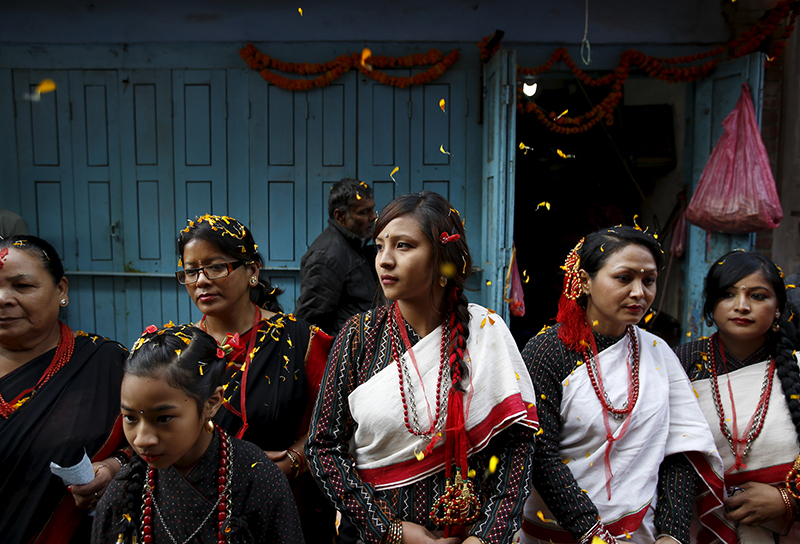
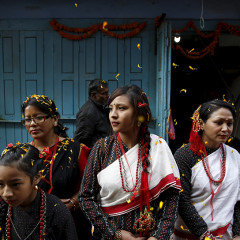
Participants from the Newar community in traditional attire take part in the parade to celebrate the Newari New Year that falls during the Tihar festival, also called Diwali, in Kathmandu, Nepal, on Nov. 12, 2015. Members of the Newar community observe the start of their Newari New Year 1136, in accordance with their lunar calendar, by worshipping their spiritual selves in a ritual known as "mahapuja." Photo courtesy of REUTERS/Navesh Chitrakar
*Editors: This photo may only be republished with the photo slideshow RNS-DIWALI-FESTIVAL, originally transmitted on Nov. 12, 2015.
The Hindu festival of lights, or Diwali, is celebrated all over the world with music, dance and fireworks. In Kathmandu, Nepal, it is known as the Tihar festival to the Newar community, who observe the start of their new year 1136 according to the lunar calendar. Photos courtesy of REUTERS
Please click on any photo below to view slideshow.
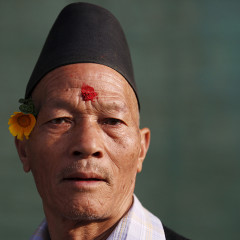
A Newari man takes part in the Newari New Year parade that falls during the Tihar festival, also called Diwali, in Kathmandu, Nepal, on Nov. 12, 2015. Members of the Newar community observe the start of the Newari New Year 1136, in accordance with the lunar calendar, by worshipping their spiritual selves in a ritual known as “mahapuja.” Photo courtesy of REUTERS/Navesh Chitrakar *Editors: This photo may only be republished with the photo slideshow RNS-DIWALI-FESTIVAL, originally transmitted on Nov. 12, 2015.
Participants from the Newar community in traditional attire take part in the parade to celebrate the Newari New Year that falls during the Tihar festival, also called Diwali, in Kathmandu, Nepal, on Nov. 12, 2015. Members of the Newar community observe the start of their Newari New Year 1136, in accordance with their lunar calendar, by worshipping their spiritual selves in a ritual known as “mahapuja.” Photo courtesy of REUTERS/Navesh Chitrakar
*Editors: This photo may only be republished with the photo slideshow RNS-DIWALI-FESTIVAL, originally transmitted on Nov. 12, 2015.
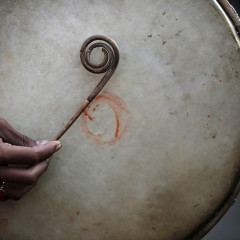
A hand of a Newari boy using a bamboo stick plays a traditional musical instrument during the Tihar festival, also called Diwali, in Kathmandu, Nepal, on Nov. 12, 2015. Members of the Newar community observe the start of their Newari New Year 1136, in accordance with their lunar calendar, by worshipping their spiritual selves in a ritual known as “mahapuja.” Photo courtesy of REUTERS/Navesh Chitrakar
*Editors: This photo may only be republished with the photo slideshow RNS-DIWALI-FESTIVAL, originally transmitted on Nov. 12, 2015.
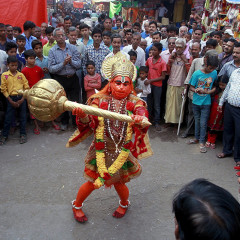
A man dressed as Hindu monkey god Hanuman performs on a street during Hanuman Jayanti Festival in Allahabad, India, on Nov. 10, 2015. In Allahabad, Hanuman Jayanti is celebrated to commemorate the birth of Lord Hanuman on the eve of Diwali, the festival of lights. Photo courtesy of REUTERS/Jitendra Prakash
*Editors: This photo may only be republished with the photo slideshow RNS-DIWALI-FESTIVAL, originally transmitted on Nov. 12, 2015.
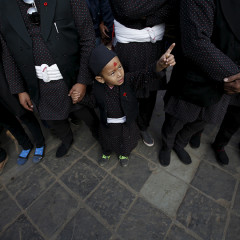
A Newari boy, dressed in traditional attire, observes the Newari New Year parade that falls during the Tihar festival, also called Diwali, in Kathmandu, Nepal, on Nov. 12, 2015. Members of the Newar community observe the start of their Newari New Year 1136, in accordance with their lunar calendar, by worshipping their spiritual selves in a ritual known as “mahapuja.” Photo courtesy of REUTERS/Navesh Chitrakar
*Editors: This photo may only be republished with the photo slideshow RNS-DIWALI-FESTIVAL, originally transmitted on Nov. 12, 2015.
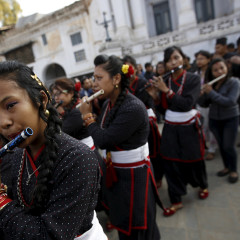
Participants from the Newar community in traditional attire play flutes in front of the ancient palace while celebrating the Newari New Year parade that falls during the Tihar festival, also called Diwali, in Kathmandu, Nepal, on Nov. 12, 2015. Members of the Newar community observe the start of their Newari New Year 1136, in accordance with their lunar calendar, by worshipping their spiritual selves in a ritual known as “mahapuja.” Photo courtesy of REUTERS/Navesh Chitrakar
*Editors: This photo may only be republished with the photo slideshow RNS-DIWALI-FESTIVAL, originally transmitted on Nov. 12, 2015.
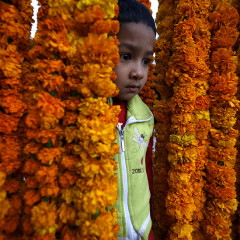
A boy stands between garlands sold along the streets of Kathmandu, Nepal, during the Tihar festival, also called Diwali, on Nov. 10, 2015. Hindus all over Nepal are celebrating the Tihar festival, during which they pay homage to cows, which are considered a maternal figure, and other animals. Devotees also worship the goddess of wealth, Lakshmi, by illuminating and decorating their homes using garlands, oil lamps, candles and colorful lightbulbs. Photo courtesy of REUTERS/Navesh Chitrakar
*Editors: This photo may only be republished with the photo slideshow RNS-DIWALI-FESTIVAL, originally transmitted on Nov. 12, 2015.
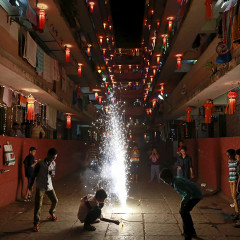
Children play with firecrackers while celebrating the Hindu festival of Diwali, the annual festival of lights, in Mumbai, India, on Nov. 11, 2015. Photo courtesy of REUTERS/Danish Siddiqui
*Editors: This photo may only be republished with the photo slideshow RNS-DIWALI-FESTIVAL, originally transmitted on Nov. 12, 2015.
Link copied!
No paywalls here. Thanks to you.
As an independent nonprofit, RNS believes everyone should have access to coverage of religion that is fair, thoughtful and inclusive. That's why you will never hit a paywall on our site; you can read all the stories and columns you want, free of charge (and we hope you read a lot of them!)
But, of course, producing this journalism carries a high cost, to support the reporters, editors, columnists, and the behind-the-scenes staff that keep this site up and running. That's why we ask that if you can, you consider becoming one of our donors. Any amount helps, and because we're a nonprofit, all of it goes to support our mission: To produce thoughtful, factual coverage of religion that helps you better understand the world. Thank you for reading and supporting RNS.