


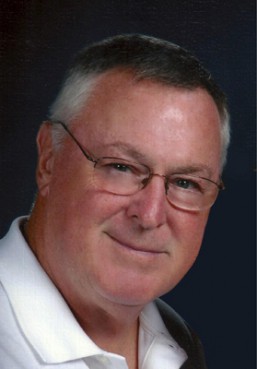
(RNS2-OCT12) Robert Lupton is the author of the new book “Toxic Charity.” For use with RNS-10-MINUTES, transmitted Oct. 12, 2011. RNS photo courtesy Robert Lupton.
WASHINGTON (RNS) Food pantries, clothes closets and mission trips have become unquestioned bastions of America’s charitable landscape. But do these well-intended services — many of them run by religious organizations — really help the poor?
According to Robert Lupton, not really. His new book, “Toxic Charity,” draws on his 40 years’ experience as an urban activist in Atlanta, and he argues that most charitable work is ineffective or actually harmful to those it is supposed to help.
Lupton is the founder of FCS Urban Ministries, through which he has developed mixed-income subdivisions that house hundreds of families. He is the author of four other books and holds a Ph.D. in psychology from the University of Georgia.
Some answers have been edited for length and clarity.
Q: You say churches and charities can harm those they propose to help. How?
A: Typically, the giving is one-way: those of us with the resources give to those with a lack of resources. One-way giving tends to make the poor objects of pity, which harms their dignity. It also erodes their work ethic and produces a dependency that is unhealthy both for the giver and the recipient.
Q: What is one of the worst instances of `toxic charity’ you have witnessed?
A: The food pantry idea has led to some fairly ugly relationships. The church or group sets up rules to govern how the food is distributed; the recipients figure out ways to circumvent those rules; and they become upset when they don’t get the food they wanted — there’s a kind of a built-in antagonism that grows between the dispensers and the recipients.
Q: Why do you think ill-formed charity is so pervasive?
A: The feel-good experience draws us back in. In our newsletters about mission trips we report how wonderful and grateful the people are, but what we don’t hear are the ways that the trips damage people behind the scenes.
I don’t think we’ve held up good models of development. When there’s a flood or a hurricane, folks continue operating on a one-way, crisis, give-to-the-poor mentality long after development should have taken place, because it’s easier for relief agencies to sell crisis than development and empowerment.
Q: You advise limiting one-way giving to “emergency situations.” What do you define as an emergency situation?
A: A home burning down, a bad hurricane, a devastating earthquake, a famine. What we interpret as crisis, particularly in the U.S., is a different matter. Many of those who are running our food pantries and our clothes closets, for example, feel they are meeting a crisis need of unemployed families. I contend that those are chronic poverty issues that deserve a development strategy.
Q: What is one of the best examples you have seen of a charity that works well?
A: We converted our food pantry into a food co-op. Members of the co-op put in $3 a week; with that, we can purchase $30 worth of groceries from the food bank. The members of the co-op actually own it, run it, collect the money, do the shopping and decide what the rules are. It becomes an empowering process.
Q: Are there any wide-scale studies or statistical data to support your claims?
A: On a national scale, look at the results of the one-way giving that has gone into countries in Africa or Haiti over the years. Those statistics are available, and they’re blatant. But I don’t know of any studies that have been done to quantify the harm versus the benefits of U.S. food distribution. It’s an unexamined industry.
Q: It seems like you could be facing some heat for this idea; what has been the reaction so far?
A: I’ve gotten mixed reviews. It confirms the suspicions of a growing number of people, but for those who are involved in the distribution, it feels like a slap in the face. I think the whole thing is going to be fairly controversial.
Q: What’s the most controversial idea in the book?
A: It might be that most of our service projects and mission trips are counterproductive. We spend as much as $5 billion dollars annually on mission trips, millions of Americans take them every year, and the amount of good accomplished is very, very minimal compared to the expenditures we’re laying out.
Q: Is your book a justification for libertarian politics?
A: I don’t think it is a political book at all. It is a practical book — it has to do with the practice of charity. It calls for responsible charity, examined charity, rather than mindless charity.