


In Spain, Pope Leo XIV urges Europe to overcome polarization
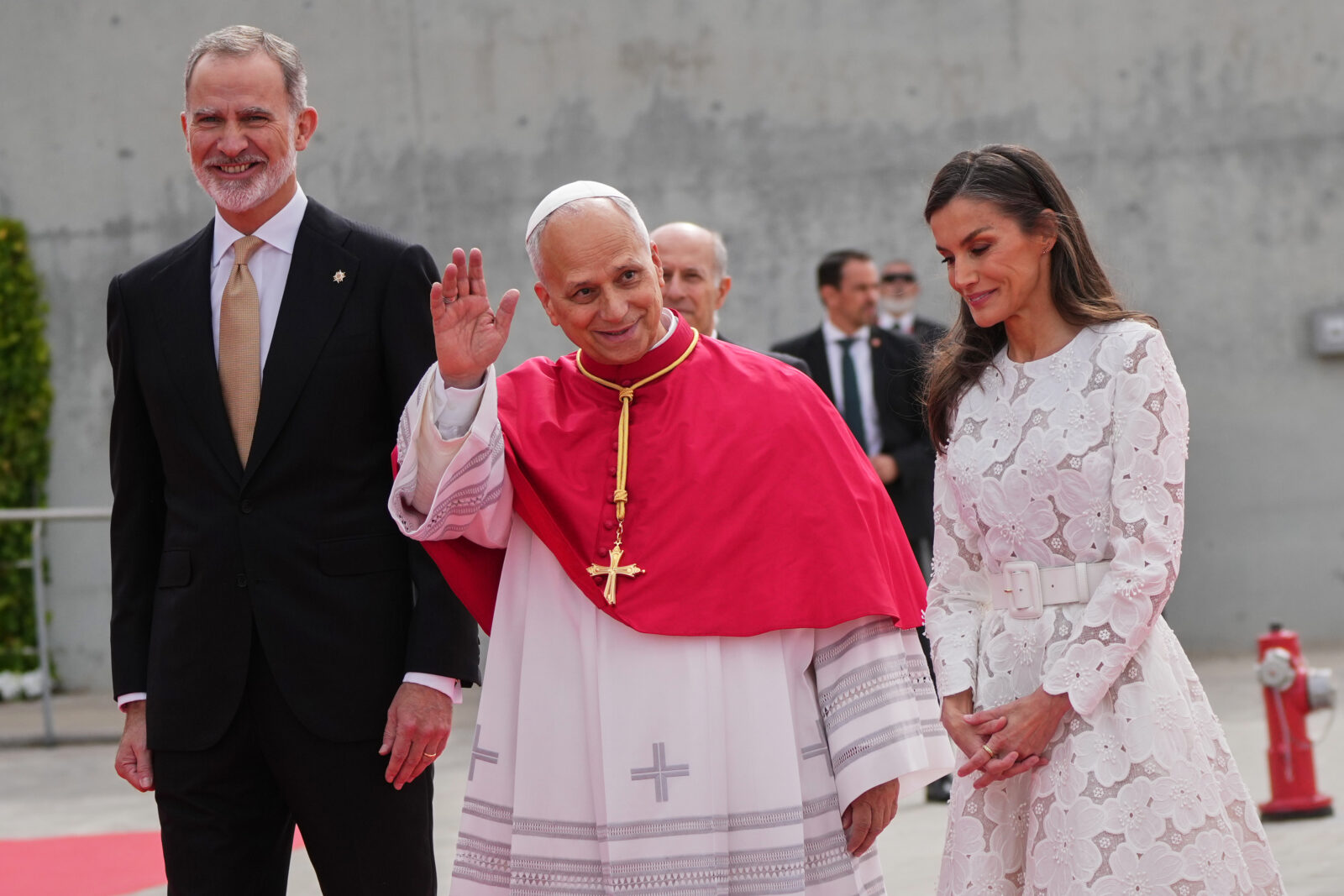


MADRID (RNS) — Pope Leo XIV made an appeal to cast aside polarization in his address on Saturday (June 6) to political and diplomatic heads in Madrid, the first leg of his six-day papal visit to Spain. The pope encouraged Europeans to become proponents of a more nuanced political and social discourse.
“Today, the temptation to gain popularity by fanning the flames of polarization seems to have grown rather than diminished, and human dignity continues to be violated,” he said, calling for “culture, interiority and free quality of education.”
“For the love of truth, I invite everyone to set aside the divisive and polarizing narratives of your societal reality and history, so as to overcome sterile simplifications through the fruitful appreciation of complexity,” he said.
Leo said “appreciating and studying complexity” is “a vocation particularly suited to Europe,” which can allow it to escape a logic centered on “the enemy.” He warned that new technologies are increasing prejudice and weakening critical thinking. “Nevertheless, goodness can prevail and spread,” he added.
The pope chose to deliver his message of unity and dialogue to Spain, a country that like many others in the West is marked by political and social polarization over issues ranging from migration to abortion.
José Restán, editorial director of the Spanish Catholic Radio COPE, said it had become a serious problem that people saw “the other” as an enemy. He said the pope’s visit offered Spain a chance to hear a moral voice for an “entire society that must raise its gaze,” referring to the motto of the papal trip, “Alza la Mirada” (Raise Your Gaze).
The pope’s first stop in the country was the royal palace, where he was greeted by King Felipe VI and Queen Letizia as cannons blasted in the courtyard. The Catholic monarchs had a private meeting with the pontiff, before he delivered his speech to political and diplomatic authorities.
Leo said he is visiting Spain to “affirm, encourage and instill a renewed fidelity to the gospel among believers, as well as a deeper reconciliation and collaboration among the various elements of this nation.”
He underscored his message of peace, already a key theme of his young pontificate, stating that it strikes some “ as naive and others as confrontational.” But the world “cries out from its depths for peace, for a new understanding of the human person and its inviolable dignity, for a civilization of love,” he added.
The pope made the case to invest in education and security, which he said is less about drawing weapons and building walls than it is working side by side with others to overcome divisions. He also addressed the need to continue dialogue with Islam.
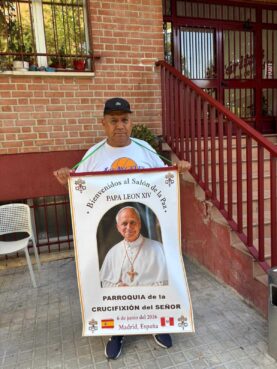
Elmer León Calderón, 60, a Peruvian immigrant and resident at the Cedia 24 Horas Social Project, holds a banner greeting Pope Leo XIV, May 28, 2026, in Madrid, Spain. (RNS photo/Claire Giangravè)
Following in his predecessor Pope Francis’ footsteps, Leo prioritized the physical and existential peripheries in his first major trip to Europe. Saturday evening, he prayed with 40 disabled and sick people and later visited the Cedia 24 Horas Social Project, a Catholic residence for the homeless in the outskirts of Madrid, which Francis had encouraged in their work in a letter.
Leo listened to the stories and experiences of a migrant and a mother who are residents at the home. He told the staff and residents that those who “dismiss or ridicule charitable works,” must “go back and re-read the Gospel.”
The Cedia center is among the first residence for the homeless in Madrid and serves over 90 people every day through counseling, health assistance, food and shelter, as well as offering support in finding employment. It houses men and women — including migrants, Trans individuals and sex workers — who suffer loneliness and exploitation.
Elmer León Calderón, 60, a resident at the facility, emigrated from Peru only to be scammed. “They filled me with illusions, things that were not true,” he said. “I slept on the street for three and a half months, in the middle of winter.”
He found work as a construction worker, but physical ailments made it hard for him to keep the job. That’s when he learned about Cedia. “I feel peaceful because they give support, not only to me, but to all my companions, to every immigrant,” he said.
Calderón said he and his fellow residents were eager to greet the pope. “From here, from this center, from this place, I say to Pope Leo XIV: Welcome here to the Hall of Peace,” he said.
María Santos, who heads the homelessness program for the Catholic charity Caritas in Spain, said that the pope’s visit represents a “unique opportunity” for the residents of the facility to know “that they are very important and worthy of love.”
According to a 2025 report by the European Anti-Poverty Network, almost 1.5 million people in the Madrid area were at risk of poverty or social exclusion in 2024. A housing crisis in Spain is making it harder for many — especially young people — to buy a home, leaving some to live on the streets.
“We think it can have quite an impact that the pope goes there and that his first visit is with those without a voice, because within Madrid, a city so large and with so much diversity, there are many invisible cities, realities that are not seen, and this one, that of the most vulnerable, is one of them,” said Sara de la Torre, spokesperson for the Archdiocese of Madrid.