




(RNS) — “Sounds good me!” was Donald Trump’s comment on a text he reposted last week. It described him as more powerful than Alexander the Great, the Caesars, Genghis Khan, Attila the Hun, Tamerlane, Napoleon, Hitler, Mao and Stalin because he has “greater global reach.”
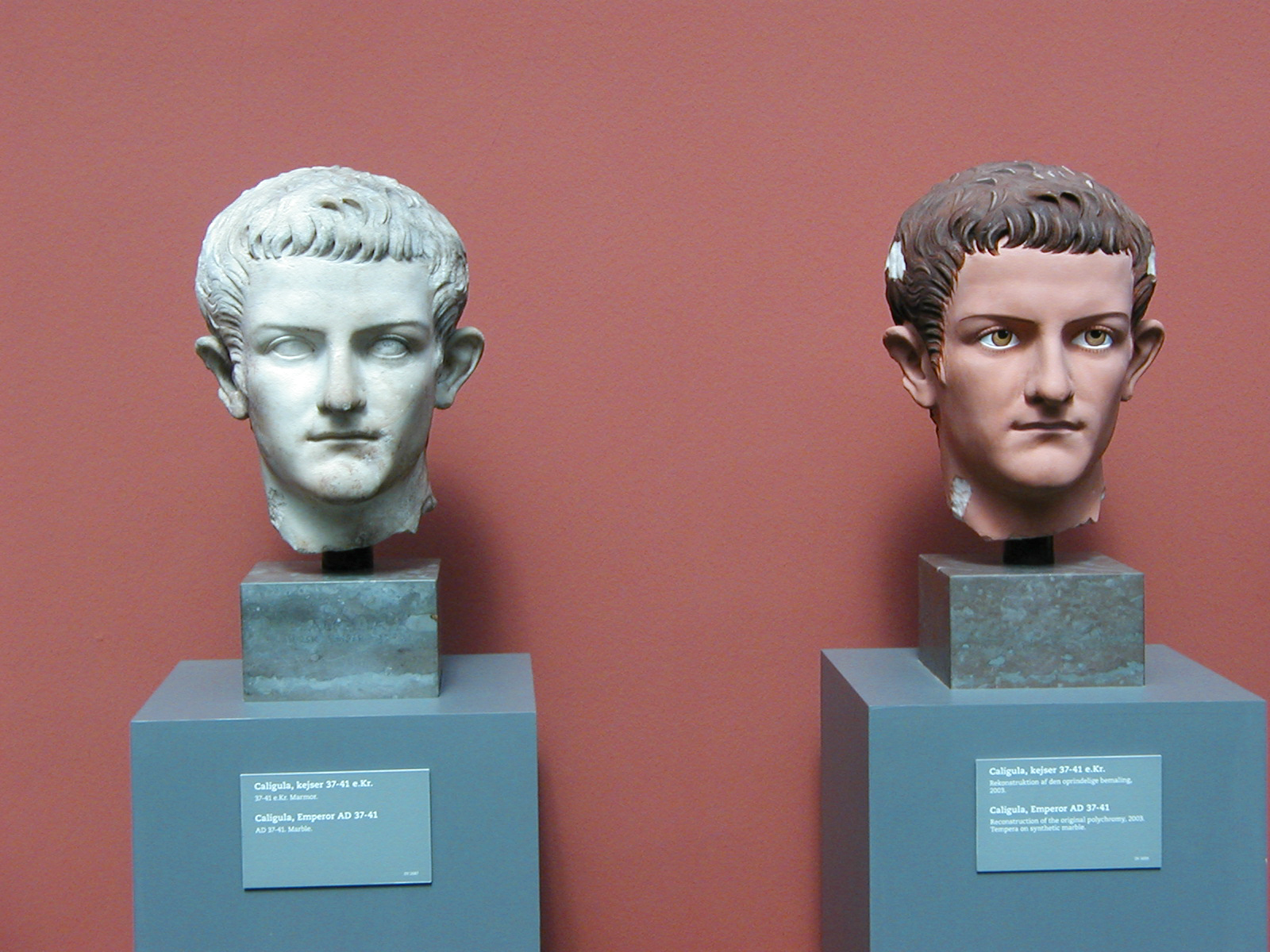
Whatever. The more interesting question is which of those powerful predecessors he most resembles. I’d go with one of the Caesars: Gaius Julius Caesar Augustus Germanicus, aka Caligula, the third of the Roman emperors, who ruled from 37 to 41.
Consider the following.
Caligula was a performer who loved being on stage and, though no reader of books, had a talent for speaking. He had four successive wives, was a serial adulterer and was vain about his thinning hair.
He devoted much of his rule to grandiose construction projects around Rome. He sought to do away with limits on the personal power of the emperor, saying (writes the ancient Roman historian Suetonius) he had “the right to do anything to anybody.”
Caligula pandered to the Roman masses while denigrating the Roman elite. Priding himself on what he called his “shameless impudence,” he had the most high-ranking senators run in their togas beside his chariot for several miles and wait on him at dinner. He said he’d make his horse, Incitatus, a consul of Rome. He often boasted that he would make sure lawyers gave no advice other than what he wanted.
He had a talent for wasting money, and to refill the imperial coffers there was “no class of commodities or men on which he did not impose some form of tariff.” Increasing his gains “by falsehood and perjury,” he went so far as to open a brothel in his palace, “setting apart a number of rooms and furnishing them to suit the grandeur of the place.”
Consumed by a mania for money, “he would often pour out huge piles of gold pieces in some open place, walk over them barefooted, and wallow in them for a long time with his whole body.”
The single war he conducted, an abortive expedition to Germany from which he retreated in a panic, accomplished nothing more than the capture of an exiled British prince — though to judge by the letter he sent to Rome about it, he’d captured all the British Isles.
About religion he was, not to put too fine a point on it, self-promoting. He ordered famous statues of gods brought to him from Greece and had their heads cut off and replaced with his own. Demanding that he be worshipped as a living god, he dedicated a temple to himself with a gold statue that was dressed each day in the clothing he wore.
On a lake south of Rome, he constructed two giant party boats under the eyes of the aristocrats in their villas on the surrounding hills. Nearby was an ancient shrine to the goddess Diana whose priest, an escaped slave known as the King of the Grove, could only be replaced when another escaped slave killed him in single combat. Envying the present occupant for holding the position for many years, Caligula arranged for a stronger adversary to attack him.
According to Josephus, he ordered a statue of himself as Jupiter to be installed in the Temple of Jerusalem but at the behest of leaders of an enraged Jewish community rescinded the order. Then, learning that the Jews had planned to revolt if the statue was put in place, he changed his mind and told his reluctant governor to go ahead with the plan on pain of death.
Before it could happen, however, he was assassinated by members of his Praetorian Guard.