

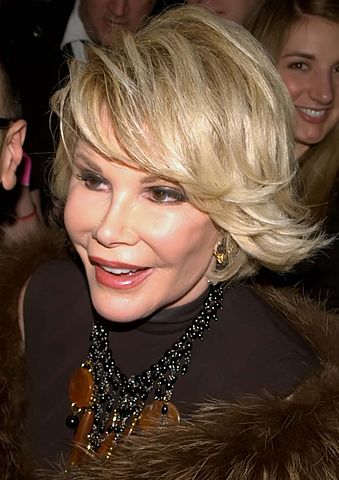


If only we had Joan Rivers – throwing out her acerbic one-liners and to heck with our tender feelings – to find the humor right now.
Humor, she often said, is “how you get through life. If you laugh, you can deal with it. Done.”
Tuesday, doctors were planning to bring the 81-year-old comedienne out of a medically induced coma and assess her mental and physical condition after she had a heart attack last week during an outpatient procedure.
Whether you turn to prayer or superstition to wish for stricken Joan Rivers’ recovery, you may be the beneficiary.
While she’s silent, everyone else is talking — and praying for a miracle or simply crossing their fingers, or both like her daughter Melissa.
Does either make a difference? For whom?
If you judge by what becomes of the endangered person, the evidence is not good for intercessory prayer. Indeed, if you really care about Joan, you might hope no one mentions to her you are praying on her behalf.
The Templeton Foundation, always focused on the advancement of both spirituality and science, spent $2.3 million to conduct a scientific study of third party prayer for patients following heart surgery. The study, which wrapped up in 2006, concluded:
“Intercessory prayer itself had no effect on complication-free recovery …but certainty of receiving intercessory prayer was associated with a higher incidence of complications.”
So, is it back to the rabbit’s foot, fingers crossed and other superstitions?
In Jewish tradition (since Joan is Jewish it seems appropriate) there’s a superstitious tradition to change a sick person’s name so the Evil Eye would not know where to look. Maybe it’s time to rename her Chaya (Life) and put a hamsa, the upheld hand sign also intended to ward off evil, by her hospital bed.
I say all the above. Prayer and best wishes do work — but the work is on the person taking action.
Expressing care for someone is focusing your attention on another person’s needs. If you are part of their community, that might be accompanied by action – the proverbial banana-bread delivery to the overwhelmed caretakers, the ride to a medial appointment, the dog walked. That community might be a church, synagogue or mosque or the local atheist meet-up group or your Sunday morning basketball team.
If you’re just a far-off fan of a celebrity, you might be moved to make a donation to that person’s cause. Or perhaps attention to someone else’s ills mean less time stewing over your own woes. Your Tweet or Facebook post showing concern for an old school friend or acquaintance (stay well, Dan!) or a never-met-in-person Facebook friend (thinking of you, Judith!) might hearten them in difficult times.
We’ll never know it prayers have the ear of God, if intercessors on earth or in heaven move the almighty to reset the clock and intervene in daily human affairs.
We’ll never know if our best wishes steered someone to good health and long life.
Neither is it proof of evil triumphing — or insufficient prayer or best wishes by us — if the celebrity or the loved one or friend is not healed,
But we know if we’ve shared our love, our best selves, and we’re better for it.
Be well, Joan. Come back to us and make us laugh, and sometime cringe, with your dead-eye humor.
As she once said:
“Yesterday is history, tomorrow is a mystery, today is God’s gift, that’s why we call it the present.”