
Mastodon

Colonial Williamsburg offers to safeguard Iraqi relics

WASHINGTON (Reuters) Islamic State militants have systematically destroyed dozens of ancient temples, shrines, manuscripts, statues and carvings in northern Iraq.
Colonial Williamsburg offers to safeguard Iraqi relics
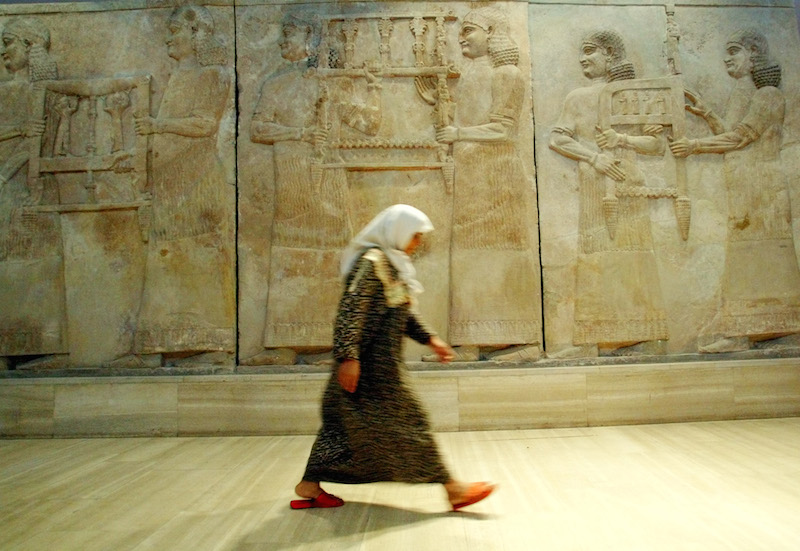
An Iraqi woman walks in front of Assyrian mural sculptures on exhibit in Baghdad in this 2003 photo. One of the most significant archaeological finds of the 20th century, the Nimrud treasures -- excavated in the ancient Assyrian city of Nimrud near present day Mosul-- date back to 900 B.C. and consist of gold artifacts and precious gems. Photo courtesy of REUTERS/Radu Sigheti HIGH RES: http://archives.religionnews.com/multimedia/photos/rns-isis-nimrud

An Iraqi woman walks in front of Assyrian mural sculptures on exhibit in Baghdad in this 2003 photo. One of the most significant archaeological finds of the 20th century, the Nimrud treasures — excavated in the ancient Assyrian city of Nimrud near present day Mosul– date back to 900 B.C. and consist of gold artifacts and precious gems. Photo courtesy of REUTERS/Radu Sigheti

WASHINGTON (Reuters) Colonial Williamsburg, the living museum devoted to preserving early American history, has offered to help Iraqi cultural experts safely store relics threatened with destruction by Islamic State militants, a spokesman said on Wednesday.


The museum in Williamsburg, Virginia, has drafted an offer to work with the Iraq State Board of Antiquities and Heritage and other Iraqi archaeological and historical organizations to help protect and preserve artifacts of historical and cultural importance that are at risk, according to spokesman Joe Straw.

Colonial Williamsburg president Mitchell Reiss, a former senior U.S. diplomat, said the museum would accept all the Iraqi artifacts it can handle.

“At Colonial Williamsburg, we well know that a nation’s past is a foundation for its future,” Reiss said in a statement.

In recent weeks, Islamic State militants have systematically destroyed dozens of ancient temples, shrines, manuscripts, statues and carvings in northern Iraq.

There have been no direct threats against Colonial Williamsburg, but its website was among several U.S. sites hit in a recent cyber-attack that was attributed to ISIS.

Williamsburg, located about 150 miles south of Washington, served as the capital of colonial Virginia for most of the 18th century, and is now a popular tourist destination.

(Reporting by John Clarke in Washington; Editing by Barbara Goldberg and Eric Walsh)

No paywalls here. Thanks to you.
As an independent nonprofit, RNS believes everyone should have access to coverage of religion that is fair, thoughtful and inclusive. That's why you will never hit a paywall on our site; you can read all the stories and columns you want, free of charge (and we hope you read a lot of them!)

But, of course, producing this journalism carries a high cost, to support the reporters, editors, columnists, and the behind-the-scenes staff that keep this site up and running. That's why we ask that if you can, you consider becoming one of our donors. Any amount helps, and because we're a nonprofit, all of it goes to support our mission: To produce thoughtful, factual coverage of religion that helps you better understand the world. Thank you for reading and supporting RNS.
Deborah Caldwell, CEO and Publisher
Donate today