


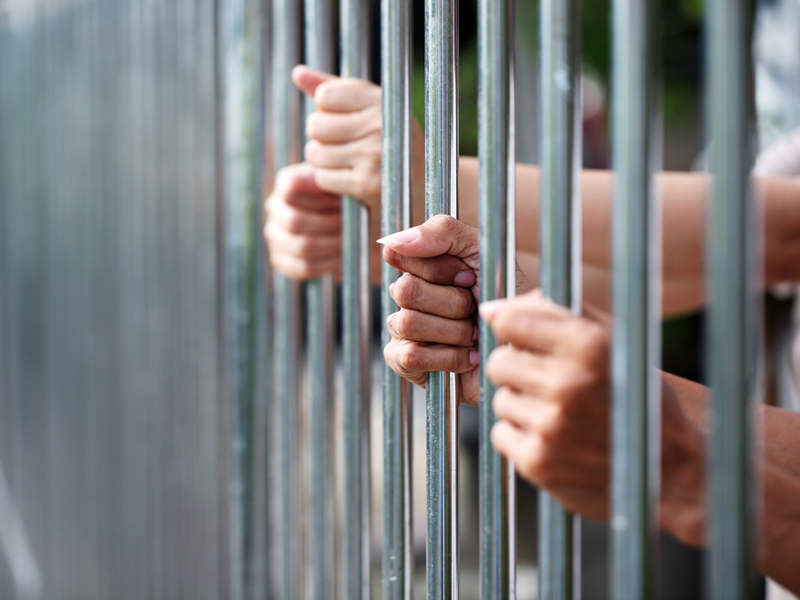


(RNS) The Justice Department’s move to phase out private federal prisons brings a welcome end to a moral and political crisis that has tested the very foundations of our democracy. It is a historic and courageous leap toward a more fair and equitable system of justice in our nation.
Private prisons are really sophisticated forms of modern-day slavery, through which predominantly African-American and Hispanic bodies are in bondage. The slave trading companies of the 17th and 18th centuries have been replaced with publicly traded companies like Corrections Corporation of America, GEO Group Inc., and Management and Training Corporation.
Fueled by both federal and state-issued contracts, these companies have historically contributed heavily to Democratic and Republican campaigns, accelerating policies that have led to what author Michelle Alexander in her book, “The New Jim Crow: Mass Incarceration in the Age of Colorblindness,” described as a class of permanently disenfranchised groups funneled in and out of federal and state-run private prison facilities.
For years, rights organizations have been struggling to bring attention to the ways in which the private prison lobby has had a dire influence on the criminal justice system and immigration policies. It has pushed for lengthy sentencing guidelines, warehousing inmates as opposed to rehabilitation, and stop-and-frisk policies contributing to an endless sea of mostly black and brown bodies behind bars of shame.
Under the banner of so-called “get tough on crime” legislation arising out of the crack cocaine epidemic of the 1980s, the private prison industry’s campaign has taken a huge toll on economically depressed communities, which often fall victim to unfair policing, sentencing and imprisonment.
So, the recent decision by the Justice Department to abandon its use on the federal level is a hard-fought victory in the struggle for broader prison reform, the abolition of mass incarceration and the criminalization of immigrants in American society.
The decision is not a surprise, because the Obama administration has long been ambivalent about private prisons.
Organizations such as Amnesty International have been calling on both Democratic and Republican party leaders to dismantle them not only because of the deplorable conditions, but also because of the inherent problem of attaching dollars and market-driven stocks to the housing and incarceration of human bodies. The practice began in the late 1990s under the failed policies of the Clinton administration, which contributed to prison overcrowding across the nation and in federal detention centers.
The Justice Department’s step is important, but now is the time to also end the use of private prisons by states and U.S. Immigration and Customs Enforcement as well.
As a faith leader committed to justice, reconciliation, and building a stronger nation, I applaud the Justice Department’s decision to begin washing its hands of the blood money of private prisons — a decision that is in the interest of public safety and the common good.
Let us now work passionately to address the problems that led to the rise of the prison industrial complex in the first place — access to good jobs, quality education, housing, fair sentencing guidelines, and health care — and create a society where human beings are not traded like stock options on Wall Street.
(The Rev. Johnny Bernard Hill is an author and advocate for justice, reconciliation and human rights)