


Tree of Life synagogue demolition begins ahead of rebuilding site of deadly antisemitic attack
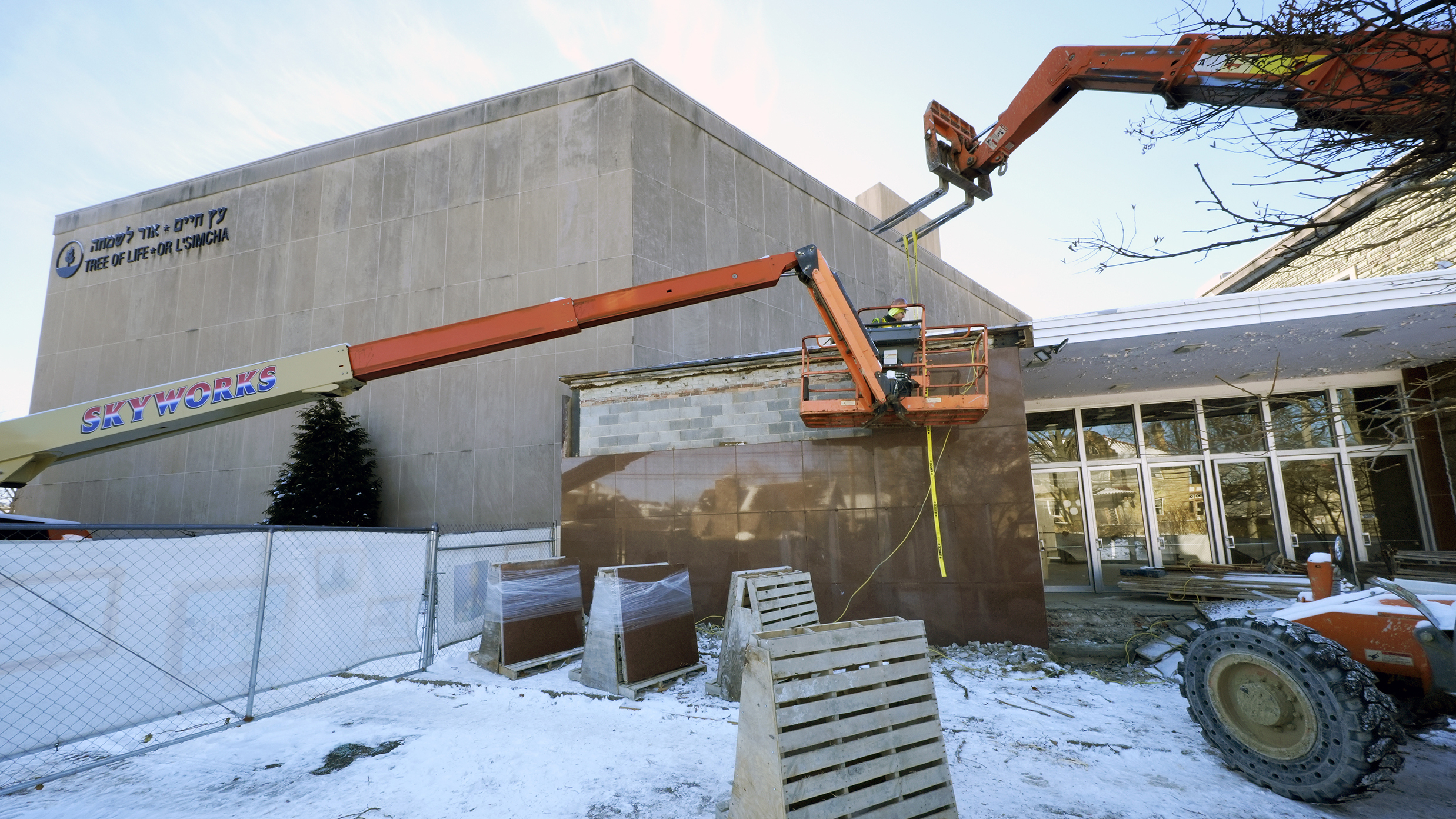


PITTSBURGH (AP) — Demolition got underway Wednesday at the Tree of Life synagogue in Pittsburgh, the site of the deadliest antisemitic attack in U.S. history, as part of the effort to reimagine the building to honor the 11 people who were killed there in 2018.
The demolition work began slowly, with crews picking away at the building’s exterior.
Most of the building will be removed, although portions of the sanctuary walls will be preserved. The new building will include spaces for worship, a museum, an education center and a movie theater.
Carole Zawatsky, who heads the new nonprofit overseeing the project, was at the site as demolition began. She said she had a mix of emotions, including feeling bittersweet knowing why the old building was being demolished but also feeling tremendous excitement about seeing the project moving forward. It was sobering and a physical manifestation of healing, she said.
“It is an incredible symbol of great resilience and moving forward,” she said.
The building has held decades of important moments, including weddings, weekly services, and bar and bat mitzvahs, said Alan Hausman, the president of the Tree of Life congregation. To see if be demolished is difficult, but it also lays the foundation for the beginning of groundbreaking work the congregation hopes to accomplish, he said.
“It just runs the whole gamut of emotions, all wrapped up into one in the same day,” Hausman said.
Andrew Stewart’s family has belonged to the synagogue for more than 60 years. His bar mitzvah was one of the first events held in the social hall, which was the last addition to the main building and was one of the first sections to be demolished.
“The synagogue means so much to so many. It’s an institution in the community,” said Stewart, who was the chairman of the construction working group. “It’s time to say goodbye to it, to let go of it and to create something that is fitting to memorialize the lives that were tragically lost and — more — to create worship space and to bring forth an institution that can make a dent in hatred and can help educate people about antisemitism.”
The Oct. 27, 2018, attack claimed the lives of 11 worshippers from three congregations meeting at the synagogue – Dor Hadash, New Light and Tree of Life. The three have been meeting at nearby synagogues since then.
In a related project, a memorial to the victims is being planned for a site just outside the synagogue.
The process of planning that memorial was left to representatives of the congregations and victims’ families.
The design calls for a walkway that will lead visitors into garden memorial with 11 sculpted forms of open books, each representing one of the people who were killed.
They represent the “Book of Life,” where, according to Jewish tradition, the righteous are named.
The man who killed the congregants was sentenced to death last year, after the conclusion of a long-delayed federal trial.