



(RNS) — After her synagogue was attacked, Mandy Bentley had nightmares about going back into the building, especially with her three children.
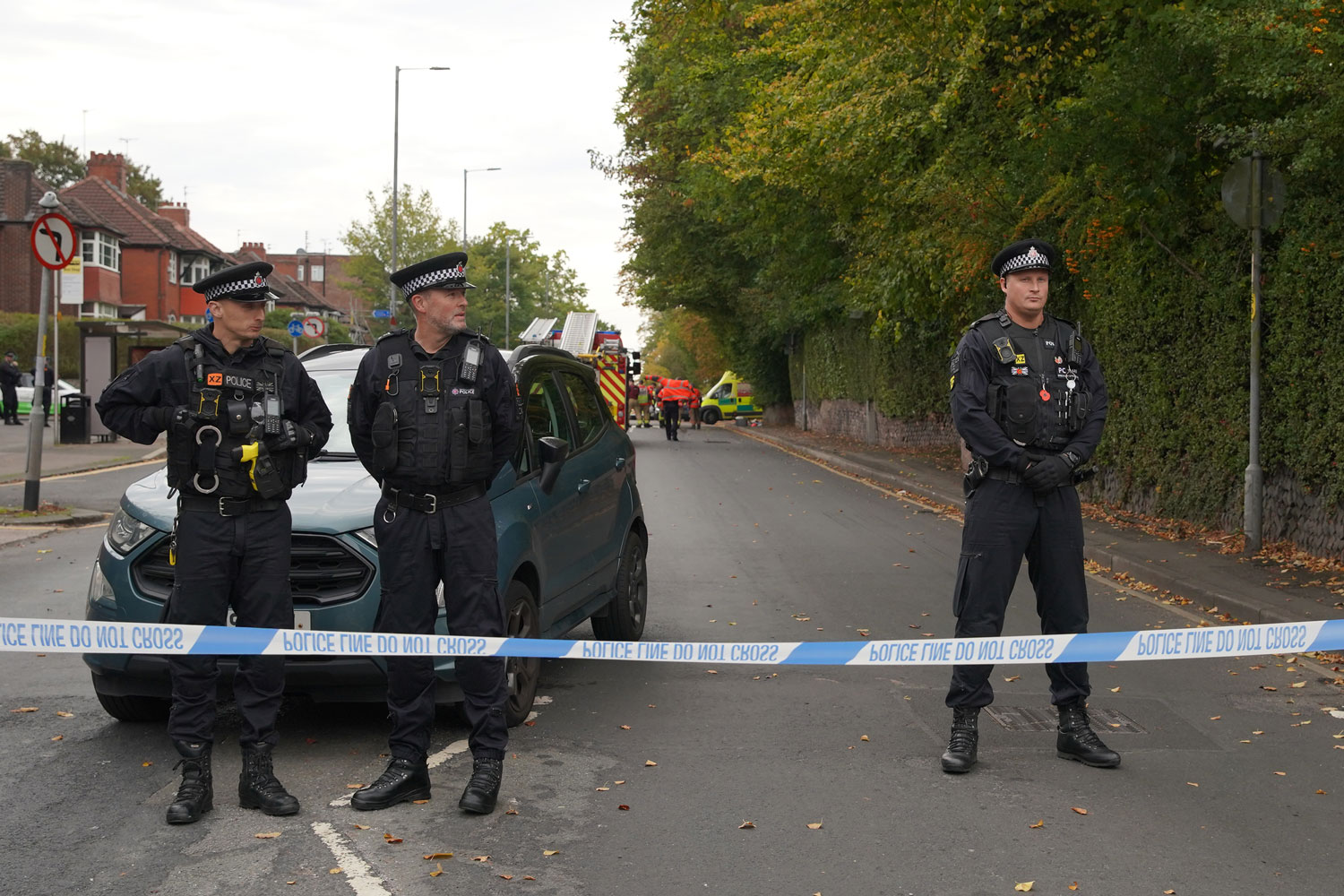
Nearly two months ago, an assailant rammed a car into people on their way to Yom Kippur services outside the Heaton Park Hebrew Congregation in Manchester, England, then got out and started stabbing several with a knife. Two synagogue members were killed in the Oct. 2 attack, one by the attacker, the other, accidentally, by the police. The alleged assailant, a 35-year-old Syrian-born U.K. citizen, was shot and killed by police.
“I was really unsure what I was going to do,” said Bentley, 38, a mother of two boys and a girl who lives in Manchester. “I had really bad anxiety over, like, what will happen? I won’t be able to protect them. How would I save my children?”
The synagogue attack in northern England was just the latest in a series of violent attacks on Jews this year. But services have recently resumed in the synagogue’s sanctuary and security has been beefed up outside. Alongside private security guards, more community members have volunteered for patrols, said Rob Kanter, the synagogue’s vice president.

Mandy Bentley of Manchester, England, with her three children. (Photo courtesy of Mandy Bentley)
High security has been a feature of British Jewish life for three decades now. Nearly all synagogues have electronic metal gates and either professional guards and/or volunteers at the entrance. Visitors must notify the synagogues in advance if they want to attend, show ID at the entrance and occasionally be interrogated to determine if they are Jewish — efforts often led by Community Security Trust, a British charity that provides security and support for Jewish institutions. Its representatives declined multiple interview requests.
And while U.S. synagogues and other Jewish institutions don’t follow the same exact protocols, they too have greatly expanded security over the past five years in response to a spate of violent incidents against Jewish Americans, beginning with the 2018 Tree of Life massacre that killed 11 Jewish worshippers in Pittsburgh.
This year alone, a gunman opened fire outside the Capital Jewish Museum in Washington, D.C., killing two Israeli Embassy staff members who attended an event there in May. The following month, a man threw Molotov cocktails at a group of Jewish Americans demonstrating in support of Israeli hostages at a Boulder, Colorado, park. Twelve people were injured and one later died of her injuries.
RELATED: Two Israeli embassy staffers killed in shooting outside Capital Jewish Museum in Washington
At the Jewish Federations of North America’s General Assembly in Washington last month, security was a key focus, with Executive Vice President Shira Hutt announcing the completion of a five-year project to build up Jewish security infrastructure.
By the end of 2025, Hutt said, all 141 Jewish federations in North America will have a dedicated former law enforcement professional directing community security at each Jewish institution in that federation’s region, whether it’s a synagogue, school, college Hillel chapter, community center or camp.
Over the past four years, the JFNA’s LiveSecure initiative raised $62 million, which it has since parceled out to various Jewish federations across the continent to hire a full-time security director or build up their existing security program. Those security professionals are connected to a systemwide network for Jewish community training and sharing of best practices known as Secure Community Network.
“We want our community members to know that they’re safe when they come on a Sabbath to a synagogue, or during a holiday, or even just on a weekend evening to hear a speaker,” Hutt said.

The command center at the Secure Community Network in Chicago is staffed around the clock. (Photo courtesy SCN)
SCN, a 21-year-old organization initially organized to provide federal law enforcement a coordinated Jewish institutional response at a time when al-Qaida was threatening the country, has grown dramatically, in large part because of the LiveSecure initiative. The network now has a budget of $29 million and a staff of 130 across the country, with headquarters in Chicago. It is led by Michael Masters, a lawyer who previously worked for the Chicago Police Department and oversaw the U.S. Department of Homeland Security in Cook County.
Masters told RNS the goal of the network is to build what he called “an FBI for the Jewish community.” That means standardizing policies, procedures and tools so everyone is on the same page.
“We need to make sure that every institution, from the mikvah to the Chabad house to the day school to the 3,000-person synagogue, has a comparable approach to security so that we’re not creating gaps,” Masters said.
Security professionals for each federation — some have more than one — are responsible for creating assessments at each of the Jewish facilities in their area and a plan each one can follow. That may involve providing active threat, active shooter, situational awareness, de-escalation and greeter trainings.
A Jewish institution that doesn’t have a security plan today is an outlier, Masters said.
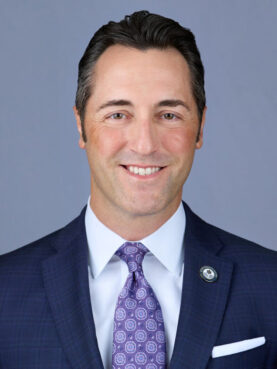
Michael Masters, national director and CEO of the Secure Community Network. (Photo courtesy SCN)
The network also helps institutions apply for federal grants to upgrade the security of their buildings, install security cameras, fortify doors, and add gates, barriers and metal detectors.
Congress allocated $274.5 million as part of the Nonprofit Security Grant Program this year, which provides funds to Jewish institutions for security as well as other nonprofits and houses of worship. Masters said security professionals in each federation have helped Jewish institutions win $28 million worth of grant funding from that pot this past year.
New provisions were added to the grant program this year. Under the Trump administration, recipients can’t “operate any programs that advance or promote DEI, DEIA (diversity, equity, inclusion and accessibility), or discriminatory equity ideology,” participate in any “discriminatory prohibited boycott,” and run any program that “benefits illegal immigrants or incentivizes illegal immigration.” Some religious groups have expressed disapproval over the new rules.
But Masters said the SCN still encourages Jewish institutions to apply. If they can’t abide by the provisions, they can return the funding later on. (Only 50% of grants are approved.)
After the attack on the Manchester synagogue, U.K. Prime Minister Keir Starmer announced his government would add 10 million pounds to pay for more security, staff and equipment around Jewish sites, such as closed-circuit television, alarms and floodlights.
Last week, police in Manchester police arrested a man “on suspicion of commission, preparation and instigation of acts of terrorism,” related to the Heaton Park synagogue violence. He was the seventh person arrested in connection with the attack.
A crowdfunding campaign for the synagogue has raised nearly 180,000 pounds (or $238,0000), money intended to help the families of the two men killed as well as the two injured who underwent emergency surgery but are expected to recover.
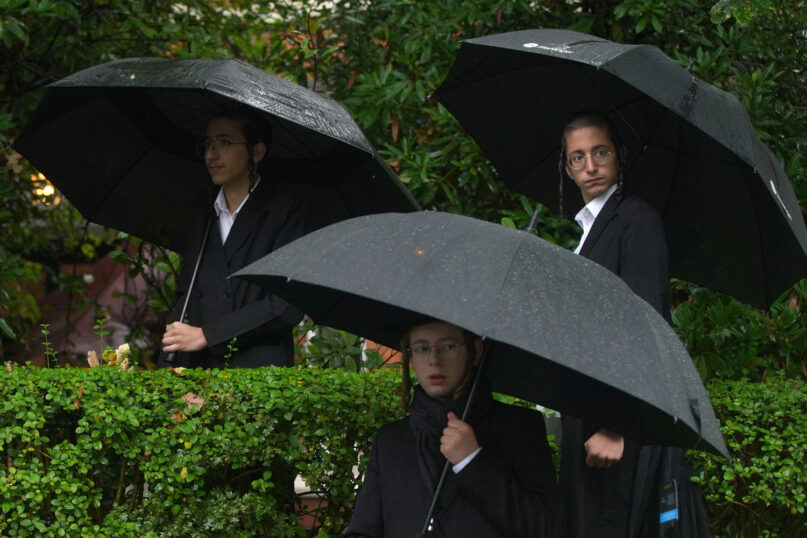
Young Jewish men attend a vigil for the victims of the attack on at Heaton Park Hebrew Congregation synagogue, in Crumpsall, Manchester, England, Friday, Oct. 3, 2025. (AP Photo/Ian Hodgson)
The synagogue has replaced the bloodstained carpeting in the foyer. It will also repair or replace the bullet-pocked doors. (The assailant did not have a gun, but police did.)
Bentley, the mother of three, has been able to overcome her fears, she said. Her brother has recently signed up to do patrols around the synagogue — one of multiple new volunteers to help with security.
A month after the attack, the synagogue held a concert in the sanctuary attended by Jews from around Manchester. Bentley attended alongside her children.
“Every seat was full,” Bentley said. “As soon as we got in there, I think the unity of everybody together made you feel safe. It was just the most incredible experience.”
RELATED: Faith groups reject new Trump security grant rules over ICE, DEI