


Judge stops Noem from ending Haitians' protected status, but fear of ICE remains


(RNS) — In a last-minute ruling on Monday (Feb. 2), a U.S. district judge in Washington halted the Department of Homeland Security’s attempt to end temporary protected status for Haitian immigrants. TPS, which allows designated Haitian nationals to live and work in the United States, was set to expire on Tuesday (Feb. 3) for some 350,000 people.
In her ruling on Miot v. Trump, which was filed in July 2025, Judge Ana C. Reyes said the TPS termination announced by DHS Secretary Krisi Noem was “null, void, and of no legal effect.”
Reyes wrote that Noem’s claims that Haiti’s current situation didn’t justify an extension of the status didn’t align with the certified administrative record’s findings that the island was plagued by a “perfect storm of suffering” and “staggering humanitarian toll.”
She also noted that Noem didn’t consult other agencies in making her decision and that she didn’t have unbounded discretion to end the status.
“Secretary Noem complains of strains unlawful immigrants place on our immigration-enforcement system. Her answer? Turn 352,959 lawful immigrants into unlawful immigrants overnight. … This approach is many things—in the public interest is not one of them,” wrote Reyes.

Ana C. Reyes testifies before the Senate Judiciary Committee on Capitol Hill in Washington, D.C., on June 22, 2022. (Video screen grab/Senate Judiciary Committee)
In a statement emailed to Religion News Service, DHS Secretary Tricia McLaughlin said the government would appeal the decision and denounced Judge Reyes’ ruling as “lawless activism that we will be vindicated on.”
“Supreme Court, here we come,” she wrote, adding, “Temporary means temporary and the final word will not be from an activist judge legislating from the bench.”
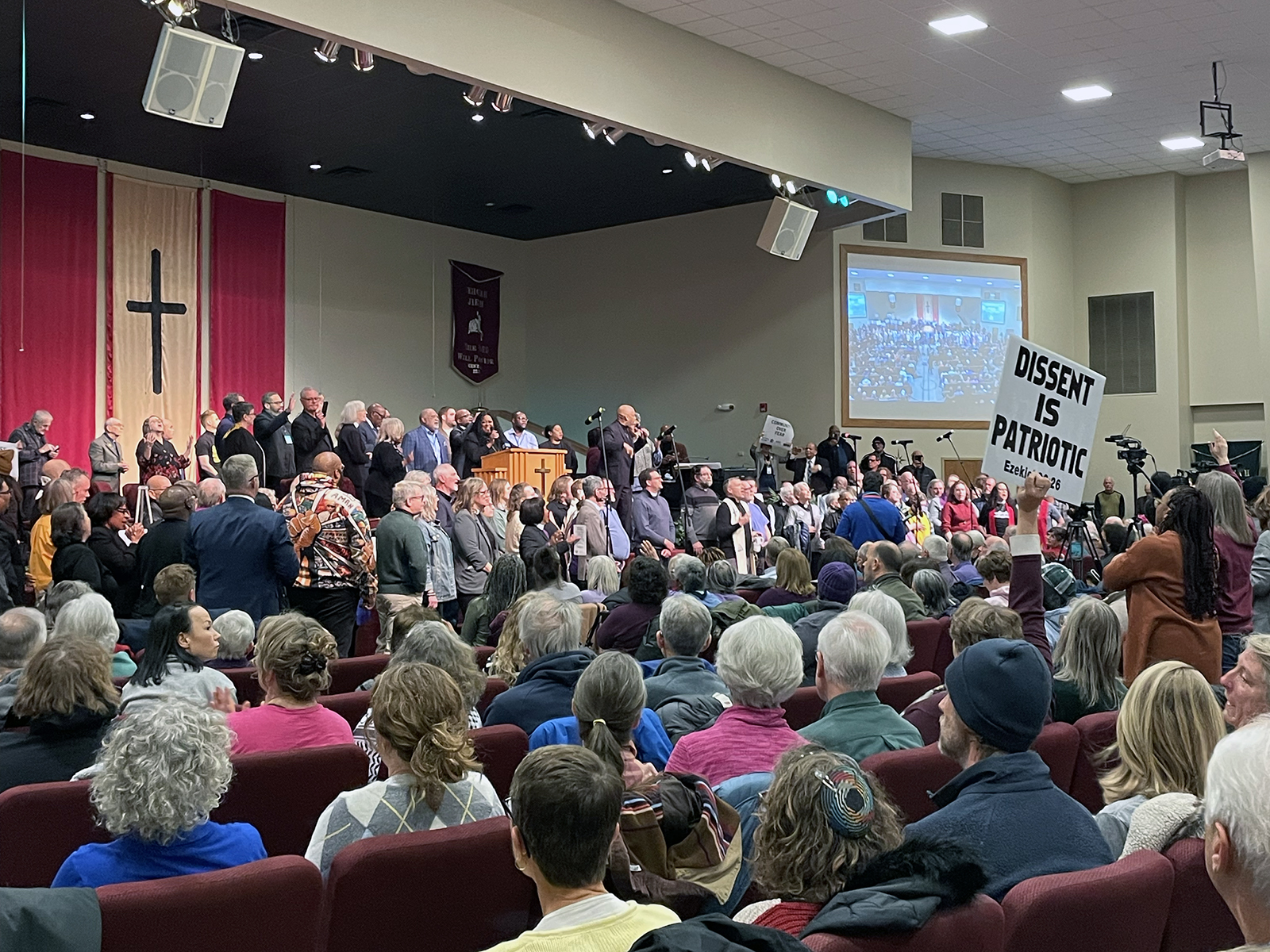
After spending the day in Springfield, Ohio, where clergy rallied in support of Haitians who benefit from the program as they awaited the decision, Geoff Pipoly, an attorney for the plaintiffs, said he hoped the decision would alleviate their anxiety. But though the ruling offered temporary relief, Haitian faith leaders and community advocates said Haitians in New York, Boston, Miami and Ohio are bracing for intensified ICE raids.
The Rev. Robenson Siquitte, a Jesuit from Haiti based in D.C., said the decision would offer respite to the community. “I’m so happy for that,” he said, adding he hoped pathways to other legal status would open to TPS-holders, who are still “in this limbo, waiting.”
TPS status, which has been extended several times, was granted to Haitians after the deadly earthquake that struck their island country in 2010. In the past five years, tens of thousands of Haitians fleeing gang violence in Port-au-Prince, the country’s capital, also settled in the U.S. through a separate Biden administration program, known as CHNV. The program granted Cubans, Haitians, Nicaraguans and Venezuelans affected by adverse political situations at home the right to live and work in the United States for two years.
About half a million migrants took advantage of the CHNV program. After it was terminated by the Biden administration in the fall of 2024, some of those migrants applied for TPS status.
Last July, a federal district court judge stayed Noem’s initial order to terminate the Haitians’ TPS status as of September 2025, but Noem made clear that TPS would not be extended to the group again when it expired this month. DHS spokesperson Tricia McLaughlin said at the time that TPS “was never intended to be a de facto asylum program, yet that’s how previous administrations have used it for decades.”

U.S. Homeland Security Secretary Kristi Noem speaks during a press conference, Jan. 8, 2026, in New York. (AP Photo/Yuki Iwamura)
On Jan. 28 of this year, a lawsuit led by the National TPS Alliance was successful in arguing that Noem’s attempt to vacate TPS status for Haitian and Venezuelan holders early was illegal.
In the case decided Monday, plaintiffs didn’t seek a ruling on whether it was safe for Haitians to return to Haiti, explained Pipoly. Rather, they argued that Noem didn’t follow proper procedures governing how TPS status is awarded or extended and that her decision was motivated by racial animus.
“The government took the literal position that if Secretary Noem wanted to, she could decide whether to terminate Haiti’s TPS designation using nothing more than a coin flip,” Pipoly said in a recent interview.
This past month, Haitians around the country have fasted and prayed for a favorable outcome. In Boston, home to the country’s third-largest Haitian community, Pastor Dieufort Fleurissaint said members of his congregation at Total Health Christian Ministries have prayed for God to intervene in favor of TPS-holders.
“There is nothing that we can do to prepare,” he said. “How do you prepare for mass deportation of your congregants? We’re definitely relying and depending on God for divine intervention.”
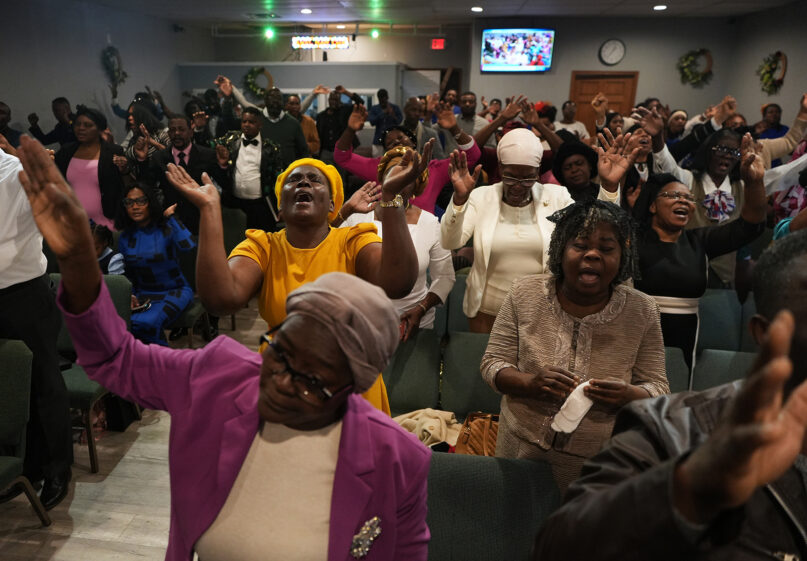
Congregants worship at the First Haitian Evangelical Church of Springfield, Sunday, Feb. 1, 2026, in Springfield, Ohio. (AP Photo/Luis Andres Henao)
At a Jan. 20 congressional hearing in Washington, Fleurissaint and business owners convened to highlight that Haitian migrants were “peaceful and productive citizens.”
Despite Monday’s ruling, some Haitians are preparing for the worst. Manny Daphnis, a member of the Haitian Evangelical Pastors of New England, said the group expects ICE agents to focus on Haitian communities. Boston officials expect a large influx of ICE agents in the city this week as the TPS deadline approaches, according to the Springfield News-Sun.
The Ohio Haitian community has been on the edge as the case proceeded, said Pastor J.C. Dorsainvil. The expectation the DHS will continue its pressure means the future remains uncertain. “That creates that type of panic and uncertainty in the community,” said Dorsainvil, a plaintiff in the Miot v. Trump case who among those with TPS status. “They are at the mercy of God, being so fearful, not knowing what can happen to them.”
Faith leaders in other places where Haitians are strongly represented have stood up for continuation of the group’s TPS status. Last week, Miami’s Catholic archbishop, the Most Rev. Thomas Wenski, at a press conference organized by the archdiocese, stood in support of TPS, saying Haitians shouldn’t be forced “into a crisis in Haiti or create a crisis here, forcing them out of their jobs. They’re not violating the laws; they’re documented.”
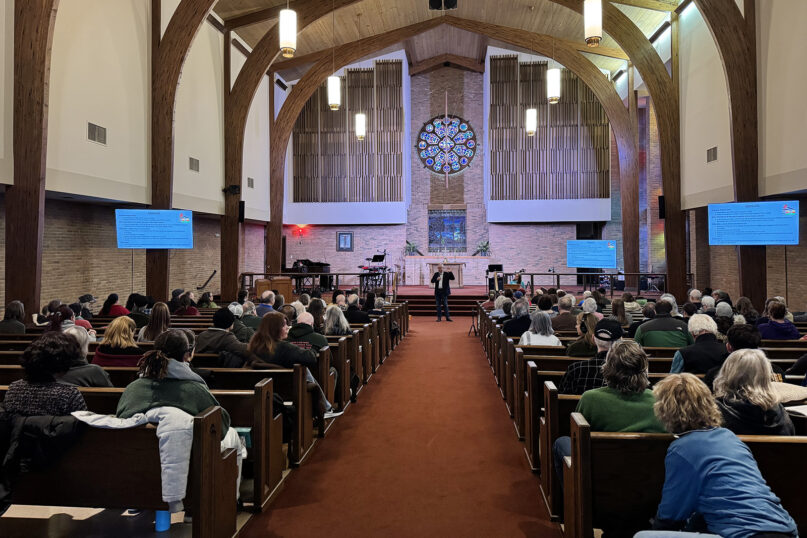
The Rev. Carl Ruby, center, speaks to trainees at Central Christian Church, Jan. 24, 2026, in Springfield, Ohio. (RNS photo/Kathryn Post)
In both Massachusetts and Ohio, churches are working with community members and interfaith networks to reduce the risk for Haitians. Last week, members of the Haitian Evangelical Pastors of New England took part in a Zoom meeting with Minnesota clergy who have been protesting ICE’s presence to learn how to avoid trouble with federal agents. The Minnesotans suggested taking down sensitive content from YouTube and Facebook, removing protest signs from church property and posting ushers at the door.
“We wanted to give clergy here a sense of not just what’s happening, but what may, frankly, be on our doorstep within a matter of days or weeks,” said Daphnis, who noted what they described was “unimaginable, not America.”
Locally, the LUCE Immigrant Justice Network of Massachusetts has provided crucial help in maintaining ties between individuals placed in ICE detention and their families, Daphnis said.Across the state, clergy have also organized through the Massachusetts Communities Action Network, an affiliate of the Faith in Action network. On January 23, the clergy group held a prayer rally at the State House to urge the governor to stand alongside Haitian TPS holders.
Daphnis said some undocumented immigrants and U.S. citizens alike have shared being afraid to leave their homes. At some churches, attendance has dropped as community members fear interactions with ICE agents, he said.
“While we’re not seeing ICE at church doors as of yet, we are certainly seeing the impact of the noise and the chatter in (the) community,” said Daphnis.
“The angst of this moment is about brown and Black people feeling targeted by an administration that deems us as negligible,” he said. “What I understand and know is that when the people of God come together and seek the face of the Lord, God shows up.”
This article was updated in paragraph 24 to correct an earlier version that incorrectly stated that the Massachusetts Communities Action Network and the LUCE Immigrant Justice Network of Massachusetts were partner organizations.