


Liberal Jews denounce bill to ban non-Orthodox prayers at Western Wall
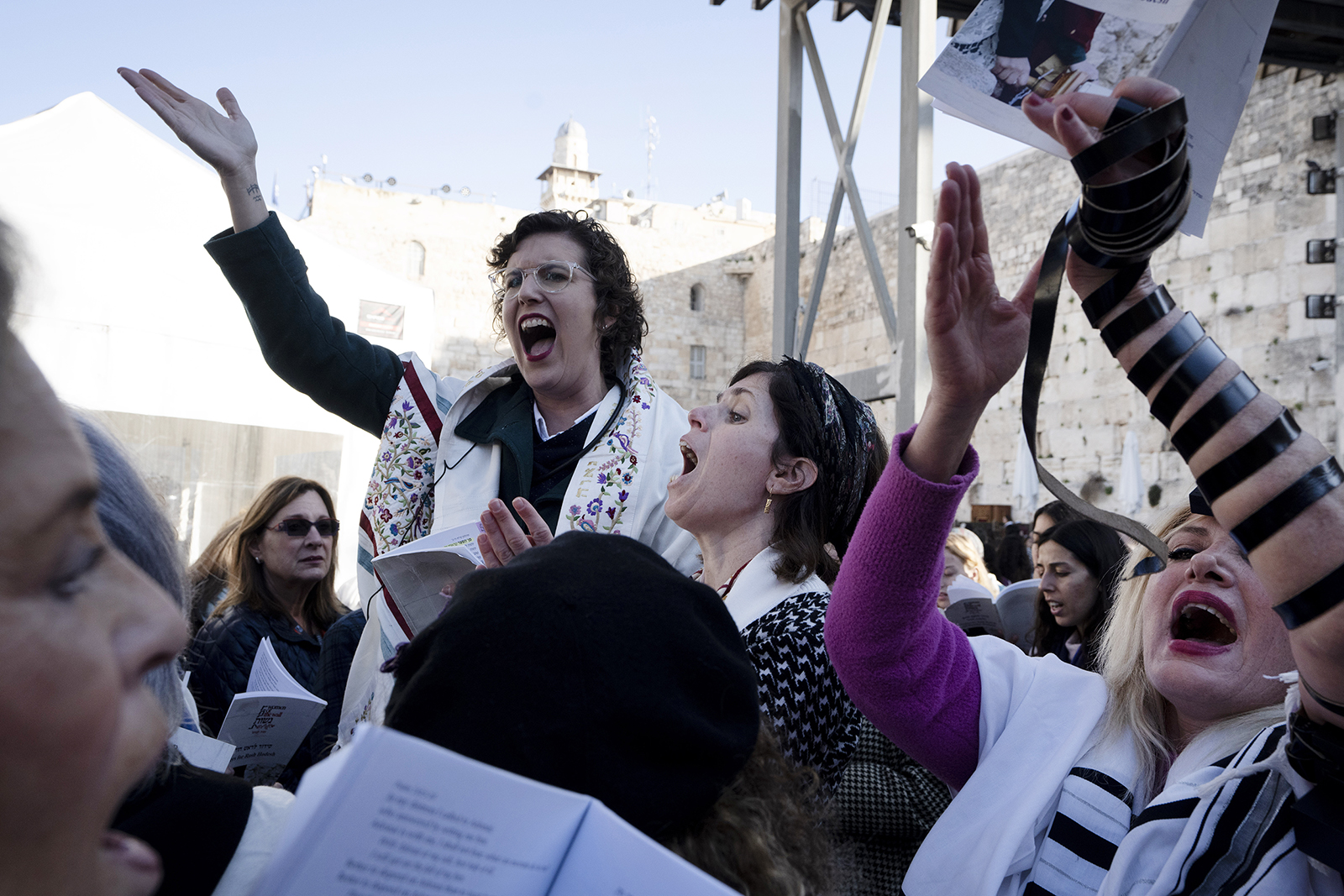


JERUSALEM (RNS) — The Israeli parliament’s decision to introduce legislation that would make it illegal to hold non-Orthodox and mixed-gender prayer in any part of the Western Wall complex has infuriated liberal Jews in Israel and the U.S.
Some Orthodox rabbis have also criticized the legislation, which passed the first of three readings by a margin of 56-47 on Wednesday (Feb. 25).
“This is a day that will be remembered as the moment the State sent a clear message to millions of Jews in Israel and around the world: you are not welcome in the Jewish people’s holiest site if your prayer does not align with the rabbinate’s interpretation,” the Women of the Wall women’s prayer group said in a statement.
If passed in the coming weeks or months, the controversial law would grant sole authority over the entire Western Wall complex to the Chief Rabbinate, an ultra-Orthodox governmental institution. Egalitarian prayer, women-led prayer and prayers with no gender segregation would all be banned, including in the southern section that has served as a non-Orthodox prayer space for decades.
Violators could face up to seven years in prison.
Although Prime Minister Benjamin Netanyahu recently nixed a reading of the bill because he knew it would anger Diaspora Jews, Avi Maoz, a member of Israel’s Knesset, had no such qualms. He introduced a “private member’s” bill that has received the support of several political parties.

A member of Women of the Wall, wearing tefillin, a cubic black leather box with leather straps, takes part in the Rosh Hodesh prayer marking the new month, at the Western Wall, the holiest site where Jews can pray, in the Old City of Jerusalem, Jan. 23, 2023. (AP Photo/Maya Alleruzzo)
The bill would amend an existing Protection of the Holy Places Law, which went into effect in 1967, soon after Israel captured East Jerusalem from Jordan. The Jordanian government denied Jews any access to the Wall during its rule from 1948-1967.
RELATED: Israeli settlers torch and deface a West Bank mosque during Ramadan
Although the main portion of the Western Wall, which is divided into separate sections for men and women, has long functioned as an Orthodox synagogue, the section known as Azarat Yisrael (formerly called Robinson’s Arch) has long been the unofficial place for liberal or non-Orthodox Jews to pray together.
Part of a tranquil archaeological garden, the Azaret Yisrael plaza provides access to the Wall without the bustle and crowds of the main plaza.
Yet it was not until 2016 that the government agreed to designate it as the official place for non-Orthodox prayer. Under the “Kotel Compromise,” the government agreed to fund, expand and upgrade the site and create a governance council that would include representatives from Women of the Wall and the Reform and Conservative movements. Netanyahu, who came up with the compromise in the first place, reneged on the agreement a year later, due to pressure from ultra-Orthodox political parties. Liberal Jews have continued to use the prayer space, despite the lack of implementation.
Last week, after the High Court ruled that the government must finally carry out the Kotel Compromise, Maoz introduced his bill. Supporters called the legislation a response to what they said was the court’s “overreach.”
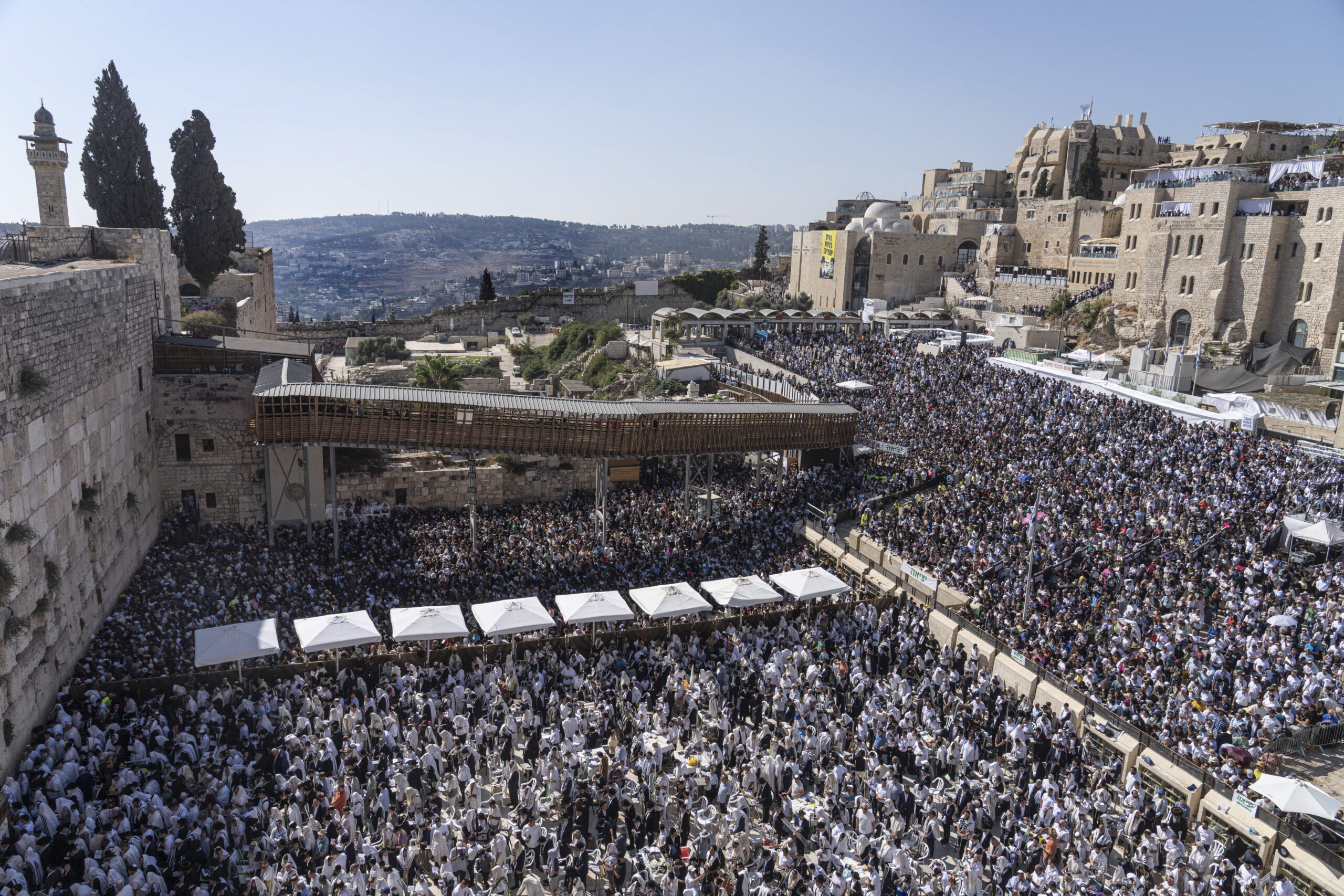
Jewish men pray as they attend a blessing ceremony during the Jewish holiday of Sukkot at the Western Wall in the Old City of Jerusalem, Oct. 12, 2022. (AP Photo/Tsafrir Abayov)
“The Knesset has told the High Court of Justice ‘Enough is enough,” Justice Minister Yariv Levin said after the preliminary vote. “I call for the completion of the legislative process in order to put an end to the High Court’s intervention in the management of the Western Wall.”
In Israel, where the rabbis and institutions of the Reform and Conservative streams have never been recognized or funded by the government, liberal Jews said the legislation is a new low.
Gilad Kariv, a Reform rabbi who also serves as member of parliament, urged Israeli and Diaspora Jews to do everything possible to thwart the bill. Several organizations have co-sponsored a petition to do just that.
“We will fight this extremist law with all our strength, together with the majority of the secular and traditional Israeli public and with the majority of Jews around the world,” Kariv said. “We will not allow Avi Maoz and Benjamin Netanyahu to spit in the faces of our brothers and sisters around the world, who at a time when they are confronting an unprecedented wave of antisemitism are being stabbed in the back by the government and the coalition.”
Rabbi Rick Jacobs, president of the Union for Reform Judaism in New York, said he could not believe that the Knesset passed the bill in its first reading.
“It literally criminalizes non-Orthodox prayer,” Jacobs said. “If I pray at Azarat Yisrael, I risk going to prison for seven years for singing with my family on a congregational tour or a Birthright trip. It’s unimaginable that this is being contemplated. It’s beyond shocking.”

The Western Wall, top left, and Robinson’s Arch, right, with the Azarat Yisrael Plaza prayer platform, center left with white umbrellas, in Jerusalem. (Photo courtesy of Wikimedia/Creative Commons)
Rabbi Ada Zavidov, the rabbi of Kehilat Har-El, the oldest Reform synagogue in Israel, has helped hundreds of non-Orthodox children from Israel and abroad celebrate their bar mitzvahs or bat mitzvahs at Azarat Yisrael. If the bill passes, she said, non-Orthodox children will no longer be welcome at Judaism’s second holiest site.
“This is awful,” she said. “The (main) Wall is essentially an ultra-Orthodox synagogue, even though it is meant to belong to the whole Jewish people: ultra-Orthodox, Conservative, Reform, secular. We have only the southern wall.”
In a Times of Israel blog post, Rabbi Jeffrey Woolf, an Orthodox rabbi and Talmud scholar, defended the designation of Azarat Yisrael as a non-Orthodox prayer space. He said the bill shows “incredible ineptitude, cruelty and obtuseness” toward liberal Jews and effectively says: “We don’t want you.”

A Jewish woman wears a prayer shawl as she prays during the Jewish holiday of Passover in front of the Western Wall, the holiest site where Jews can pray, in Jerusalem’s Old City, on April 24, 2016. (AP Photo/Ariel Schalit)
Putting the Wall under the Chief Rabbinate’s jurisdiction could also spell the end of civil events currently held at the Western Wall Plaza, including the swearing-in of new soldiers and Jerusalem Day celebrations.
Rabbi Kenneth Brander, an Orthodox rabbi who heads the Ohr Torah Stone educational network in Israel, suggested in an editorial in eJewishPhilanthropy that Conservative and Reform Jews “deserve their own sacred space.”
RELATED: Two new DC congregations cater to Black Jews