


'They have already suffered enough': Central African clergy respond to US deportation
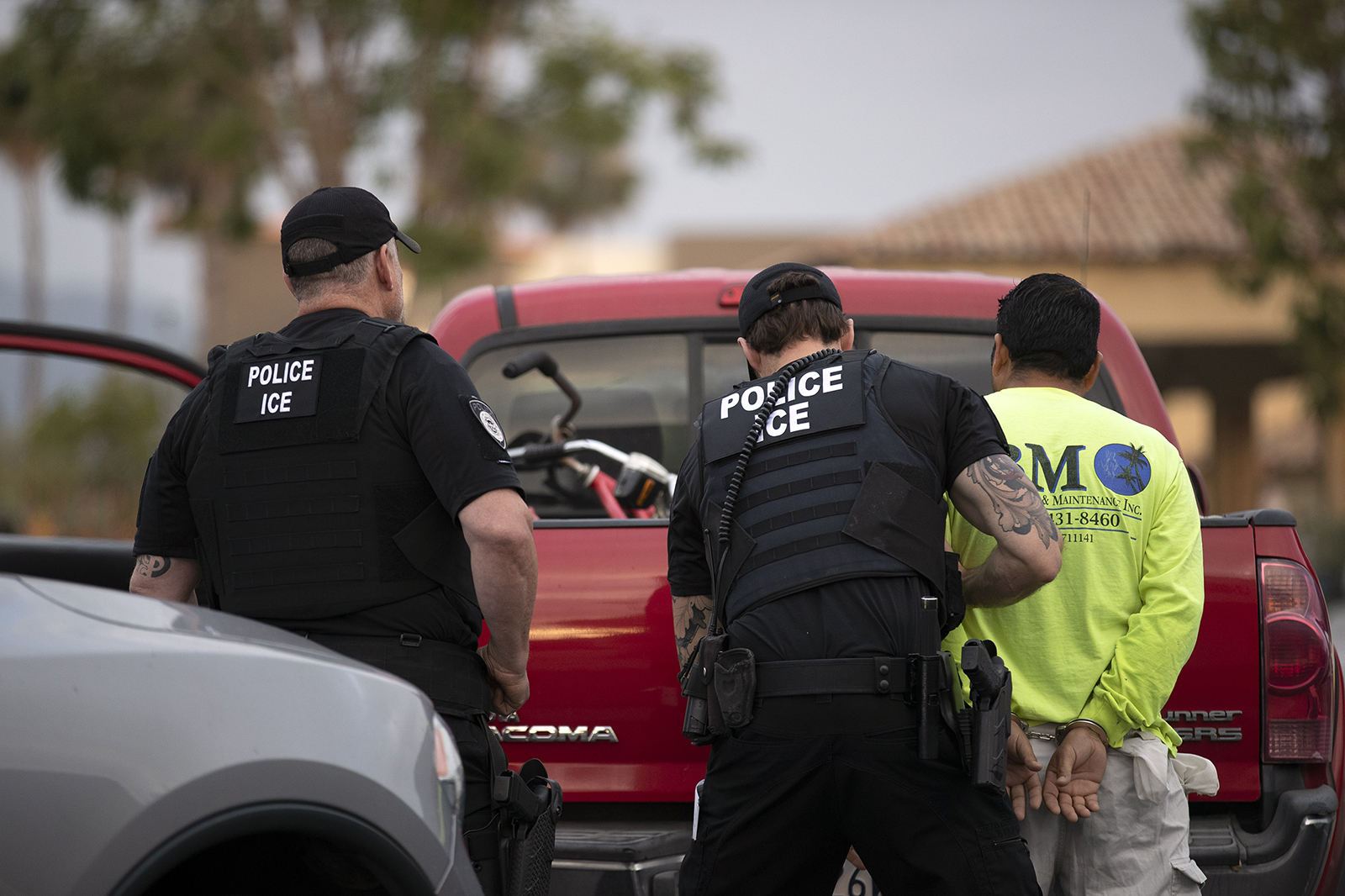


NAIROBI, Kenya (RNS) — Religious leaders in the Central African Republic say they were stunned by the arrival Friday (June 12) of migrants deported from the United States to their country without cultural or familial ties, questioning why people who fled religious and political persecution were sent to a nation still grappling with its own history of sectarian violence and instability.
The U.S. government flew at least two dozen migrants from countries including Iran, Afghanistan, Turkey, Armenia and Georgia to Bangui, the Central African Republic’s capital, as part of the Trump administration’s third-country deportation agreements with several African and Latin American countries.
Human rights groups and immigration lawyers say several of those deported had established credible fears of persecution in their home countries, including torture, imprisonment and death. Among them were Christian converts at risk and at least one Iranian pro-democracy activist who could face severe punishment if returned to Iran for her political activity and religious beliefs.
“I was surprised to hear that migrants who fled persecution in their own countries had been deported to ours,” Jean Ngaba, an evangelical pastor in southern Central African Republic, told Religion News Service.
Some of the deportees had been granted withholding of removal, a legal protection preventing their deportation to their countries of origin because of the risk of persecution. Rather than being returned home, they were transferred to the Central African Republic under a bilateral agreement between Washington and Bangui. Advocacy groups have expressed concern that the migrants could face onward refoulement, meaning they could eventually be sent back to the countries they originally fled.
In particular, the Iranian American Legal Defense Fund has warned that deporting Iranians to the Central African Republic is potentially fatal, pointing to close ties between the African country and Moscow, a key ally of Iran.
“The Central African Republic is poor and still trying to heal after years of conflict between Christians and Muslims,” said Ngaba, who works on local grassroots peace and reconciliation initiatives. “It is inhumane for any government to do this to people who have already suffered because of their beliefs or political views.”
So far, no church, mosque or faith-based charity has been formally tasked with receiving the deportees, although religious leaders interviewed by RNS said they would be willing to help if asked.
“As religious leaders, we are ready to assist them if we are called upon or if we meet them,” said Ngaba.
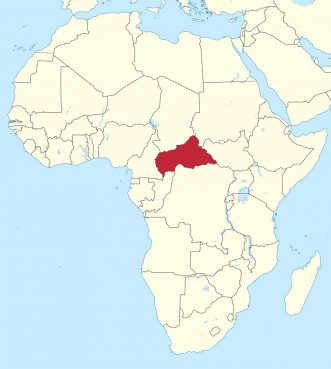
Central African Republic, red, in central Africa. Image courtesy of Creative Commons
According to immigration advocates and officials familiar with the operation, the deportees are being temporarily housed in apartments in Bangui while authorities determine their next steps. Their long-term future remains uncertain, and the Central African government has not publicly clarified whether they will remain in the country or eventually seek asylum elsewhere. The International Organization for Migration is providing post-arrival humanitarian assistance at the request of the Central African government but has stressed that it is not involved in the U.S. deportation process itself.
Cardinal Dieudonné Nzapalainga, the Catholic archbishop of Bangui and an internationally recognized advocate for interfaith peace, said he was aware of the arrivals but was still gathering information about the situation. The cardinal said the Catholic Church would be willing to assist the migrants if called upon, reflecting the church’s commitment to helping people in need.
Muslim leaders have also voiced concern over the deportations.
Cleric Moussa Ibrahim, a Bangui-based Muslim leader who has worked to promote peace and reconciliation, said many of the deportees had escaped religious persecution only to arrive in a country with its own complex history of sectarian tensions.
“Most of these people escaped persecution because of their beliefs,” Ibrahim said. “But here in the Central African Republic, we have a long history of religious violence because of conflict and weak state authority. Muslims have fought Christians and Christians have fought Muslims.”
For more than a decade, the country has experienced repeated cycles of violence involving the predominantly Muslim Séléka coalition and the largely Christian and animist Anti-Balaka militias. Although a ceasefire reached in late 2025 reduced large-scale fighting, insecurity remains a challenge in parts of the country where armed groups continue to operate. According to the Open Doors World Watch List 2026, the Central African Republic remains among countries where Christians face significant persecution, particularly in areas where government control is weak.
Ibrahim questioned how the migrants would rebuild their lives in a country facing enormous economic and social challenges.
“How are they going to survive here?” he asked. “Will they stay temporarily or eventually move somewhere else? These are the questions we are asking as religious leaders because opportunities are limited, and the environment can be difficult for both Christians and Muslims, especially for people who have converted from one faith to another.”
The arrival of the deportees has also raised broader humanitarian questions in the Central African Republic, where many communities continue to struggle with poverty, displacement and the lingering effects of conflict.
While the long-term future of the deportees remains uncertain, Ngaba said people of faith have a responsibility to welcome those who have lost their homes and communities.
“They have already suffered enough,” Ngaba said. “If they come to us, we will welcome them because that is what our faith teaches us. Before they are migrants or deportees, they are human beings, and every human being deserves compassion and dignity.”