


War is 'never blessed by God,' says Pope Leo in opening cardinals summit
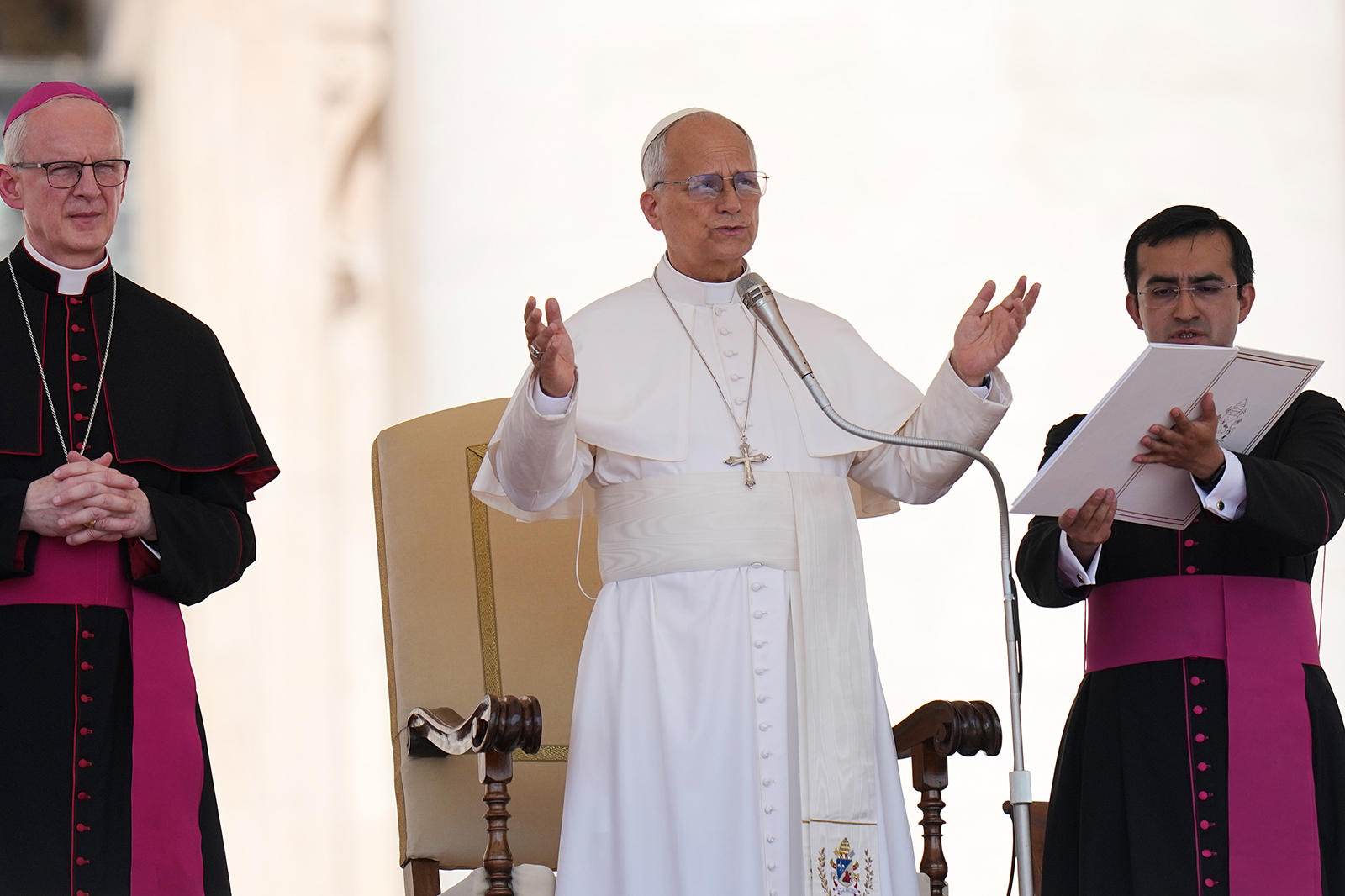


VATICAN CITY (RNS) — Pope Leo XIV opened his summit of cardinals at the Vatican on Friday (June 26) by appealing to unity within the church, which he said is called to build a “civilization of love” amid rising conflicts and ongoing wars around the world.
“War is never worthy of humanity, and it is never blessed by God, because even if we are equipped with high-tech weapons, the Creator has endowed us with intelligence and free will to resolve conflicts as human beings and not as beasts,” the pope said in his homily at Mass, which he celebrated with the cardinals in St. Peter’s Basilica.
Cardinals from all over the world — a total of 178 — are gathering at the Vatican from June 26-27 for what’s known as an extraordinary consistory, a gathering meant to address how the church can promote peace in the world and unity in its ranks.
Leo drew from the day’s reading to remind the prelates to “share in the true freedom of faith,” which allows the church to engage in a world where “international tensions and conflicts seriously wound the human family.” But the pope also recognized the many examples of good, rooted in justice and respect for human dignity, that occur in the church and in the world.
“That the unity of the human family takes precedence over individual peoples and states is not merely a biological fact; it is an ethical principle,” Leo said, adding that “peace is a duty of justice because we are one human family.”
The pope reflected on the words of his predecessor, Saint Paul VI, who first adopted the phrase “a civilization of love” as an antidote to the arms race and economic instability of the Cold War. For Leo, the church offered an “alternative path” at the time that remains relevant today.
Drawing from what have emerged as the key themes of this young pontificate, peace and unity, Leo emphasized that he envisions his role as pope as a service made in collaboration with the College of Cardinals. He renewed the promise made to the cardinals the day after his election to rule the church alongside them.
“In helping me in the exercise of the Petrine ministry, you will find in me one who asks, not commands,” Leo said, adding that “the authority of primacy belongs to the one who listens and only then leads, to the one who learns and only then teaches,” in light of Jesus’ teaching.
The pope homed in on these themes again during his opening speech to the cardinals at the Paul VI Audience Hall at the Vatican before the first session of the consistory. He recognized that many of the cardinals “come from lands marked by war, violence and social or religious polarization,” inviting them to share their reflections and experiences.
Leo called on the cardinals to help build the common good through synodality, or the collaboration of the full Catholic Church. “Synodality is not, first of all, a set of procedures. As I have said several times, synodality is an attitude, an openness, a willingness to understand,” he said.
Pope Francis launched a major consultation of Catholics all over the world in 2021, asking faithful to share their concerns, demands and hopes for the church. The “Synod on Synodality” concluded with two major summits in Rome in 2023 and 2024. Some of its themes, including the broader inclusion of women and LGBTQ+ Catholics in the church, were the center of heated debates among clergy and lay Catholics.
While some have criticized synodality as weakening clergy in favor of lay people, Leo said, “in reality, it helps us understand more deeply the meaning of authority itself, which exists to safeguard Communion, foster the participation of all and guide the common path of the church.”
Pope Leo also met with bishops representing all continents on Friday, during which he gave a “powerful sign of support and encouragement” to the synodal process, according to a press release from the Vatican synod office. The meeting was a part of a three-year implementation phase of the synod, seeking concrete ways to promote dialogue and inclusion in the church, which will result in an October 2028 assembly at the Vatican.
The pope concluded his opening remarks by repeating his desire to lead the church with the help of the cardinals. “The ministry the Lord has entrusted to me cannot be lived alone,” he said, adding that he asks the prelates to share their wisdom, knowledge and discernment of what is happening in the world.
“I need your support: strong, explicit and public. I need to feel supported by you as brothers,” Leo said.
Cardinal Luis José Rueda Aparicio, who moderated the first session, assured the pope of the cardinals’ “support, offered with faith, joy and willingness,” according to a statement by the Vatican.
In their reflections following the first session, the cardinals stated that their communities report “growing polarization” due to fake news and lack of communication, the statement read. The cardinals also noted “that violence is increasingly used as a means of resolving disputes, leading to personal antagonism, aggression and, at the international level, wars and conflicts.”
From loneliness to a sense of disillusionment toward democratic institutions and the future, cardinals offered a grim portrait of today’s “inability to recognize otherness and to build relationships,” according to the Vatican statement. They highlighted numerous religious freedom violations, rising antisemitism, the need to address migration and the ecological crisis.
The statement added that the cardinals said that the church must “show herself as a mother and a welcoming place” and that a vacuum of trustworthy moral voices in the world calls the church to “find the credibility lacking in other institutions,” especially by being close to those who suffer.