


Texas should ask not whether to require Bible reading in schools — but why
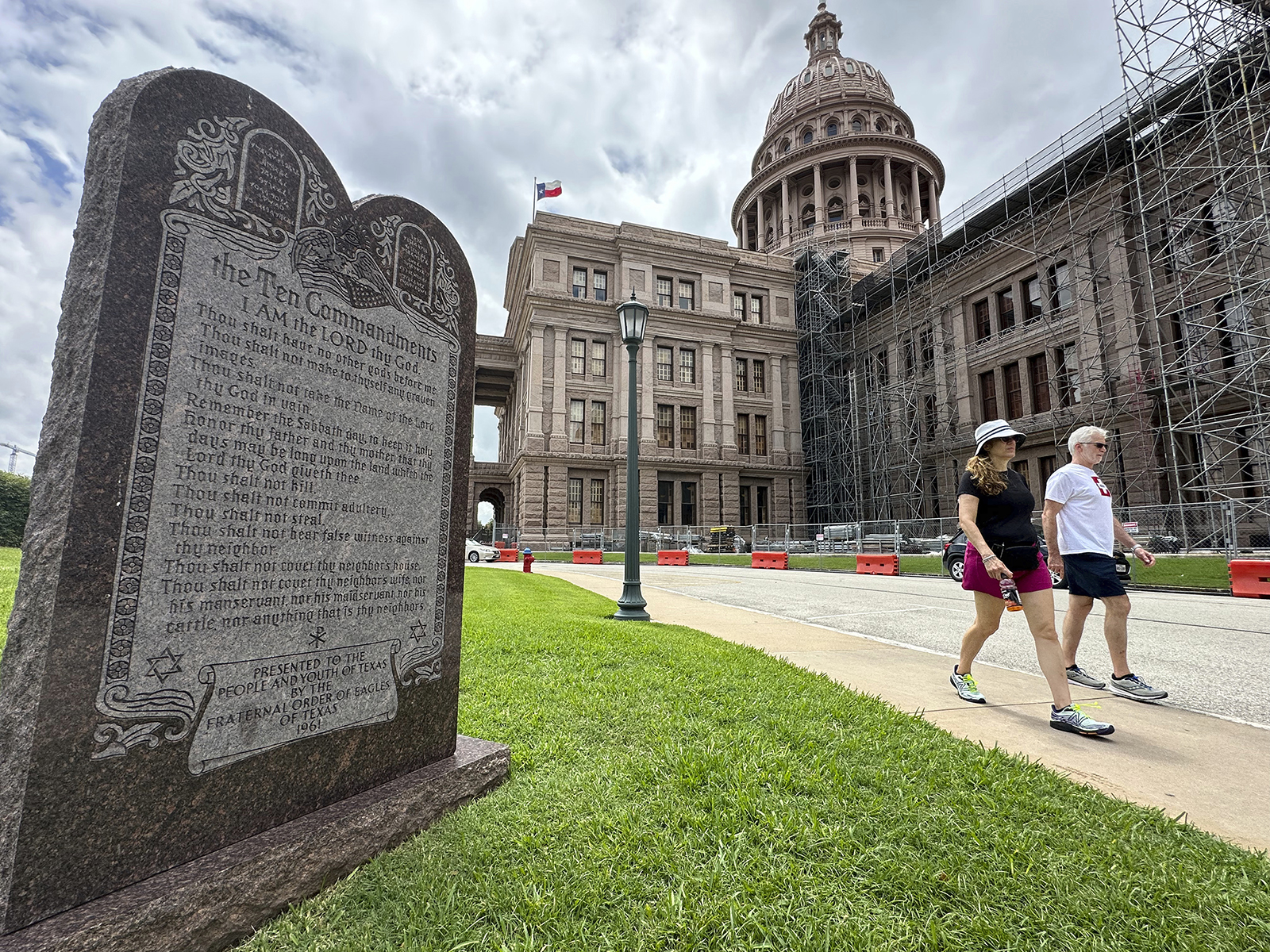


(RNS) — Last week, the Texas State Board of Education approved a mandatory reading list for its public schools. The change making the most headlines is the new curriculum requirement for Language Arts that includes Bible stories and passages from the Bible. Countless Christians (and others) are now weighing in on whether or not the Bible should be required reading in public schools given the pluralistic character of our nation.
Whether or not the Bible should be required reading in public schools isn’t the right question, however. Nor is it the most pressing one for Christians.
What texts are taught (and what ones are excluded) is an important matter, of course. So, too, is the separate matter of the qualifications of the teachers who teach the material. But a teacher who is qualified to teach Dr. Suess or Shakespeare is just as qualified (or not) to teach the Bible as literature.
Reading lists — whether such lists pertain to required, recommended or removed texts — are perennially controversial. Any core curriculum by its very nature creates a tension between two competing goods: cultivating a communal body of knowledge and giving freedom to teachers, classrooms and schools to teach most effectively in their own contexts. This tension exists in public schools, private schools and college classrooms. These questions are part of the bigger picture but still don’t point us to the more important questions.
The right question isn’t whether the Bible should be required, but why it is.
If the purpose is to teach students to read rich literary texts to better equip them to understand and appreciate literary and cultural traditions, then teaching key passages from the Bible is an excellent idea.
As many have rightly argued over the years, one can hardly understand world history and literature without a passing knowledge of it. Perhaps no one has expressed this truth more eloquently than novelist Marilynne Robinson did in her 2011 essay in The New York Times titled, “The Book of Books: What Literature Owes the Bible.” Robinson writes, “The Bible is the model for and subject of more art and thought than those of us who live within its influence, consciously or unconsciously, will ever know. Literatures are self-referential by nature, and even when references to Scripture in contemporary fiction and poetry are no more than ornamental or rhetorical — indeed, even when they are unintentional — they are still a natural consequence of the persistence of a powerful literary tradition.”
If this is the reason, then let the schools teach the Bible.
Also let them teach the Tao Te Ching. Let them teach Shakespeare and Dickens. Let them teach Frederick Douglass and Anne Bradstreet. Let them teach Judy Blume, S.E. Hinton, Alex Haley, Mark Twain and Toni Morrison. Let them teach Paulo Coelho, Ray Bradbury, Langston Hughes and Emily Dickinson. Let them teach as many great, good and fun literary texts as the school days allow. (On that point, I do wish the Texas Board of Education had left Margaret Thatcher and the Federalist Papers for the history and government curricula to leave more space in the language arts requirements.)
If, however, the motivation for requiring the Bible in public school classrooms is something other than offering a sound education in literature, language and culture — if the motivation is something that is rooted in an attempt to elevate one religion over another or if it is merely a ham-fisted attempt to advance a Christian nationalist agenda — then Christians seeking to follow the way of Jesus ought to be wary.
The Bible is sacred. It is powerful, and its power is to be used in our own lives as Christians against our own sin and that of the church, not wielded against other citizens in wars of our own making.
From my vantage point, which is far from Texas and Texas politics, I don’t know what the motivation for the new requirement is. Ultimately, the fruit the new requirements bear will be telling.
This leads to the other matter that raises more important questions than whether or not readings from the Bible should be required in school. This is the matter of whether or not people can read at all.
Illiteracy in America is, according to some analysis, at a crisis point. Widely cited data shows that America is facing the highest rates of adult illiteracy in over 150 years. The National Literacy Institute reports the following:
- On average, 79% of U.S. adults nationwide are literate in 2024.
- 21% of adults in the U.S. are illiterate in 2024.
- 54% of adults have a literacy below a sixth-grade level (20% are below fifth-grade level).
- Low levels of literacy cost the U.S. up to 2.2 trillion per year.
It’s important to note that the vast majority of illiterate adults in America (about two-thirds) were born here.
Why is illiteracy a Christian concern?
As Tony Kriz and Jeff Martin argue compellingly in their book, “Read: How God’s People Can Bring Justice through Literacy,” doing all we can to teach basic literacy is a way of loving our neighbors. The documentary film “Sentenced,” produced by the Children’s Literacy Project and a companion film to this book, conveys powerfully the profound and lasting effects of illiteracy not only on individual lives but on the rest of society. Illiteracy is linked to generational poverty, disproportionate rates of imprisonment, higher rates of teen pregnancy, under-education and under-employment. Human flourishing in the modern world requires literacy, and doing all we can to cultivate literacy is a powerful and far-reaching way to love our neighbors as ourselves.
For a longer view of what it means to live in a post-literate world, one need only read Neil Postman’s classic text, “Amusing Ourselves to Death: Public Discourse in the Age of Show Business.” Published nearly four decades ago, the book predicted what kind of culture we would have today because we were then and are still becoming a people who have ceased to read.
Because Christians are people of the Word, no one more than Christians should understand how crucial reading is to learn more about a God whose very name is “the Word” (John 1:1) and who reveals himself through his written and inspired word in part to help us understand his purpose for our lives.
Not only this, but Christians are by definition a people of hope. We can hope because we have read the end of the story.
This hope confirms one approach to illiteracy described in “America Is Sliding Toward Illiteracy,” published last year in the Atlantic. The article explains that decreased learning and increased illiteracy over the past 10 years or more are owed, in part, to lowered expectations: “In short, schools have demanded less and less from students — who have responded, predictably, by giving less and less.”
Requiring Bible readings alone isn’t an increase in expectations. But teaching students to read many rich literary texts well — in and of itself — just might be.