




Empower Women Media’s 8th annual Religious Freedom Film Competition highlights women’s voices promoting freedom of religion or belief through storytelling.
LOS ANGELES — Empower Women Media announced the winners of its eighth annual Religious Freedom Film Competition, recognizing women filmmakers whose compelling short films explore freedom of religion or belief (FoRB), women’s empowerment, and peaceful coexistence across faith communities.
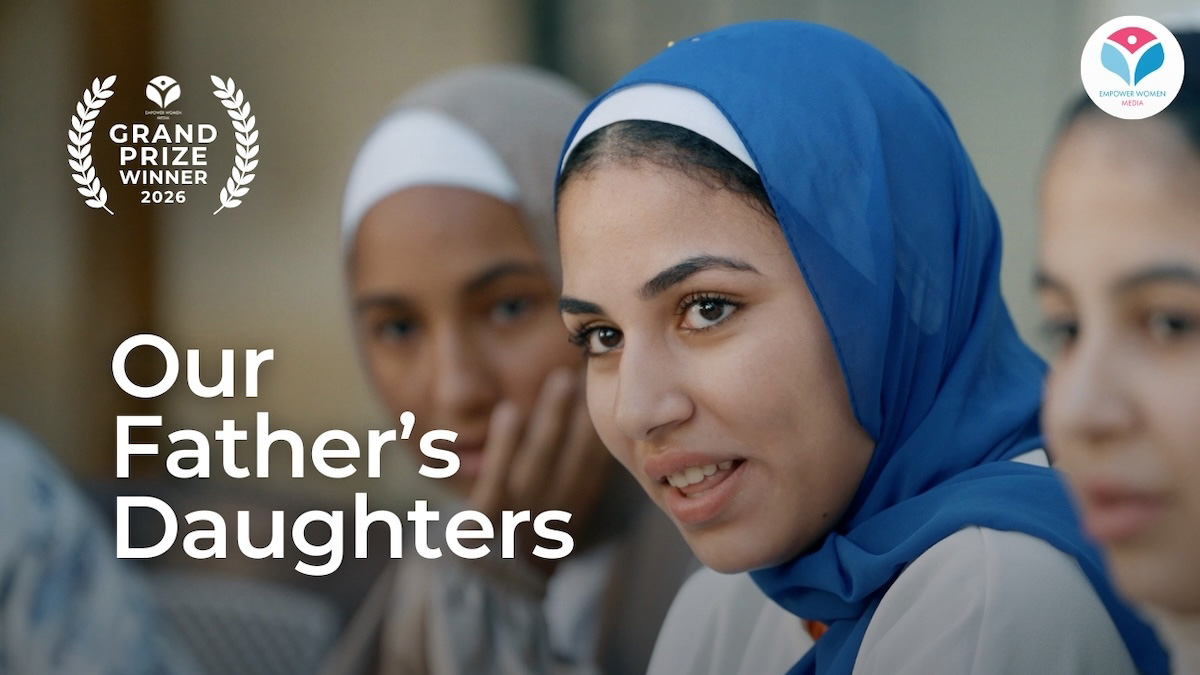
The 2026 Grand Prize was awarded to Egyptian filmmaker Rasha Azia for Our Father’s Daughters. Don’t Look Away by Maryam Farahzadi (Iran/U.S.) received First Runner-Up, while Just a Human by Cherry Ramsis and Suzy Fawzy (Egypt) earned Second Runner-Up.
The Grand Prize includes a $3,000 award, with $1,500 presented to the First Runner-Up and $500 to the Second Runner-Up.
The competition features films created by women participating in Empower Women Media’s Middle East Fellowship. Over several months, fellows from Egypt, Iran, Pakistan, Israel, Cyprus, Morocco, Syria, and other countries studied freedom of religion or belief, explored the role of storytelling in advancing human dignity, and received professional training in documentary filmmaking.
Grand Prize winner Our Father’s Daughters examines the continued practice of female genital mutilation (FGM) in parts of Upper Egypt, where misinformation, longstanding cultural traditions, and social pressures perpetuate the practice despite having no authentic religious basis.
Don’t Look Away chronicles Iran’s 2025–2026 uprising, following the journey from the streets of Tehran through war and political upheaval to a freedom that remains elusive, while calling on the international community not to turn away.
Just a Human tells the story of a young job applicant who lists his religion simply as “Human,” sparking a deeply personal journey through identity, memory, and the search for dignity beyond religious labels.
“Stories have the power to overcome fear, challenge prejudice, and build understanding across religious and cultural divides,” said Shirin Taber, founder and director of Empower Women Media. “These filmmakers are giving voice to women whose experiences are too often ignored, demonstrating how freedom of religion or belief is essential to human dignity and peaceful societies.”
Five additional films received Global Peacebuilder Awards:
- Faith Without Fear: Voices of Hope — Wagma Feroz (Pakistan)
- The Faith That Draws Near — Elana Sztokman (Israel)
- Barefoot: A March for Peace — Deborah Paul (United Kingdom)
- Mariam’s Veil — Maggie Morgan (Cyprus)
- Chama’s Story — Hayvi Bouzo (Syria/U.S.) and Galith Benichou (Morocco/France)
A distinguished panel of judges evaluated this year’s entries, including Nadine Maenza, former chair of the United States Commission on International Religious Freedom (USCIRF); Jeremy Barker of the Religious Freedom Institute; Yosra El Gendi of the FoRB Learning Platform; Liora Kern, CEO of The Think Room; and other internationally recognized advocates for religious freedom.
“The overall quality of the films has been improving over the years, and the entries are from a wider range of countries,” said judge Paul Marshall, senior fellow at the Hudson Institute’s Center for Religious Freedom.
Competition judge Danny Hakim, founder of Women Champions for Change, added, “The stories are moving, thoughtful, and powerful, and it is inspiring to see the creativity and courage of the women filmmakers.”
The winning films will be screened this fall at international film festivals, as well as before civil society, policy, NGO and faith leaders.
To learn more about the filmmakers, view the award-winning films, or inquire about upcoming screenings, visit www.empowerwomen.media, or contact Shirin Taber at [email protected].
Empower Women Media is a multi-faith network that inspires, equips and mobilizes leaders to support human rights and religious freedom (UDHR, Article 18). Through media, education and leadership initiatives, we seek to support everyone’s human right to live what they believe.
###
Disclaimer: The views and opinions expressed in this article are those of the authors and do not necessarily reflect the official policy or position of RNS or Religion News Foundation.