


In a Tisha B'Av reversal, these American Jews grieve for destruction of Palestinian lives
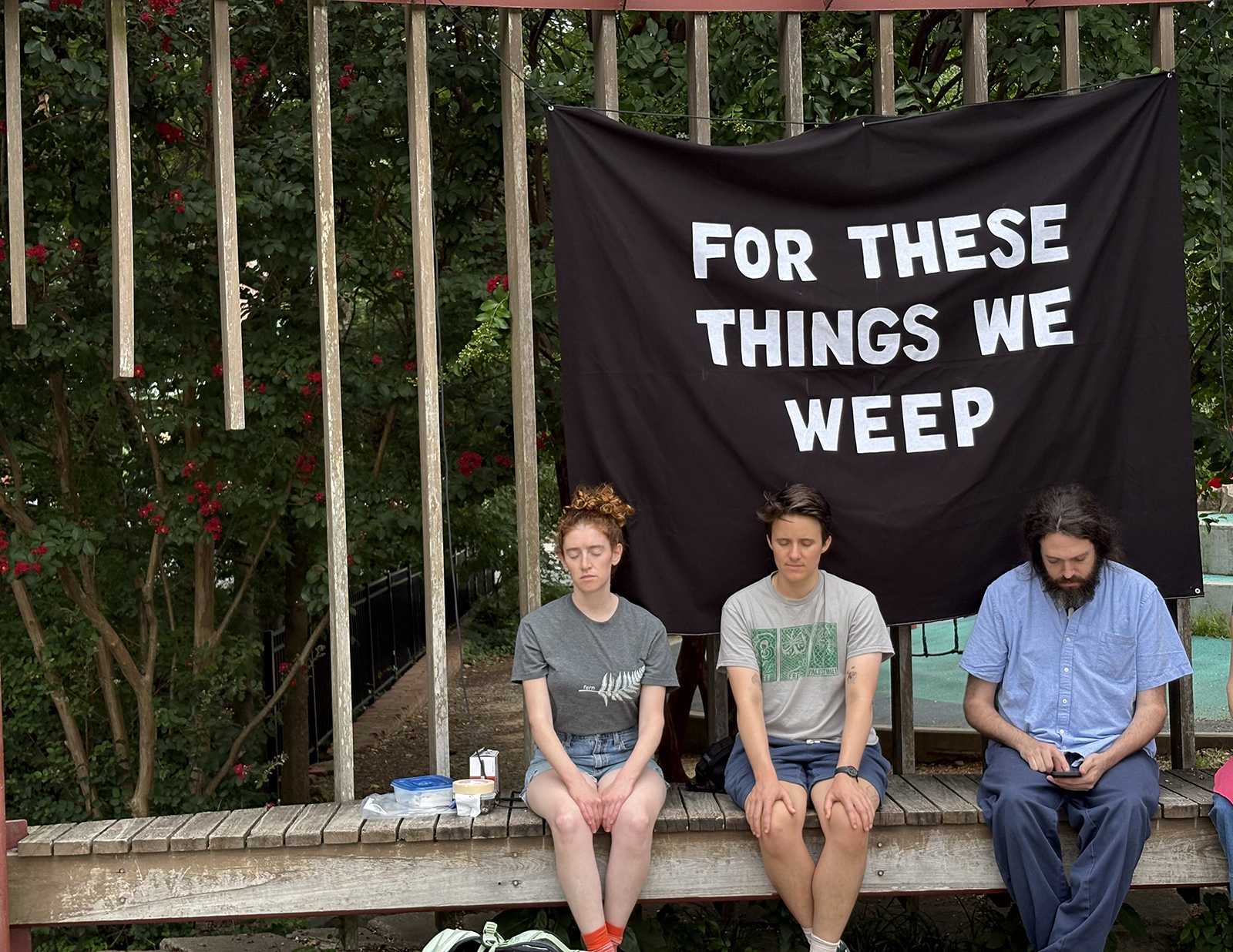


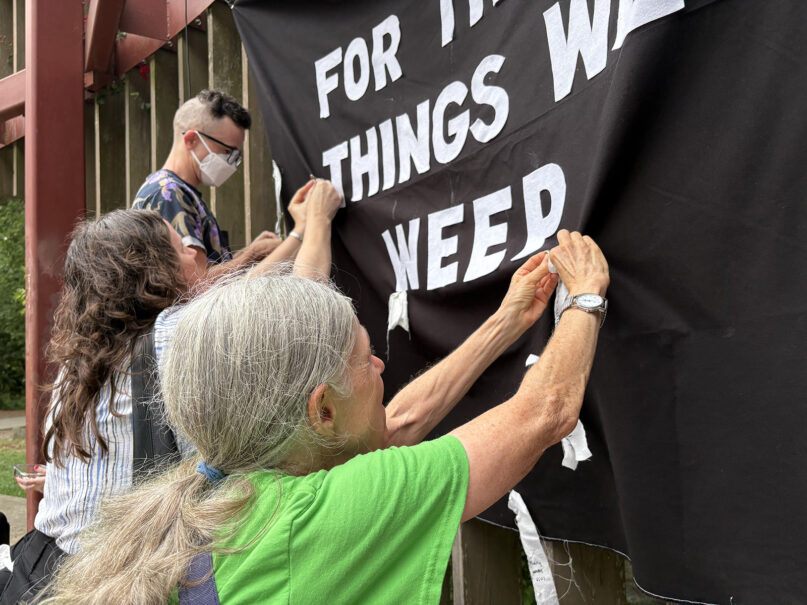
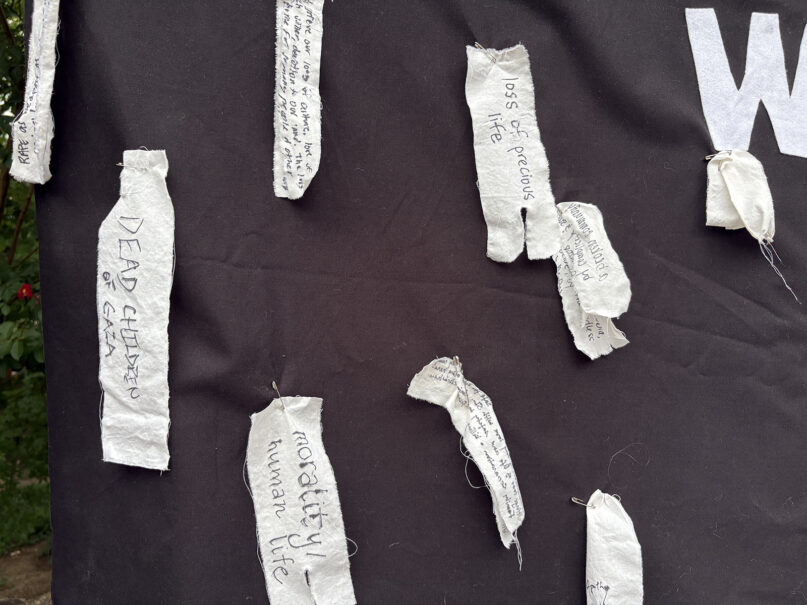
DURHAM, N.C. (RNS) — A group of 40 Jews gathered in a public park under cloudy skies on Wednesday (July 22) and wrote on scraps of white cloth the things they were grieving for this Tisha B’Av:
Dead children of Gaza
Loss of precious life
Apathy in the face of destruction
Loss of imagined future
When they finished, they ripped the cloth, a Jewish mourning custom, and pinned it to a black banner with the words “For These Things We Weep” (a phrase from the biblical book of Lamentations).
Over the past three years, Tisha B’Av, the traditional day of mourning for the destruction of the first and second Jerusalem temples, has become an occasion among some on the left to lament not what was done to Jews (first by the Babylonians and, centuries later, the Romans), but what the state of Israel has done to Palestinians since the Oct. 7, 2023, Hamas attack on Israel.
“Today in 2026, we weave into this day of lamentation the ongoing destruction of Palestinian life by Israel,” said Rabbi Salem Pearce, a Durham-based rabbi who is a member of Rabbis for Ceasefire, a nonprofit group founded in 2023 to protest Israel’s retaliation in Gaza.
“A history of destruction and tragedy leads us to rise in solidarity with Palestinians facing violence by the Israeli military, and Tisha B’Av reminds us of the inviolable dignity of all human life,” she continued, speaking to the gathered crowd.
RELATED: As Jews mark Tisha B’Av, ancient mourning rituals make room for modern grief
Seven cities across the country — including Boston, Chicago, Denver, Kansas City, Philadelphia and Seattle — held similar public rituals to mark the Jewish day of mourning. It was the third year that Rabbis for Ceasefire had organized such an event. In Durham, it was cosponsored by the local chapter of Jewish Voice for Peace and Makom, an anti-Zionist congregation.
This is not the first time Tisha B’Av has been stretched to mark other historical tragedies. In past years, Jewish activists have also held public rituals on Tisha B’Av to mark the Holocaust and, more recently, the deaths of 1,200 Israeli residents who died at the hands of Hamas on Oct. 7, 2023.
But it is a reversal of sorts to use Tisha B’Av to mark tragedies inflicted on other people by Jews. The war in Gaza, which the Durham group called both a genocide and an ethnic cleansing, has angered and mobilized the Jewish left — and divided American Jews.
Polls show half of American Jews say Israel’s ongoing military operations in Gaza are unjustified. They don’t like Israeli Prime Minister Benjamin Netanyahu, with roughly 6 in 10 viewing him very or somewhat unfavorably, according to an AP/NORC poll. But they also fear that criticism of of Israel — such as that recently expressed by New York Mayor Zohran Mamdani in a video calling Netanyahu a war criminal — makes them feel unsafe as Jews.
Those at Wednesday’s Tisha B’Av in Durham said they felt morally compelled as Jews to respond to Israel’s actions in Gaza and elsewhere.
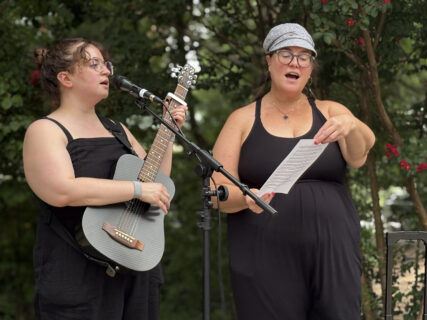
Rabbi Salem Pearce, right, and Eiiana Light, a songwriter and educator, led a Tisha B’Av ritual in a Durham, North Carolina, park Wednesday, July 22, to grieve Israel’s destruction of Palestinian lives. (RNS photo/Yonat Shimron)
Beth Bruch, one of the organizers of the Tisha B’Av ritual, related that her grandparents were able to escape Nazi Germany and settled in Illinois, while so many others Jews died in Europe.
“I just wish that more people had spoken up for my ancestors back then,” said Bruch, a 53-year-old school librarian. “How could I not speak up for people now?”
As an American Jew, she said she feels implicated in a war that has killed 73,000 Palestinians in Gaza, according to the Gaza Health Ministry, many with U.S.-made bombs.
“Our calendar gives us times to actually feel our grief, and I think it’s especially important given our complicity as Americans in what’s going on in Palestine,” Bruch said. “It’s my tax dollars that are funding the weapons, the war, the bombs that are being used to kill so many children, adults, elders in Gaza and the West Bank, even since the ceasefire.”
Grieving the destruction of Gaza is not just a political act, it is also part of the Jewish tradition of “teshuva” or repentance, those gathered for the ritual were reminded. Tisha B’Av, which concluded Thursday, is a bridge into the month of Elul, the final month of the Jewish year, a period of spiritual introspection leading up to the High Holidays with their theme of repentance.
“Even as the bombs fall, we are called to begin our teshuva, the path to sacred repair,” Pearce told participants.
She then led the chanting in Hebrew from the Book of Lamentations, which is traditionally sung with each verse beginning in a major key and descending into a minor key to evoke a sense of grief. A musician led two songs.
Kasey Kinsella, a 33 year-old performing artist who helped plan Wednesday’s liturgy but could not attend, said she believed such rituals are critical to helping Jews share their grief collectively.
“These grief rituals like this one is an opportunity to really come together and feel the emotions distributed to more than just ourselves,” she said. And critically, she added, such rituals can lead to more action.
RELATED: Takeaways from the AP-NORC poll of more than 1,000 Jewish Americans