


Explaining away the pope
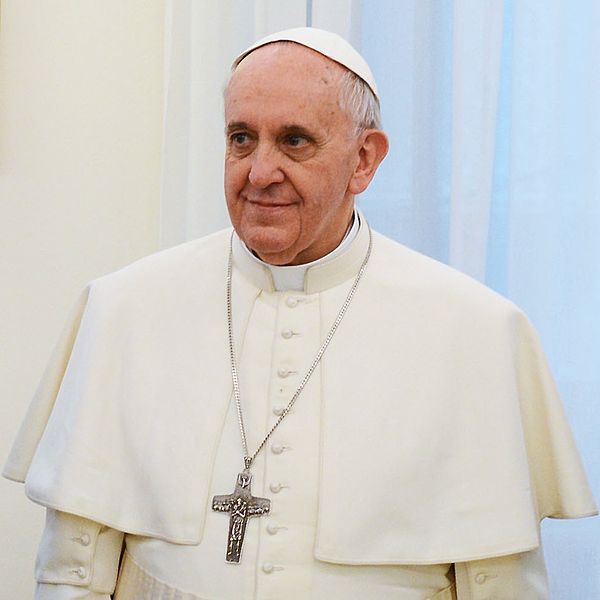


http://en.wikipedia.org/wiki/File:Pope_Francis_in_March_2013.jpg
Michael Sean Winters put up a good post today critiquing conservative Catholics for downplaying the significance of Pope Francis’ “Who am I to judge” remark about gays. In particular he singled out San Francisco Bishop Salvatore Cordileone, who interprets the remark along the lines of “love the sinner, hate the sin”:
While the Church does not judge individuals, the Church does judge actions, for we know that some acts violate human dignity while others make us more truly human according to the image in which God originally made us.
Winters might also have mentioned Cardinal Dolan, who takes a similar hermenuetic line: “Actions? Yes; the heart? No. No change in Church teaching here . . . or no intended ‘correction’ to a more ‘dour’ approach by his predecessors.”
Against this, Winters cites a priest he knows, who considers the distinction bizarre: “Actions are done by people so how can you not really judge an action without some of the judgment falling on the person?” After all, when a priest imposes penance after Confession, he is passing judgment on the sinner, not the sin.
In fact, however, the distinction that Francis was making in his remarks was not between person and action, but between person and lobby. As in: gay lobby, bad; gay person who seeks God and is of good will, not to be judged.
The problem is not that one has this tendency; no, we must be brothers, this is the first matter. There is another problem, another one: the problem is to form a lobby of those who have this tendency, a lobby of the greedy people, a lobby of politicians, a lobby of Masons, so many lobbies. This is the most serious problem for me.
What seems to concern Francis is the problem of cabals in the Vatican, just as what concerned the American founders was the danger of faction — groups acting for their own rather than the common interest (see Federalist 10). In other words, Francis reserved the right to judge not actions but factions.