


Taxing Mormon temples
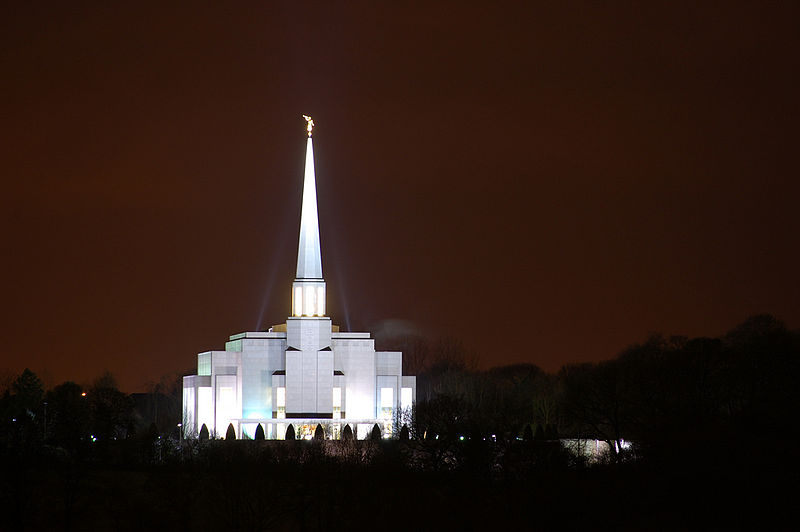


Mormon Temple in Preston, England
A friend of mine who practices First Amendment law is not happy that the European Court of Human Rights on Tuesday upheld a British refusal to permit the Mormon Temple in Preston tax-free status as a place of public worship. “It’s another indication of how equality is overriding religious liberty,” he emailed.
Here’s the deal. Tax law in England affords 100 percent tax relief to religious institutions that allow for public worship. But the LDS Church restricts entrance to its temples to members of the church in sufficiently good standing to possess “recommends” from their bishops. So, relying on a 1964 precedent, the Law Lords decided in 2008 that since the Preston temple restricts access in this way, it is only entitled to the 80 percent tax reduction given to all charitable institutions. (Let it be noted that those Mormon facilities open to the public at large get the 100 percent reduction.)
Writing for a three-judge majority, Lord Hoffmann declared, “Parliament must have a wide discretion in deciding what should be regarded as a sufficient public benefit to justify exemption from taxation and in my opinion it was entitled to take the view that public access to religious services was such a benefit.”
In a concurring opinion, Lord Scott of Foscote waxed philosophical:
Religion can bind communities together; but it can also emphasise their differences. In these circumstances secrecy in religious practices provides the soil in which suspicions and unfounded prejudices can take root and grow; openness in religious practices, on the other hand, can dispel suspicions and contradict prejudices. I can see every reason why a state should adopt a general policy under which fiscal relief for premises used for religious worship is available where the premises are open to the general public and is withheld where they are not.
The LDS Church thereupon took the case to the human rights court, which has now determined that “such difference of treatment had a reasonable and objective justification” and thus not in violation of the European Convention on Human Rights.
I can’t imagine the U.S. Supreme Court handing down a decision like this, and I don’t think most Americans would want it to. To tax only those religious institutions that restrict entry to insiders — monks in a monastery, say — violates our understanding of what the free exercise of religion is all about.
It does, however, strike me that the European approach has less to do with equality — i.e. non-discrimination — than with an establishmentarian religious tradition that regards houses of worship as places of public rather than private or communal accommodation. Regardless, it’s a reminder that even among those committed to the principle of religious freedom, there’s considerable disagreement about exactly what it means.