


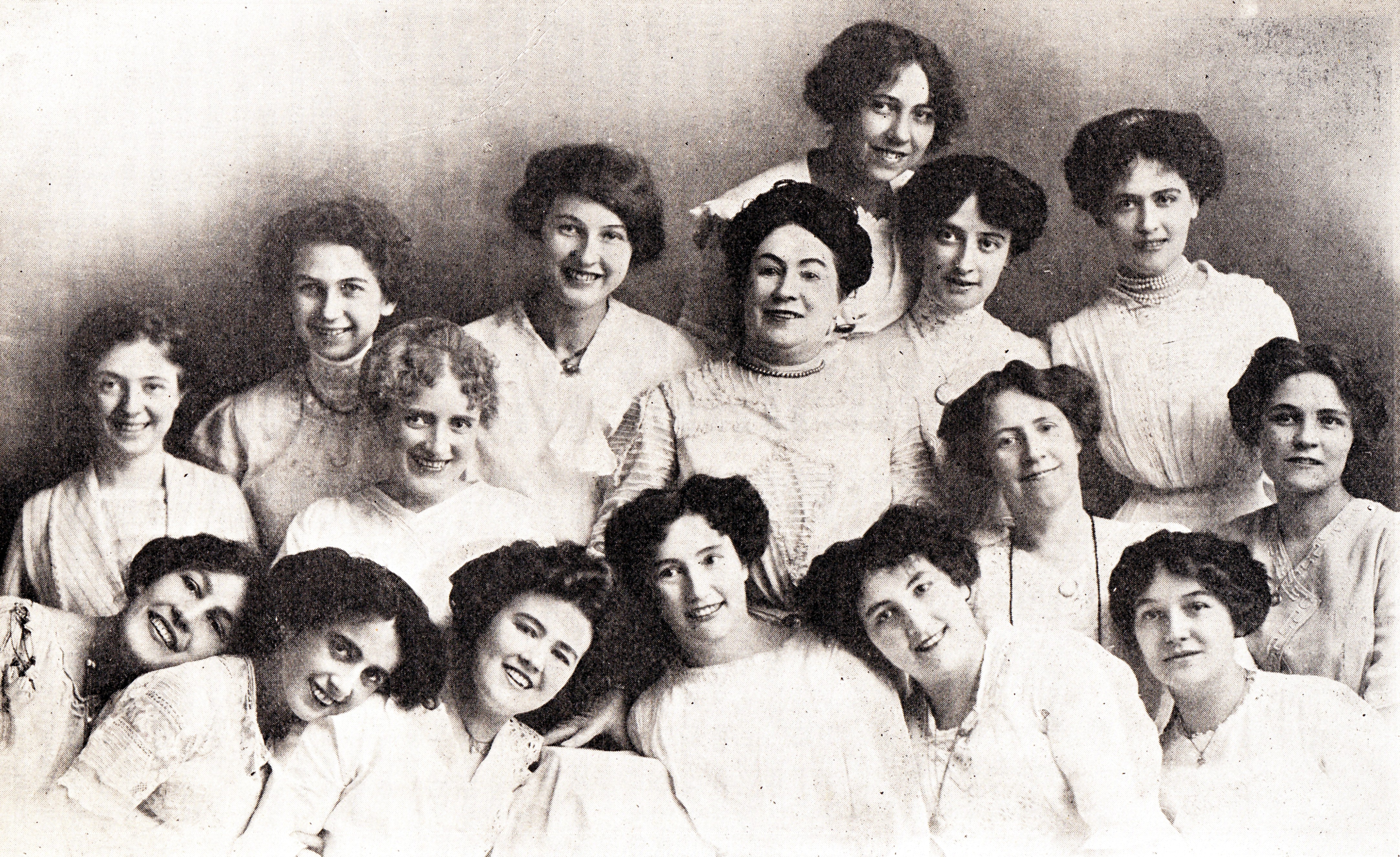


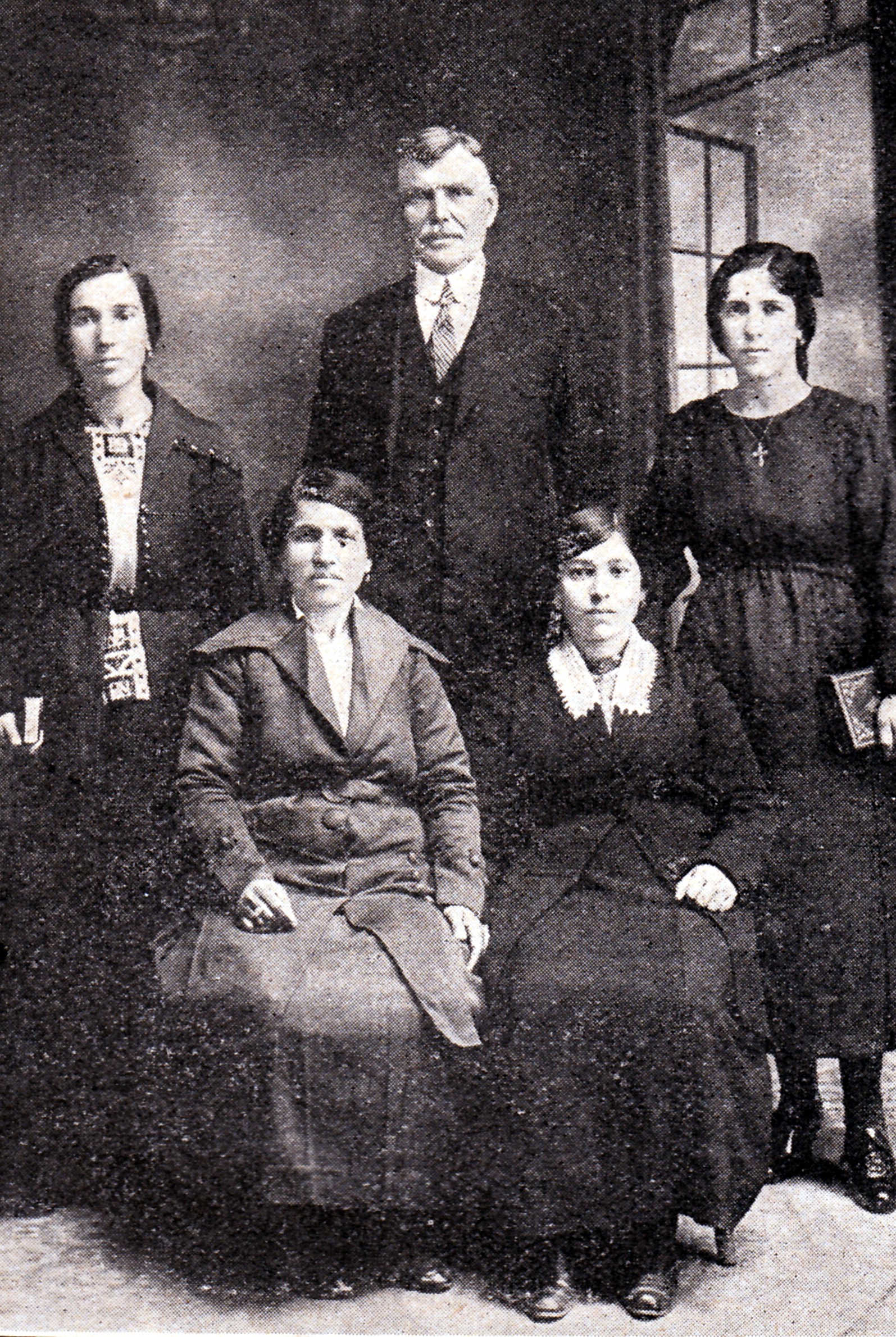
The Relief Society board of Aleppo, Syria (Armenian Mission), 1923
This week, an independent Mormon historian who runs the blog Keepapitchinin launched a Kickstarter campaign to fund a one-volume LDS history told from the perspective of the women involved.
Within a few hours Ardis Parshall’s project was more than 25% funded; as of this morning it was halfway to its $30,000 goal.
Why focus on women?
As Parshall states in the one-minute Kickstarter video:
Women have taken active roles in building Zion from the beginning, yet how often in the usual telling of history have you seen women taking center stage, making a critical difference, doing the work of the kingdom?
She Shall Be an Ensign follows a familiar narrative of church history, but with women in the foreground. When I tell about women as witnesses to the Book of Mormon, you’ll see the angel showing the plates to Mary Whitmer. When I tell of missionaries converting their thousands, you’ll see the women who distributed the tracts that brought people to hear those missionaries. We’ll follow women pioneers and women temple builders and the women who so often were the first to accept the gospel as it spread around the world.
My response when I first heard this was, “Wait. The angel showed the plates to Mary Whitmer? How come I’ve never heard about this?”
And that’s the genius of this project, of putting “women in the foreground” of history.
It’s not that we don’t have stories about women in Mormon life. In fact, we have many such stories about the history of women in the Church, mostly in the form of biography.
But.
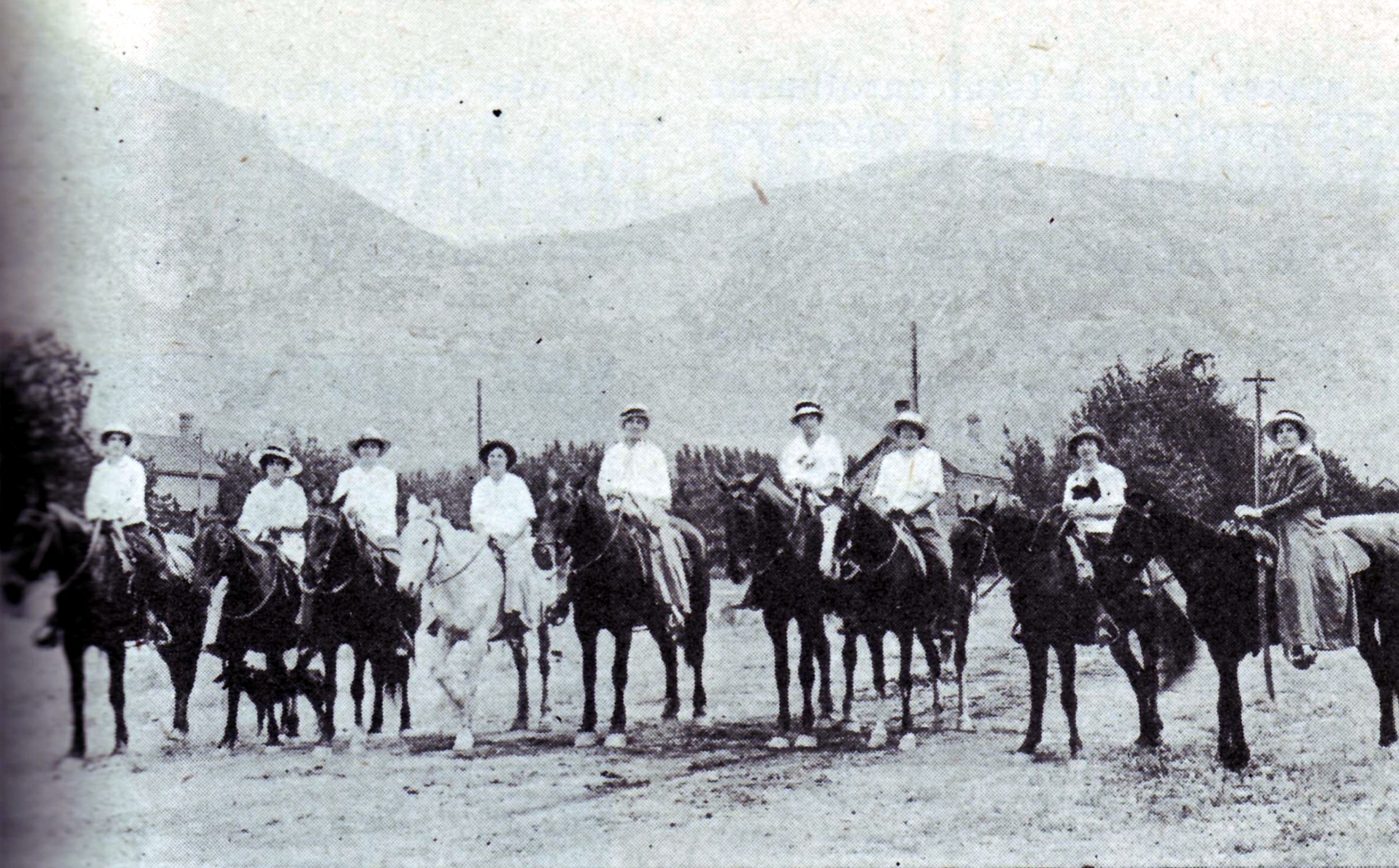
“Beehive Girls” at the time was not a class for 12-13-year-olds, but a summer scout-like experience for those ages 12-20, and even their mothers. Alpine, Utah, 1917.
“What we don’t have is a history of the Church itself that incorporates the contributions of Latter-day Saint women to any significant extent,” Parshall explains. “The active, achieving, contributions of women are largely reported as the history of women, segregated from the history of the Church itself. It’s time to change that.”
To clarify: this is not a history of women in the Church; it is “a history of the Church told from the lives of women.” For more detail on why those two things are different, see Parshall’s explanation on the blog.
And consider the following, also from the Keepapitchinin blog:
- When Parshall was in college, the text used was Ivan J. Barrett’s 1970 history Joseph Smith and the Restoration: A History of the LDS Church to 1846. In the index are eight women and 96 men.
- The 1992 church history The Story of the Latter-day Saints features 54 named women and 569 men.
- Richard Bushman’s excellent 2005 biography of Joseph Smith has a slightly better record: 86 women and 478 men. Some of these, though, were named only because of their relationship to Joseph Smith (plural wife, relative).
So basically, we’ve gone from women being 7% of narrated Mormon history to 15%.
The good news is: that statistic more than doubled! (Hey, we’re Mormons. We try to look on the bright side.)
The bad news is: that statistic still really sucks! According to a graphic at the blog, if we keep going at this rate, we will have projected equality between male and female actors in history in the year 2189.
Members of the Mormon Tabernacle Choir on the Choir’s tour to New York City and Washington, D.C. in 1911.
If you, like me, aren’t willing to wait almost two centuries before seeing historical parity, consider contributing to the Kickstarter campaign. Parshall is an outstanding historian who will do an exemplary job.
And people! Backers can get copies of the book and MORMON WOMEN TRADING CARDS. This idea of trading cards has my Mormon-history-nerdself and my Marvel-comic-nerdself square dancing together on the prairie in capes.
Still not sure? If you’re on the fence, you can get mini-stories and historical photos on the project’s Facebook page and spanking new Twitter feed.
But I hope you’ll contribute.