
Mastodon

Bullet holes found at building next to old German synagogue
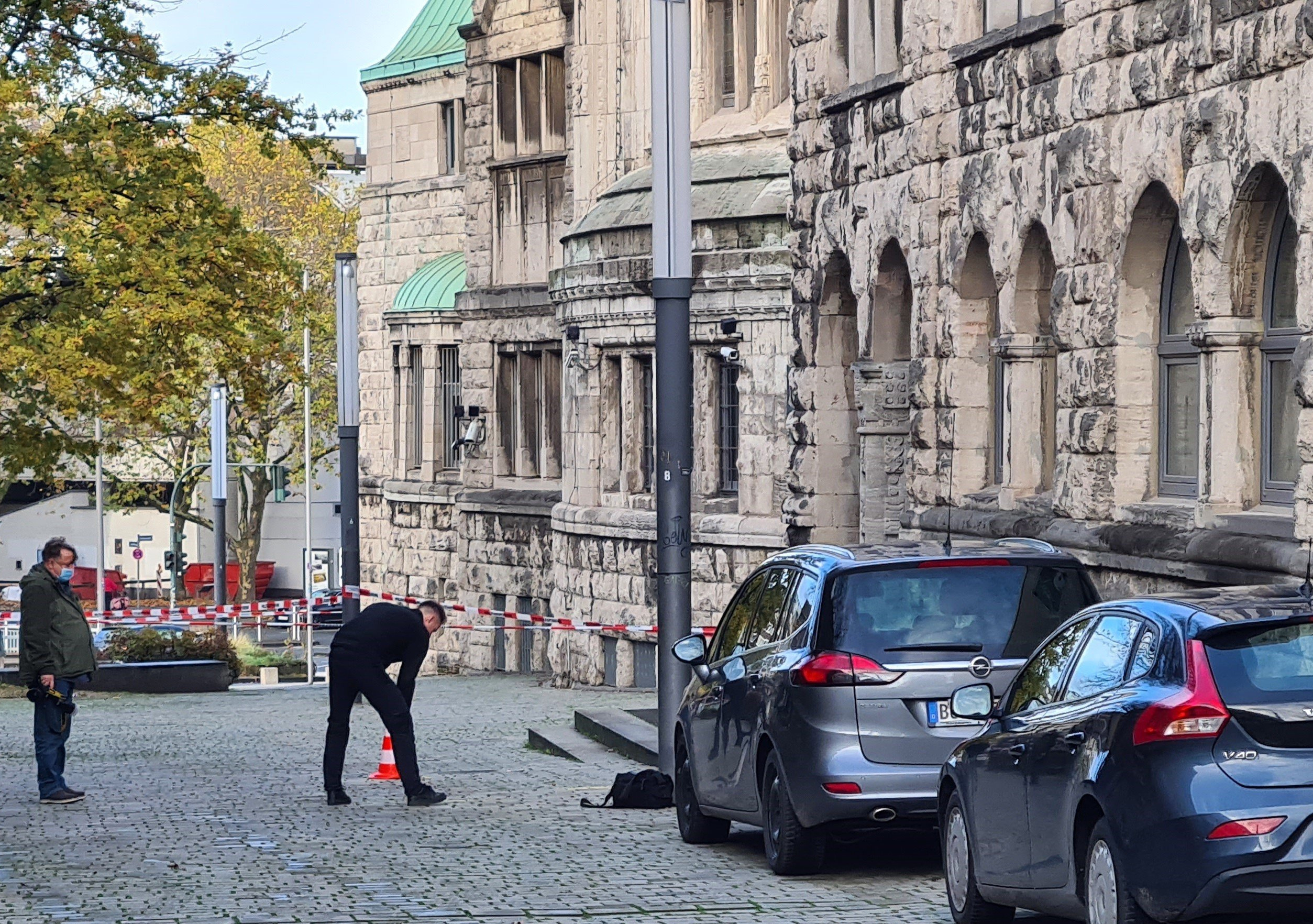
BERLIN (AP) — Four bullet holes were found in the door of a former rabbi's residence that adjoins an old synagogue in the German city of Essen.
Bullet holes found at building next to old German synagogue
Emergency forces stand at the rabbi's house near the 'Old Synagogue' in Essen, Germany, Friday, Nov. 18, 2022. Four bullet holes were found Friday in the door of a former rabbi's residence next door to an old synagogue in the German city of Essen, and a regional security official said a male suspect was being sought in what he called an attack. (Markus Gayk/dpa via AP)

BERLIN (AP) — Four bullet holes were found Friday in the door of a former rabbi’s residence that adjoins an old synagogue in the German city of Essen, and a regional security official said a suspect was being sought in what he called an attack.

Police in the western city said witnesses alerted then to the bullet holes on Friday morning. They said no one was hurt, there was no danger to the public and they were looking into the circumstances of what happened.

A video police have may show a person firing at the door, but they couldn’t give more details because of the poor quality of the recording.


The interior minister of North Rhine-Westphalia state, Herbert Reul, said “the attack on the old synagogue in Essen shakes me deeply,” German news agency dpa reported. He said that video recordings were being evaluated and that police are looking for a male suspect.

According to city authorities, the rabbi’s residence is not currently occupied by anyone but houses a German Jewish history institute.

The old synagogue is now Essen’s House of Jewish Culture. Members of the Jewish community worship at a new synagogue elsewhere in the city but occasionally meet at the old one for special occasions, such as commemorations of the Nov. 9, 1938 Nazi pogrom in which Jews across Germany and Austria were terrorized.

The old synagogue and rabbi’s residence were set alight during that pogrom, which was known as Kristallnacht — the “Night of Broken Glass” — and their interiors were destroyed.

Associated Press religion coverage receives support through the AP’s collaboration with The Conversation US, with funding from Lilly Endowment Inc. The AP is solely responsible for this content.
No paywalls here. Thanks to you.
As an independent nonprofit, RNS believes everyone should have access to coverage of religion that is fair, thoughtful and inclusive. That's why you will never hit a paywall on our site; you can read all the stories and columns you want, free of charge (and we hope you read a lot of them!)

But, of course, producing this journalism carries a high cost, to support the reporters, editors, columnists, and the behind-the-scenes staff that keep this site up and running. That's why we ask that if you can, you consider becoming one of our donors. Any amount helps, and because we're a nonprofit, all of it goes to support our mission: To produce thoughtful, factual coverage of religion that helps you better understand the world. Thank you for reading and supporting RNS.
Deborah Caldwell, CEO and Publisher
Donate today