


Funding SNAP: Even religious leaders are divided over how best to provide for the poor


(RNS) — The monthlong shutdown of the U.S. government is threatening to temporarily defund the Supplemental Nutrition Assistance Program, prompting urgent warnings about the possible human cost for families who rely on the program to put food on the table. But the lapse has renewed the debate over the program itself, and that has put lawmakers, policy analysts and religious leaders on opposing sides.
SNAP, administered by the U.S. Department of Agriculture, is the nation’s largest nutrition assistance program, reaching roughly 1 in 8 Americans. It is the government’s primary safety net for low-income households, seniors, people with disabilities and families with children. Anti‑hunger organizations and many state administrators warn that cuts in the level of benefits or stricter eligibility requirements would be “draconian” for families already operating on razor-thin margins. Food-security researchers link access to SNAP directly to reductions in food insecurity, improved child nutrition and lower reliance on emergency food providers.
Many faith leaders say there is a moral dimension to maintaining SNAP funding. “Scripture repeatedly exhorts care for the hungry and vulnerable,” said one pastor who works with a multifaith food program. Supporters of SNAP point to the Gospel of Matthew, which reads, “For I was hungry and you gave me food,” with the refrain, “Truly I tell you, just as you did it to one of the least of these my brothers and sisters, you did it to me.”
In the Hebrew Bible, the Prophet Isaiah emphasizes sharing bread with the hungry and bringing the homeless into one’s house. The Book of Proverbs — “Whoever is kind to the poor lends to the Lord, and the Lord will reward them” — and Deuteronomy, which calls for opening our hands to the needy, are also cited by clergy and outreach workers as scriptural foundations for public assistance.
But the religious community is not monolithic on the issue. Many emphasize the role of voluntary giving and local action, saying that the biblical mandates to help the poor underscore direct personal charity. “Whoever has two tunics is to share with him who has none, and whoever has food, do likewise,” says the Gospel of Luke. St. Paul’s Letter to the Hebrews advises believers not to neglect doing good and sharing what they have. The Book of Acts quotes the Lord’s teaching that “it is more blessed to give than to receive,” which is similarly used to encourage private generosity.
These scriptural imperatives, some faith leaders say, can support a range of policy responses: public programs, private charity and initiatives that promote employment and family stability. This plurality of views reflects differing theological and practical emphases about the best ways to meet persistent need.
In this they get support from those who say SNAP needs to be reformed. Reining in mandatory spending is necessary for the nation’s long‑term budget health, the fiscal analysts say. Tightening eligibility or benefit levels can be coupled with programs to encourage workforce participation and self‑sufficiency. Some conservative religious leaders and commentators join these thinkers in stressing the virtue of work and private charity, arguing that congregations and local institutions should play a larger role in meeting needs.
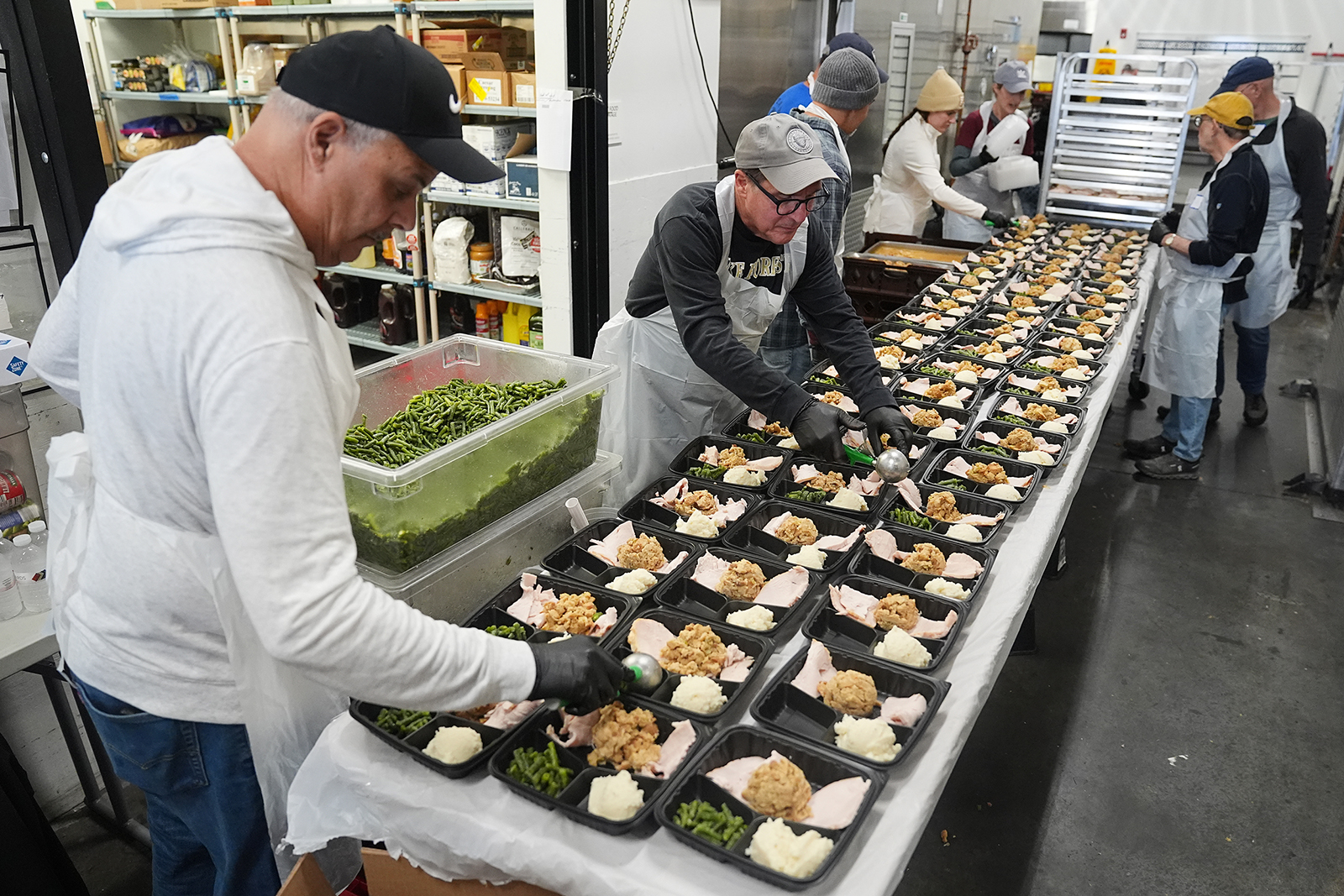
But those on the front lines of food distribution say that congregational charity can only complement, not replace, government help. “Churches and pantries can respond quickly, but they cannot replace the scale, consistency and efficiency of a nationwide program,” said the director of one nonprofit.
Local food banks and community groups say their capacity is already strained when SNAP is fully funded. Permanent cuts to SNAP would produce longer lines, depleted supplies and increased unmet need.
These groups aren’t alone in urging caution. SNAP is an economic stabilizer, say some experts. Enrollment and spending rise during economic downturns and recede in recoveries. Economists point to downstream costs — increased health care usage, poorer educational outcomes for children and greater need for other social services — as potential unintended consequences of cutting nutrition assistance.
Any significant change to SNAP would require legislative action, often tied into broader budget negotiations and reauthorization measures such as the Farm Bill. The issue will be debated in committees, on the House and Senate floors, and in public hearings — arenas where both technical evidence and moral arguments will be presented.
Whatever happens in the next days and weeks with the shutdown, congregations, community organizations and policymakers will all be watching local impacts even as they draw on economic, moral and scriptural sources to make their cases. The competing frames — pragmatic and theological, fiscal and humanitarian — suggest that resolution will require attention to both the lived consequences for families and the values that citizens and faith communities bring to public life.
(Joe McDaniel is a member of the Episcopal Church’s Executive Council and serves as co-chair for the Commission on Racial Justice & Reconciliation for the Episcopal Diocese of the Central Gulf Coast. The views expressed in this commentary do not necessarily reflect those of Religion News Service.)