


The Obama Presidential Center opening gave a glimpse at a more hopeful future
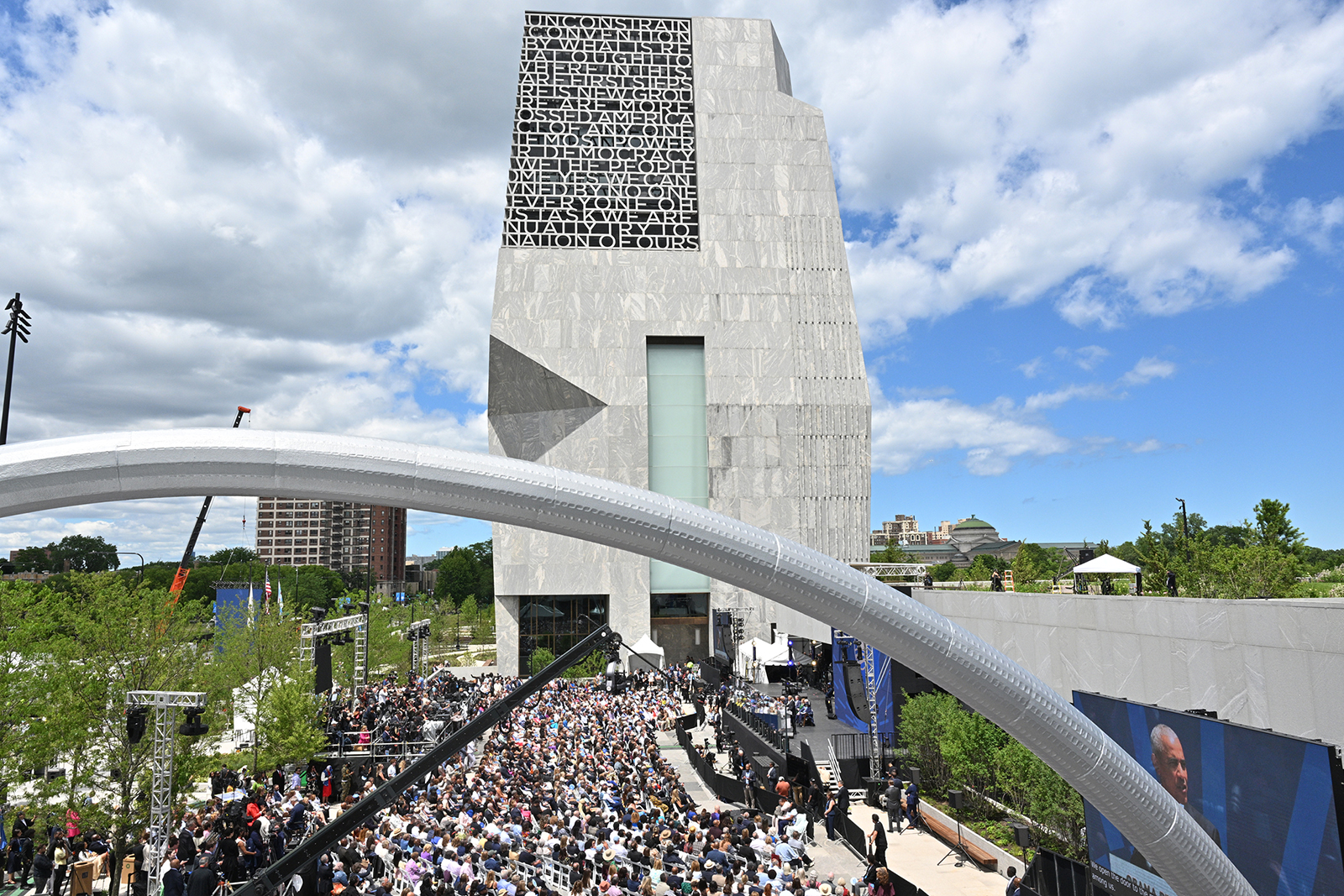


(RNS) — I had the opportunity and, really, the blessing to be invited to the official opening of the Obama Presidential Center in Chicago last week. From the high standing tower above to the participants, speakers and musicians, the day was impressive indeed. And it was clearly a moment to reflect on the moral and civic legacy of Barack Obama’s presidency, which stands in stark contrast to the current presidential ethos.
Both Michelle and Barack delivered extraordinary speeches that are well worth a listen. Yet what stayed with me most was not any single speech or performance, but the spirit of the day itself and the values that kept surfacing in conversation after conversation.
I was pleased that the day was not about nostalgia. The primary focus was about values, many of which seem absent in our present political circumstance, but values that existed long before the Obama presidency and can come again in the future.
Perhaps the word most associated with Obama is hope. It was often seen and heard during Obama’s campaign and presidency, yet many have felt despair in the years since. The gospel song, “Oh Happy Day,” sung by the Edwin Hawkins Singers, came to mind for me throughout the day. Looking at the many of us gathered together on that sunny, warm Chicago Thursday (June 18), it felt exactly like that song.
Words like kindness, compassion, generosity and caring for your neighbor were lifted up throughout the program. Empathy was the word that struck me the most as something we have lost and has to be found again. I still struggle to comprehend the phrase “toxic empathy,” which has become part of the vocabulary of some allies of the current administration. The opening of the Obama center felt like a reminder that empathy is not a weakness but a strength. There is nothing toxic about listening deeply, especially to those who have suffered the most, to understand and feel their pain, and then try to lend a helping hand.
Of course, the other word that kept coming up was dignity — for all of us, regardless of race, class, gender, sexuality or country of origin, as people created absolutely equal in the sight of God. Dignity was especially applied to the most vulnerable and marginalized, as all of our faith traditions call us to.
Faith came up often that day, but always in service of the kind of multi-faith democracy that can build bridges, solve problems, respect differences and restore the common good over individualist gain. At a time when the most wealthy and powerful seem to grow unchecked, the day’s message was a reminder of the gospel’s call to “the least of these” in the 25th chapter of Matthew.
One of the first people I ran into was Melissa Rogers, former executive director of the White House Office of Faith-Based and Neighborhood Partnerships under President Obama, and a leading voice on the intersection of faith, public policy and religious freedom. She joined me for a podcast conversation about that wonderful day and the center’s opening event.
Melissa and I reflected on the atmosphere of the day and the many friends and colleagues who had gathered together. She reminisced about the role of good faith at the White House during those Obama years. It truly felt like a reunion of shared commitments and common values. Melissa, who was able to get former staff a sneak preview of the inside of the center days before the grand opening, shared a floor by floor breakdown during our conversation.
The center itself has been described as a “living work” rather than a traditional presidential museum full of exhibits and artifacts. That distinction feels important. While many of us could see that we were getting older, we could also see the remarkable number of young people who were there and how inspired they were. Leadership was a constant theme, and the new center will devote itself to cultivating the leadership of future generations.
The fact that the Obama Presidential Center is located on the South Side of Chicago was underscored again and again. It is the community where Michelle was born and raised, and where Barack arrived as a young community organizer knowing nobody. It was the people he got to know in those South Side neighborhoods, church basements and sanctuaries, front porches and sometimes dangerous streets who taught him many life lessons.
It was also the place where Barack made his way to Christ, a faith journey that later influenced the mission of the White House faith-based office that Melissa led. I was blessed to be part of that first contingent of faith leader advisers, having known Obama from his days in the Illinois State Senate, just after he was converted, as he sought to ground his personal faith in social justice.
Perhaps the most meaningful conversations I had that day included the question, “What are you doing now?” There were so many richly diverse and multi-generational leaders there sharing the work they were doing in their communities. The energy was not directed backward toward what had already been accomplished. It was directed forward toward what still needs to be done. That’s why this extraordinary day on the South Side of Chicago was not just a day of nostalgia that we all needed, but a signpost to the future of the values that brought us together in the first place. Values that will survive, live on, be put back into action and ultimately change this present political moment.
It made us hopeful, again, about the future.
(The Rev. Jim Wallis is Archbishop Desmond Tutu Chair and director of Georgetown University’s Center on Faith and Justice and is the author, most recently, of “The False White Gospel: Rejecting Christian Nationalism, Reclaiming True Faith, and Refounding Democracy.” A version of this commentary appeared on the Substack God’s Politics with Jim Wallis. The views expressed here do not necessarily reflect those of RNS.)