


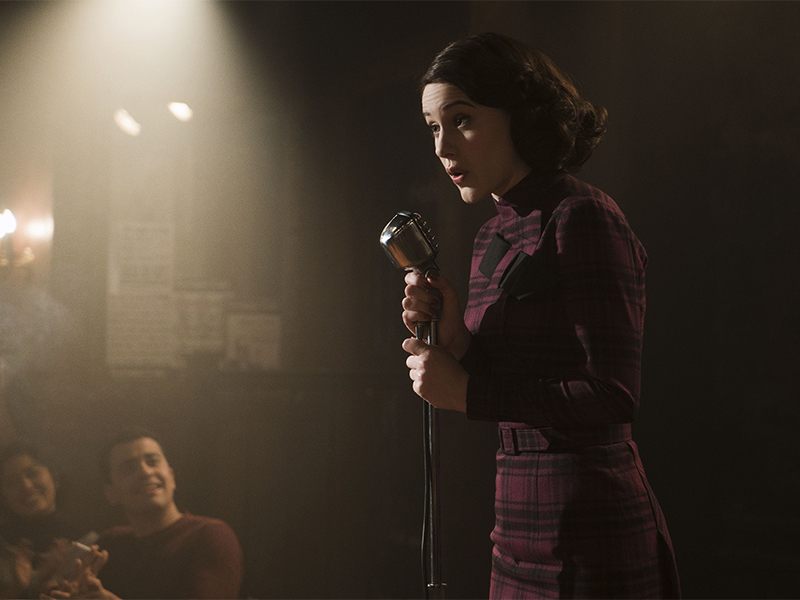


(RNS) — On Sunday, the Golden Globes for best TV comedy series and best actress in a comedy or musical went to The Marvelous Mrs. Maisel, Amazon’s new show about a young mother who becomes a stand-up comedian after her husband walks out on her.
Maisel is a pun on mazel, the Hebrew word for luck, which when joined to tov (good) is what you say to congratulate someone on an achievement. Two Golden Globes? Mazel tov!
 The show, set in Manhattan in 1958, is itself a congratulatory celebration of Jewish success in post-World War II America. Miriam (aka Midge) Maisel, played brilliantly by Rachel Brosnahan, is the daughter of a Columbia math professor who works on the side for Bell Labs. Her father-in-law, up from Brooklyn, owns a successful clothing factory.
(There’s a sly flashback to a scene from Midge’s wedding in which four clearly professional dancers entertain the crowd with Old Country-inspired numbers. Midge delights her new husband by admitting that she’s hired them from The Pajama Game, the Broadway musical about a union campaign for higher wages at a Garment District pajama factory.)
In Protestant-Catholic-Jew (1955), Will Herberg famously argued that while ethnic differences were disappearing in America, religion had “become the differentiating element and the context of self-identification and social location.” Without a doubt, Midge’s synagogue-going community fits that bill.
They hang together and don’t want their children to marry outside the faith, even as they embrace American society and culture. And in New York City, the only place in America where Protestants, Catholics and Jews exist on demographically equal terms, they can have it all.
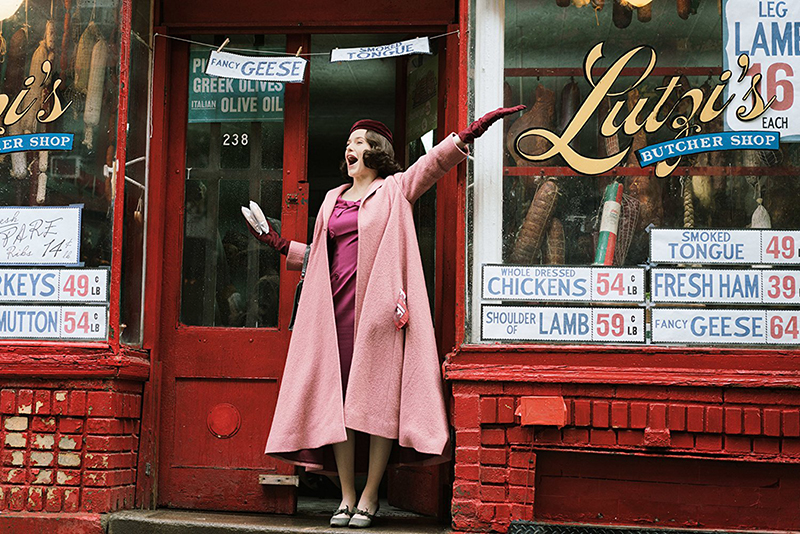
Rachel Brosnahan in “The Marvelous Mrs. Maisel.” Photo by Sarah Shatz/Amazon
They live in terrific apartments with servants on the Upper West Side. They shop at great Midtown emporiums like B. Altman, where Midge spends time working behind the cosmetics counter. Downtown, there are the jazz and comedy clubs like The Gaslight, where she develops her act.
Midge is beautiful and smart, brassy and vulgar, sweet and vulnerable. When she gets on stage, her inner dybbuk won’t let her spare her family and even those on whom her career depends. A streak of slightly before-its-time feminism keeps cropping up. She will have what she wants, and on her own terms.
For most of the show, she performs under a bland gentile stage name, but in the season’s final scene, after getting even with her husband in a comedic tour de force, she raises her arms and announces, “I’m Mrs. Maisel!”
It’s a cry of triumph for herself, her sex and, yes, for her people too.