


Trump's nativism harks back to the antebellum slavery struggle


The Wall got Donald Trump elected in 2016, so we shouldn’t be surprised that he has focused on immigration in the final days before the the midterms. It serves as a useful reminder that nativism lies at the core of his claim on the presidency.
This, of course, is just the latest nativist chapter in American history. There was the hostility to German and Irish Catholic immigrants that culminated in the success of the Know-Nothing Party in the early 1850s; the animosity toward migrant workers from China that led to the Chinese Exclusion Act of 1882; the post-World War I Red Scare that set the stage for the restrictive policy of the Immigration Act of 1924; and the internment of Japanese-Americans after Pearl Harbor.
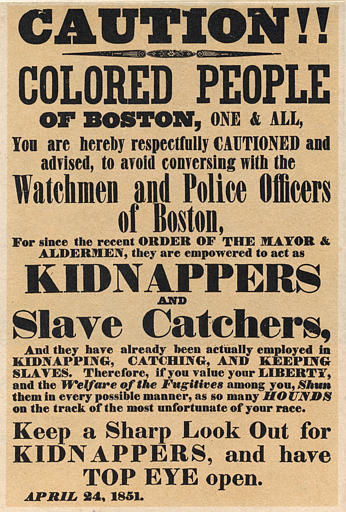
But when it comes to the kind of political polarization we’re going through today, slavery provides a better historical context than immigration. Consider the Fugitive Slave Act of 1850, which required citizens and officials of free states to cooperate in capturing escaped slaves and mandated that they be returned to their masters.
Across the North, the law was denounced and defied, and not only by free blacks and white abolitionists running the Underground Railroad. Religious opposition was particularly strong. Two weeks after the bill became law, the General Conference of the Freewill Baptists, meeting in Providence, condemned it with a series of resolutions, the first of which reads:
Resolved, That we deliberately and calmly, yet earnestly and decidedly, deny any and all obligation on our part to submit to the unrighteous enactments of the aforementioned Fugitive Lave Law. Also, that, regardless of unjust human enactments, fines and imprisonment, we will do all we can, consistently with the claims of the Bible, to prevent the re-capture of the fugitive, and to aid him in his efforts to escape from his rapacious claimants.
Throughout the free states, local vigilance committees protected fugitives, provided them with food and clothing and jobs, and got them to safe places. In Massachusetts, Boston and New Bedford and Springfield and Worcester became what we’d call sanctuary cities, where citizens and public officials alike refused to do what the federal government ordered. Along the shores of Lake Erie in Ohio and New York, the slave catchers were kept at bay.
“The crisis caused by escaping slaves was not enough to bring on the Civil War, but there is no doubt that it was a major contributing factor,” writes Vanderbilt historian R. J. M. Blackett in a masterful new book on the law and the response to it. “By their actions the slaves placed themselves at the center of the political debate about the future of slavery.”
By rights, immigration ought to pose far less of a challenge to the American political system than slavery did. Indeed, compared with the bloodletting of the Civil War, the image of a president sending some thousands of troops to the Mexican border to protect the country from a caravan of impoverished refugees recalls Marx’s famous quip about history occurring “the first time as tragedy, then as farce.”
But like slavery, immigration engages some of America’s deepest religious, racial, and geographic sensibilities. Farcical Trump’s political posturing may be, but it seems inevitable that, whatever happens in Tuesday’s election, the issue will continue to bedevil the country for a long time.