


China pushes adoption of language, cultural symbols in Tibet
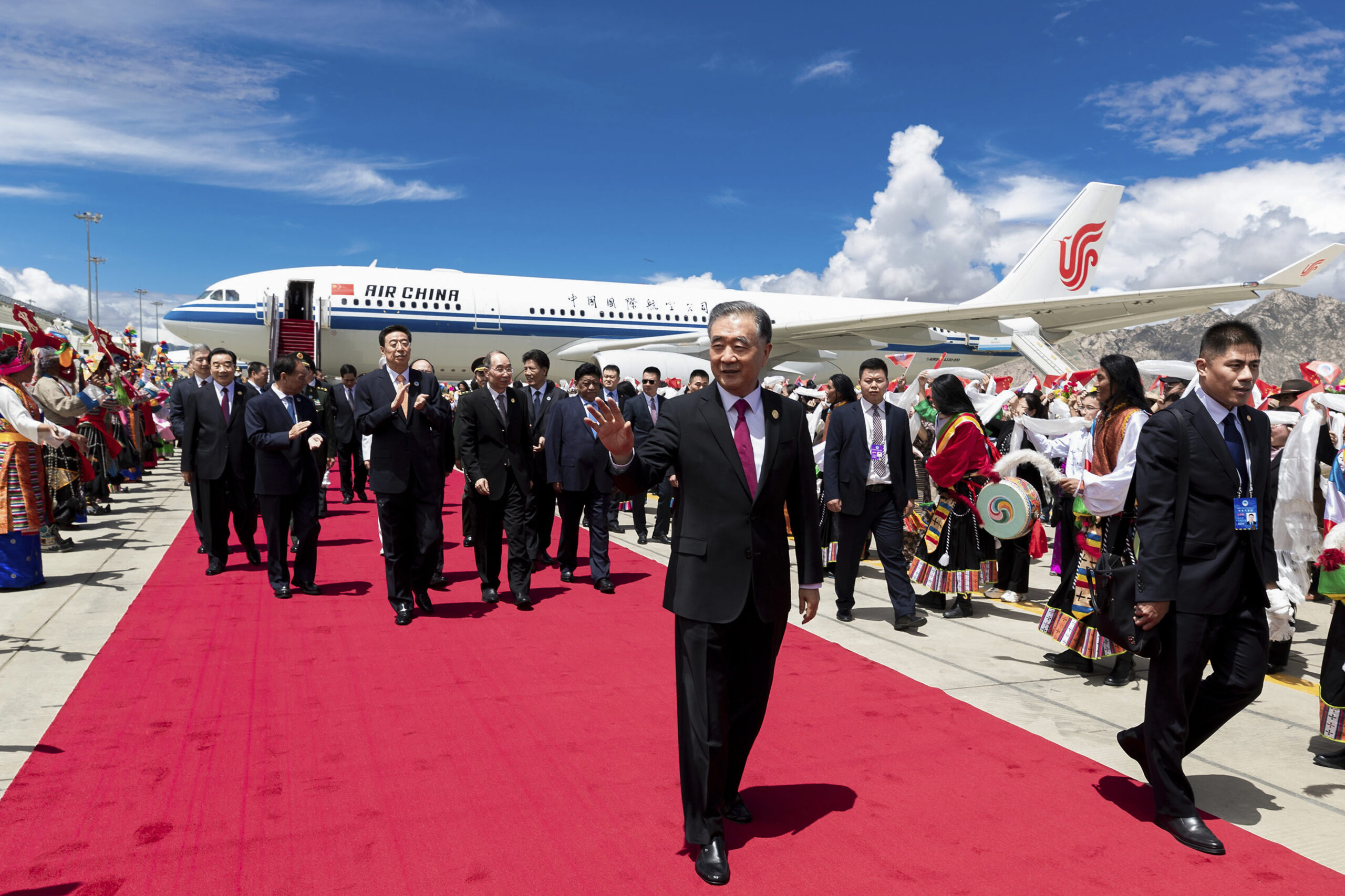


BEIJING (AP) — A top Chinese official said Thursday that “all-round efforts” are needed to ensure Tibetans speak standard spoken and written Chinese and share the “cultural symbols and images of the Chinese nation.”
Wang Yang made the remarks before a handpicked audience in front of the Potala Palace in Lhasa, the home of Tibet’s traditional Buddhist leaders, at a ceremony marking the 70th anniversary of the Chinese invasion of the vast Himalayan region.
China’s ruling Communist Party says it “peacefully liberated” Tibetan peasants from an oppressive theocracy and restored Chinese rule over a region under threat from outside powers.
Critics say such moves toward cultural assimilation spell the demise of Tibet’s traditional Buddhist culture and that Tibet was effectively independent for most of its history.
China has highlighted its efforts to boost the economy in the region and condemned the exiled Dalai Lama as a separatist.
Wang, who is a member of the Politburo Standing Committee — the apex of party power — and who oversees policy toward ethnic minorities, said “separatist and sabotage activities committed by the Dalai (Lama) group and hostile external forces have been crushed.”
Since 1951, Tibet has “embarked on a path from darkness to brightness, from backwardness to progress, from poverty to prosperity, from autocracy to democracy, and from closeness to openness,” Wang said.
Wang said Tibetans had been included in representative bodies. The region hosted close to 160 million tourists last year, according to the official Xinhua News Agency. Even before the coronavirus pandemic, China limited entrance to Tibet by foreigners.
“Only by following the CPC leadership and pursuing the path of socialism, can Tibet achieve development and prosperity,” Wang was quoted by Xinhua as saying.
The Dalai Lama fled to India in 1959 following an abortive uprising against Chinese rule and his supporters have documented human rights abuses in Tibet related to an ongoing security crackdown.
“Judging by developments in Tibet over the past 70 years, the Tibetan people have no cause for jubilation, as Chinese policies have turned Tibet itself into an open-air prison with restrictions on all aspects of Tibetan life,” the U.S.-based International Campaign for Tibet said in a statement.
“After 70 years of oppression, the only thing the Tibetan people need ‘peaceful liberation’ from today is China’s brutality,” the group said.
As China tightens its hold over Tibet, questions are arising over the future of its diaspora community. China has refused any contact with the self-declared Tibetan government in exile and the Dalai Lama has long separated himself from politics.