Mastodon

2nd Australian state bans public displays of Nazi swastikas
SYDNEY (AP) — The law allows for the swastika to be used in academic, historical or educational settings, thereby paving the way for its display by Hindus, Buddhists and Jains for whom it holds religious significance.
2nd Australian state bans public displays of Nazi swastikas
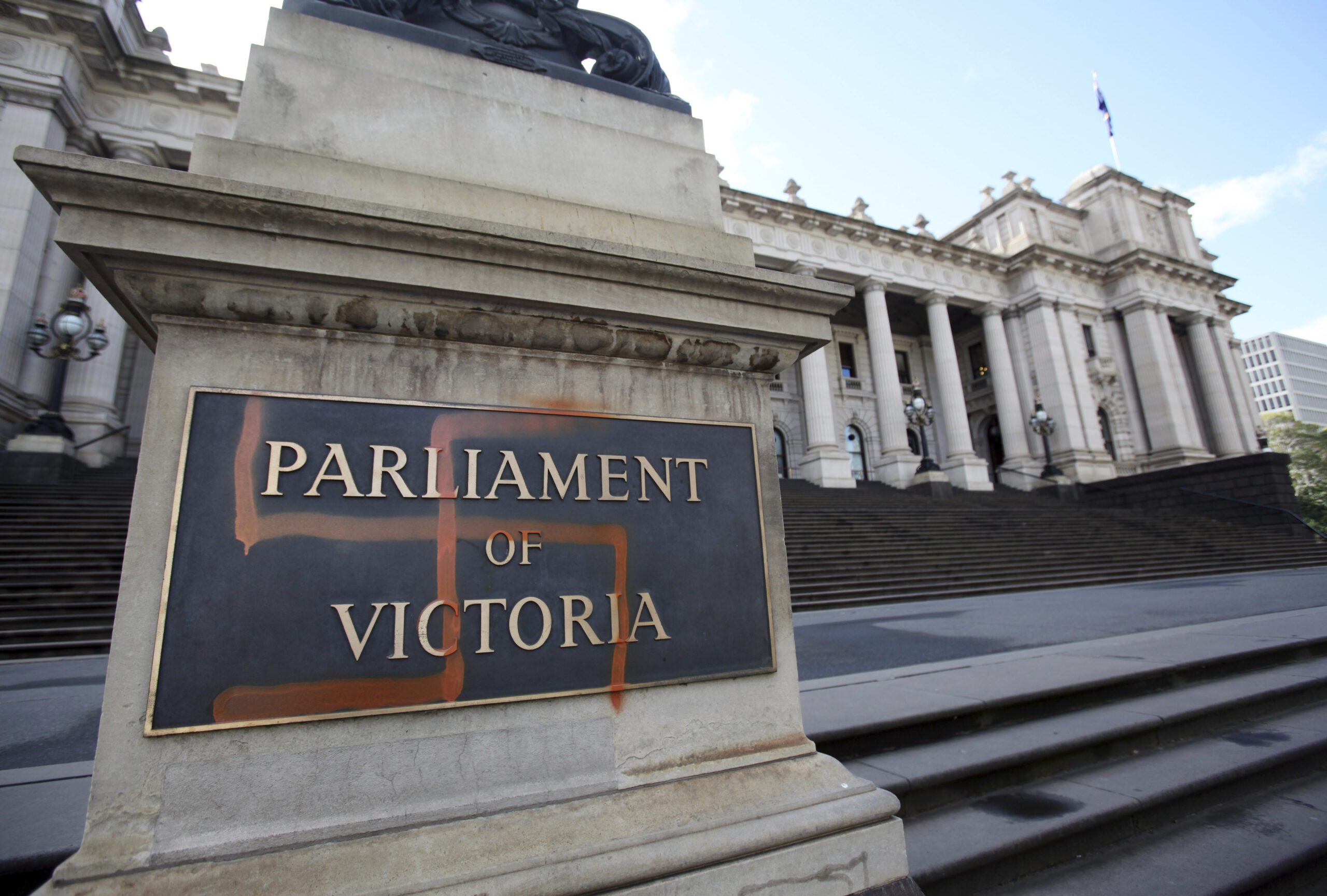
A Nazi swastika is seen graffitied on the front of the Victorian State Parliament in Melbourne, Australia, Monday, Oct. 1, 2012. New South Wales, the nation’s most populous state, on Thursday, Aug. 11, 2022, followed Victoria, the second-most populous, which banned the public display of Nazi swastikas in June. (David Crosling/AAP Image via AP)

SYDNEY (AP) — A second Australian state on Thursday banned public displays of Nazi symbols.

New South Wales, the nation’s most populous state, followed Victoria, the second most populous, which banned the public display of Nazi swastikas in June.

The law was passed with the unanimous support of the state parliament’s upper chamber. The lower chamber passed the bill on Tuesday.


Queensland and Tasmania states have foreshadowed similar laws, which would mean half of Australia’s eight states and territories and most of the Australian population were banned from displaying Nazi symbols.

New South Wales Jewish Board of Deputies chief executive Darren Bark described the passing of the law as a historic day for the state.

“Nazi symbols are a gateway to violence and are used as a recruitment tool by extremists,” Bark said.

“Banning their display is a long-overdue and much-needed law in our state. The perpetrators will finally be held to account,” he added.

The law allows for the swastika to be used in academic, historical or educational settings, thereby paving the way for its display by Hindus, Buddhists and Jains for whom it holds religious significance.

“For too long, the Hindu community has not felt comfortable to display our symbol of peace because it resembled a symbol of evil. This is no longer,” Hindu Council of Australia national vice-president Surinder Jain said.


Associated Press religion coverage receives support through the AP’s collaboration with The Conversation US, with funding from Lilly Endowment Inc. The AP is solely responsible for this content.
No paywalls here. Thanks to you.
As an independent nonprofit, RNS believes everyone should have access to coverage of religion that is fair, thoughtful and inclusive. That's why you will never hit a paywall on our site; you can read all the stories and columns you want, free of charge (and we hope you read a lot of them!)

But, of course, producing this journalism carries a high cost, to support the reporters, editors, columnists, and the behind-the-scenes staff that keep this site up and running. That's why we ask that if you can, you consider becoming one of our donors. Any amount helps, and because we're a nonprofit, all of it goes to support our mission: To produce thoughtful, factual coverage of religion that helps you better understand the world. Thank you for reading and supporting RNS.
Deborah Caldwell, CEO and Publisher
Donate today