


With bonfires and hope, Iran's minority Zoroastrians celebrate Sadeh and the end of cold winter days
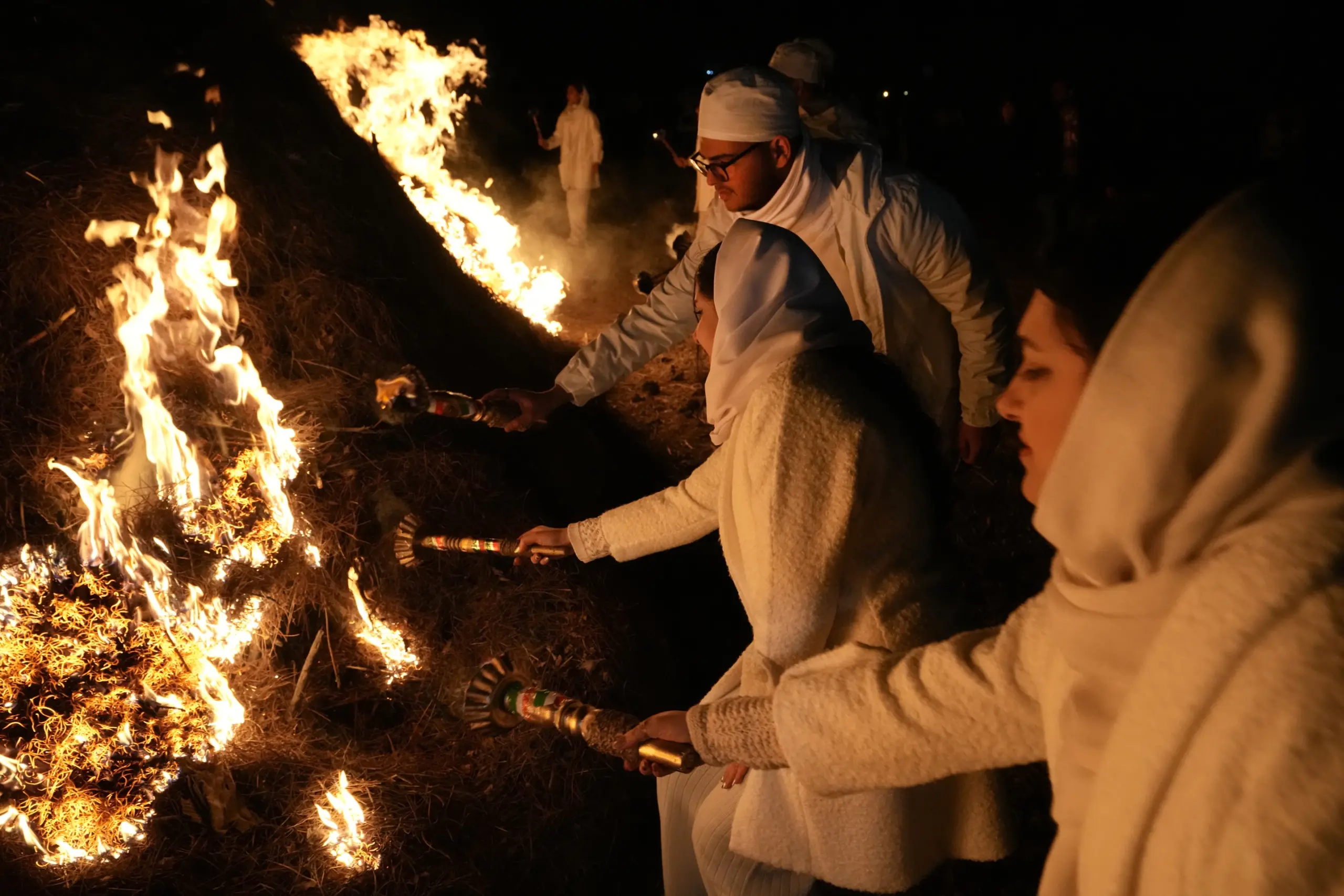


TEHRAN, Iran (AP) — Lighting fires that brightened the night sky, followers of Iran’s minority Zoroastrian religion marked the Sadeh festival in several cities, celebrating the end of the coldest winter days.
Every year on Jan. 30, Zoroastrians gather after sunset to celebrate the 50 days and 50 nights remaining to Spring. Sadah, which means “the one hundred,” is an ancient feast from when the religion was the dominant faith in the powerful Persian empire, which collapsed after the Arab invasion in the 7th century.
On the southwestern outskirts of Tehran Tuesday evening, several Zoroastrian priests and priestesses, dressed in white from head-to-toe to symbolize purity, led young followers to light a giant bonfire in a joyful ceremony.
Around the fire, people listened to bands playing music, theological lectures as they milled about eating and celebrating.
In a rare move, the Islamic Republic’s air force band played the national anthem among other tunes to the excitement of the attendees.
Iran’s 85-plus million population are mostly Shiite Muslims. The country has been ruled by hard-line clerics who preach a strict version of Islam since the 1979 Islamic revolution, who discouraged people from following pre-Islamic feasts and traditions.
Zoroastrianism is a monotheistic religion that predates Christianity and Islam. It was founded some 3,800 years ago by the prophet Zoroaster. It stresses good deeds, and fire plays a central role in worship as a symbol of truth and the spirit of God. Zoroastrians stress they are not fire-worshippers, but see fire as a symbol of righteousness.
Alongside other minorities, including Christians and Jews, they have one representative in parliament, Esfandiar Ekhtiari.
During Tuesday’s ceremony, Ekhtiari said the celebration belongs to everyone and is a symbol of “felicity, respect to humanity and nature as well as human beings .”
In 2023, UNESCO recognized Sadeh in its Intangible Cultural Heritage of Humanity from Iran and Tajikistan.
Though they have common elements such as lighting fire, the Sadeh festival is different from Nowruz which marks the Persian new year.