


Indians celebrate Diwali by lighting a record number of clay lamps
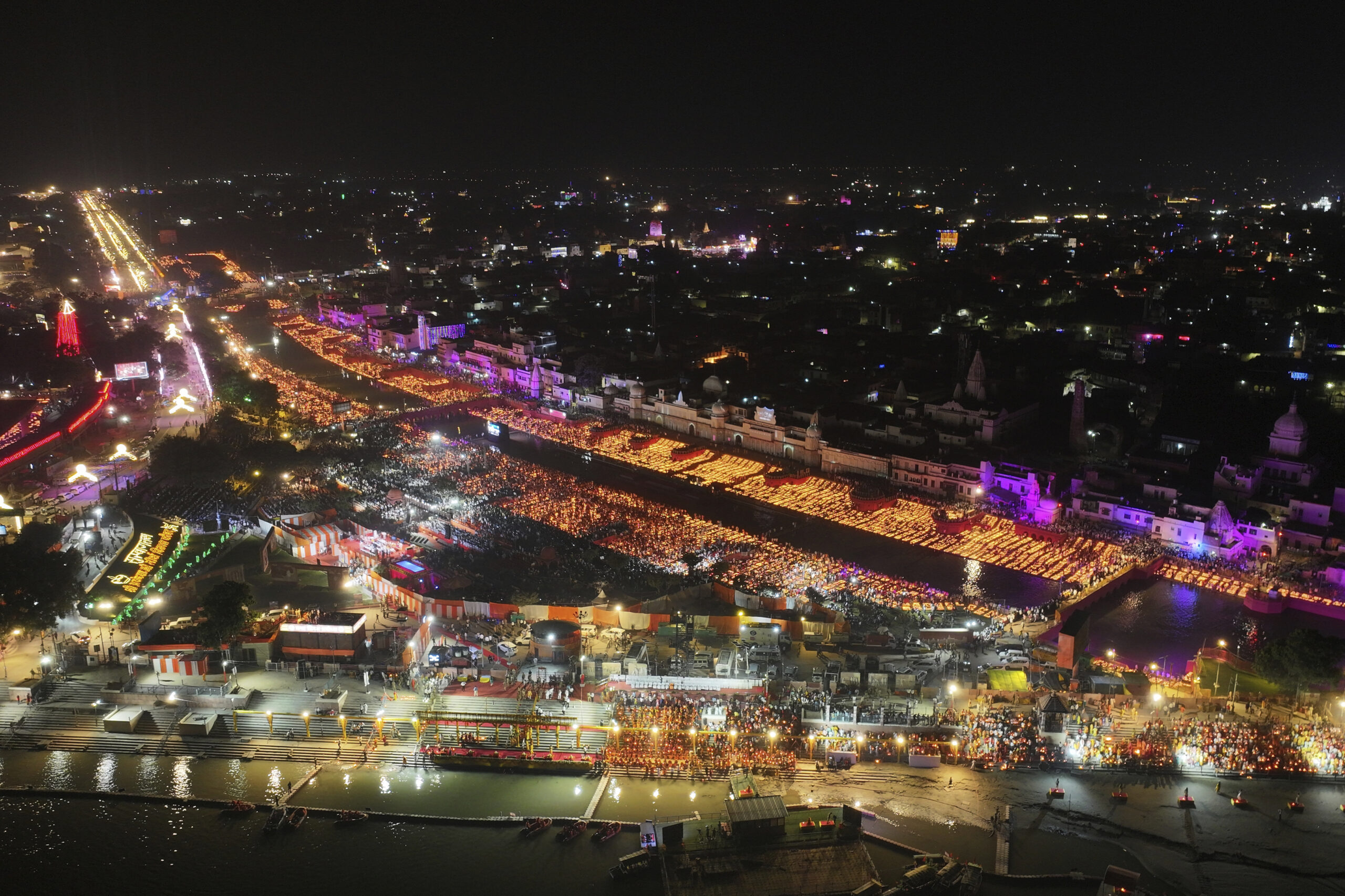


LUCKNOW, India (AP) — Millions of Indians began celebrating the annual Hindu festival of lights, Diwali, by symbolically lighting a record 2.51 million clay oil lamps at dusk on Wednesday on the banks of the river Saryu in a northern Indian city they believe to be the birthplace of the deity Lord Ram.
Diwali is the most important festival of the year in India, particularly for the Hindu majority. It is celebrated by socializing and exchanging gifts with loved ones. Many light candles and oil lamps made from clay. Fireworks are set off. In the evening, a special prayer is dedicated to the Hindu goddess Lakshmi, who is believed to bring luck and prosperity.
A Guinness World Records team presented a certificate to Uttar Pradesh state Chief Minister Yogi Adityanath acknowledging the unprecedented number of oil lamps, exceeding last year’s 2.2 million. Drone cameras closely monitored the event.
The celebrations took place within the northern city of Ayodhya, where Prime Minister Narendra Modi nine months ago opened a controversial Hindu temple built on the ruins of a historic mosque following a Supreme Court decision, seen as a political win for the populist leader. The establishment of the temple dedicated to Lord Ram fulfilled a long-standing demand by millions of Hindus.
On Wednesday, thousands of volunteers lit lamps, called “diyas,” along riverbanks, lanes, fronts and roofs of homes.
“More than 30,000 volunteers, primarily college students, worked meticulously to maintain the systematic pattern of burning lamps for the prescribed time,” said Dr. Pratibha Goyal, vice chancellor of Dr. Ram Manohar Lohia Avadh University, who coordinated the massive effort.
The lamps lit along 55 riverfront steps of the river Saryu created a captivating display along 1.5 kilometers (one mile). As the lamps remained lit for over five minutes, government spokesperson Shishir Singh said Ayodhya achieved its seventh consecutive world record for the largest display.
Singh said that around 91,000 liters (about 24,000 gallons) of mustard oil was used to light the lamps.
The event transformed Ayodhya into a city of lights amid devotional bhajan singing. A laser show depicting scenes from the epic Ramayana added to the experience, and an eco-friendly fireworks show lit the skyline. Traditional decorations, including elaborate arches and grand gateways along the main highways, captured the festive atmosphere as folk cultural performances drew pilgrims to the streets.
The festival also featured a praying ceremony performed by 1,100 priests along riverbanks.
Security was tightened across the city. Paramilitary commandos, bomb detectors, dog squads, face-recognition technology, and real-time monitoring drones were deployed, police officer Rajkaran Nayyar said.
Major Hindu festivals like Dussehra and Diwali are associated with mythological tales of Lord Ram extolling the virtues of truth, sacrifice, and ethical governance.
Diwali’s main celebrations are held across the country on Thursday.