


Criticism of the late pope is par for the course


(RNS) — Last week’s pre-conclave meetings in the Vatican audience hall did not lack for criticism of Pope Francis by cardinals preparing to elect his successor. As reported by America magazine’s veteran Vatican correspondent Gerald O’Connor, Cardinal Beniamino Stella, a longtime official of the Roman curia, denounced the former pope for opening curial positions to lay men and women.
“We have listened to many complaints against Francis’ papacy in these days, but the speech by Cardinal Stella was by far the worst,” one anonymous cardinal told O’Connor.
Shocked? There’s a long-standing tradition of using the interregnum between popes to attack the recently deceased.
For example, after Pope Urban VIII died in 1644, a Roman mob gathered to revive the custom of destroying the images of hated popes. After soldiers armed with muskets and heavy artillery stopped the mob from smashing Bernini’s statue of Urban in the Palazzo dei Conservatori, the mob proceeded to pulverize a plaster effigy of the pope in the courtyard of the Jesuit College.

Statue of Pope Urban VIII by Gian Lorenzo Bernini. (Photo by Jastrow/Wikimedia/Creative Commons)
Meanwhile, a series of hostile poems, called pasquinades, assailed Urban along with other members of his Florentine family, the Barberini, whom he had appointed to key curial positions in the great tradition of Renaissance nepotism. One notable pasquinade, “Papa Gabella” (Pope Tax), put it this way:
Urban and nephews
Have done more harm
Than Vandals and Goths
To my pretty Rome
O Pope Tax.
Referring to the bees that symbolized the Barberini clan, another pasquinade attacked the pope for soaking the Roman people in order to enrich his family: “As well as he fed the bees, so badly did he feed the sheep.” Most famously, the family was pilloried for removing the Pantheon’s bronze ceiling and melting it down for cannons: “What the barbarians didn’t do, the Barberini did.”
Urban’s successor, Innocent X, initiated legal action against the Barberini nephews for misappropriation of public funds. (They were acquitted.) Although a few recent historians have argued that Urban’s pontificate was more successful than advertised — not least in restoring Rome’s cultural prestige — his reputation has never recovered from the assaults.
By contrast, and notwithstanding the grumbling of cardinals, Francis was quite the opposite of a hated pope in Rome. Hundreds of thousands waited in line for hours to file by his casket in St. Peter’s, paying homage to “the people’s pope.”
Machiavelli, a bitter critic of the church of his time, begins the third book of his Discourses on Livy by asserting that monarchies, republics and religions that wish to last need to reform themselves periodically by returning to their origins. In the case of “our religion,” he writes, this has been achieved by St. Francis and St. Dominic, who by living lives of poverty and following Christ’s example renewed the faith among the common people such that, thanks to the religious orders they founded, “the dishonesty of the prelates and the heads of the religion does not ruin it.”
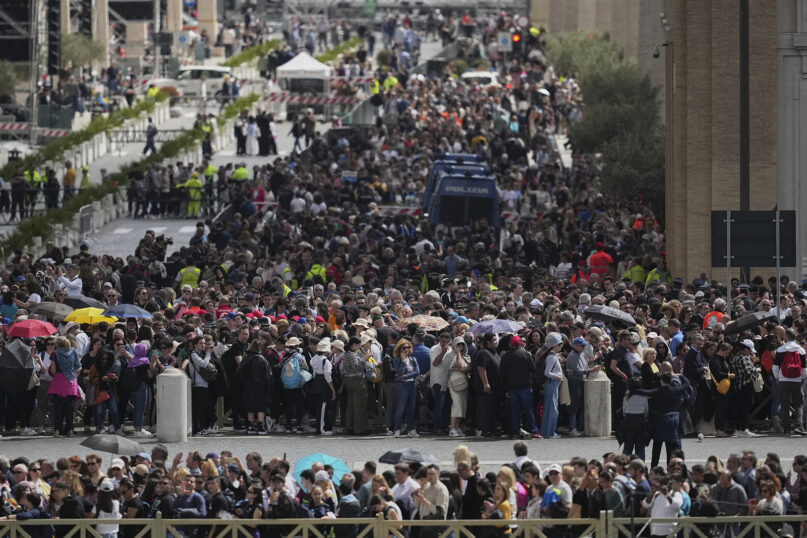
People wait in line to enter St. Peter’s Basilica to view Pope Francis lying in state, at the Vatican, April 25, 2025. (AP Photo/Andrew Medichini)
By taking Francis of Assisi’s name and living by his example — dispensing with the trappings of pontifical luxury and devoting himself to the poor and the outcast — the Jesuit Pope Francis singlehandedly did much to redeem the standing of the church in the world in the wake of the abuse scandal. Like St. Francis, he seems to have renewed the faith among the people.
Whether the heads of the religion will choose another like him, however, is more doubtful.