

The US once led on religious freedom. This administration is dismantling that legacy.
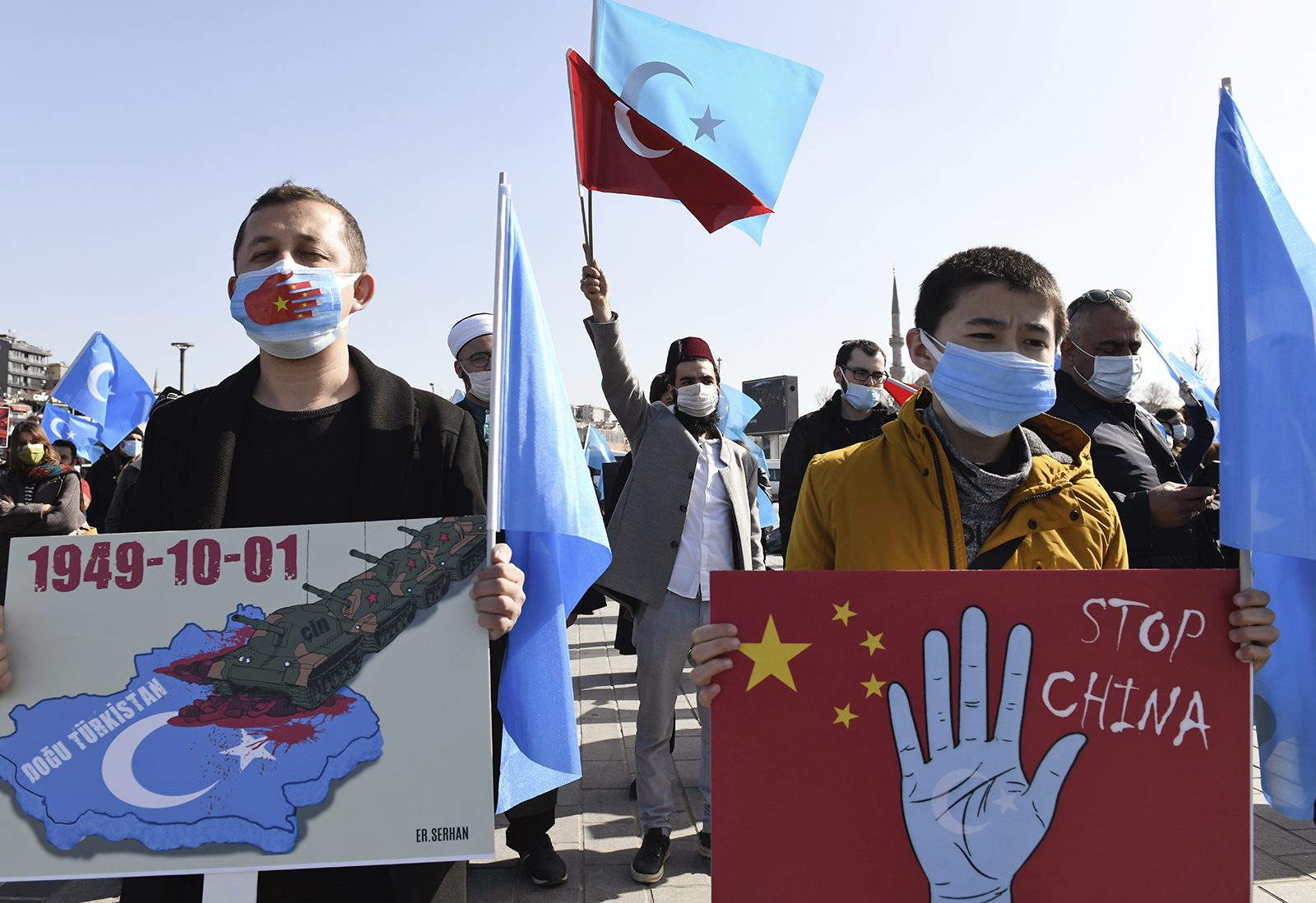


(RNS) — Countless millions of people worldwide are persecuted for what they believe. Uyghurs languish in detention camps in China. Baha’is face oppression in Iran. Christians face harassment, surveillance and arrest in Eritrea. Rohingya Muslims still live with the trauma and displacement of genocide in Burma. The human cost of these abuses is not abstract — it is measured in body counts, prisoners jailed for their faith and houses of worship shuttered by repressive regimes.
At its core, religious freedom goes beyond worship, prayer and faith. It’s about human dignity and human rights. If the government can tell you what to believe, it can do whatever it wants. When freedom of conscience wanes, violence spreads, extremism grows and democracies decay from within.
For decades, the United States championed international religious freedom with a strong, bipartisan toolbox. Yet despite promises to the contrary, the Trump administration is undermining and ignoring the International Religious Freedom Act — the landmark law, passed in 1998, that made possible our leadership on global religious freedom.
Congress must use every tool at our disposal to demand that this administration reverse course and protect religious freedom.
The International Religious Freedom Act was passed with an overwhelmingly bipartisan vote. It created a strong legal framework for America’s global leadership on freedom of religion through public reporting, diplomatic pressure, the authority to sanction offenders, and senior leadership empowered by law. Its passage was a powerful signal to oppressive regimes that the world was watching and that American diplomats had robust tools at their disposal to demand change.
Sadly, those tools are being undermined and ignored by the Trump administration at precisely the moment they are needed the most. The State Department has still not released the 2024 Report on International Religious Freedom — now a year overdue. These reports, cited by scholars and experts worldwide, are the foundation for designating which regimes are eligible for consequences due to serious religious freedom violations.
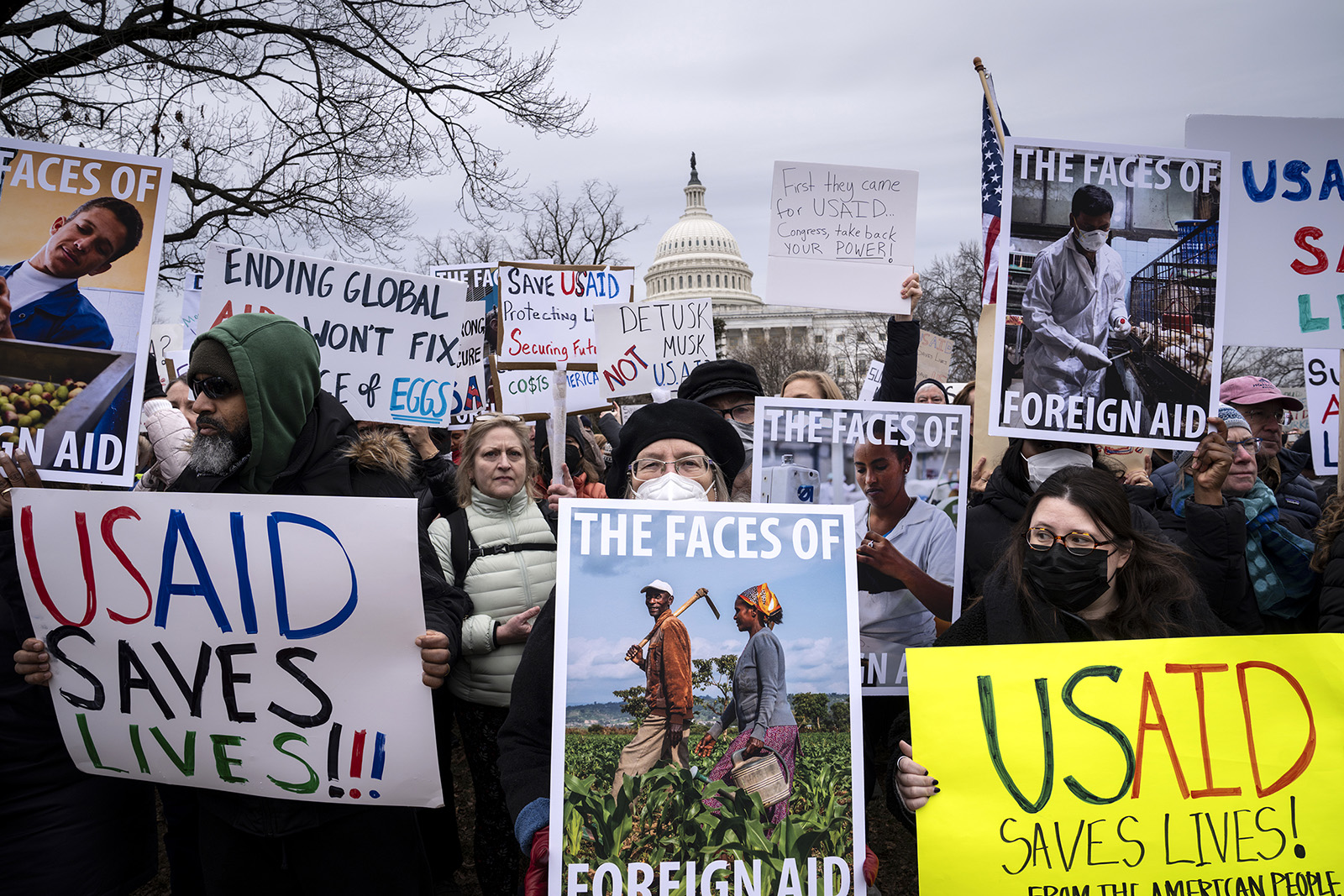
Demonstrators and lawmakers rally Feb. 5, 2025, on Capitol Hill in Washington, D.C., against President Donald Trump and his ally Elon Musk over their disruptions of the federal government, including dismantling the U.S. Agency for International Development, which administers foreign aid approved by Congress. (AP Photo/J. Scott Applewhite)
Because the Trump administration has still not released the report, the Biden administration’s designations have lapsed — meaning the U.S. no longer considers China, Iran, Eritrea or Burma to be offenders. Our credibility on religious freedom collapses when the U.S. can’t even find the time to name and shame the world’s worst offenders.
And the White House has still not appointed, as mandated by the law, an ambassador-at-large for International Religious Freedom. Instead, the Trump administration named a “principal adviser” for the issue, a title that carries neither statutory authority nor the weight of an ambassadorship. Whatever benefit that role offered, it did not last long. After just 90 days, the appointee resigned. Two U.S. Commission on International Religious Freedom seats reserved for the president’s own party sit vacant, and the State Department’s religious freedom functions have been downgraded and thinned.
Abusive regimes used to know that top U.S. diplomats were on their case when it came to religious freedom. Those posts now sit empty.
Meanwhile, the Trump administration’s budget has been a disaster for programs that help tamp down persecution before it expands. The United States Agency for International Development has been dismantled, hollowing out civil society support and interfaith programming that protects religious minorities. The U.S. Institute of Peace — an institution that has worked for decades to defuse sectarian violence — has been gutted. And cuts to United Nations funding have weakened the ability of both the United Nations Refugee Agency and the International Organization for Migration to offer protections for religious minorities fleeing violence.
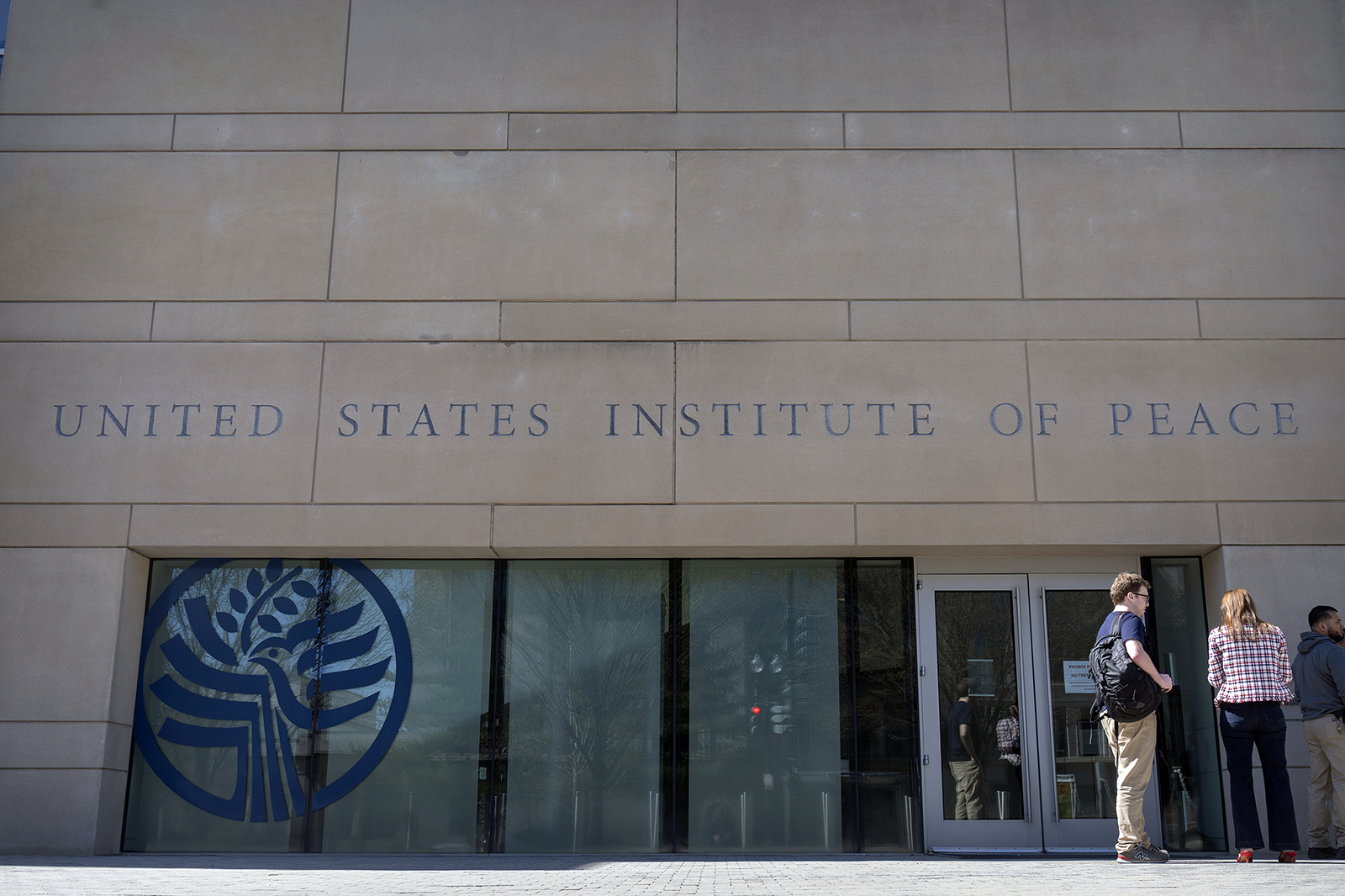
People stand outside the headquarters of the United States Institute of Peace, March 18, 2025, in Washington. (AP Photo/Mark Schiefelbein)
Perhaps most alarming, U.S. federal agencies now openly violate the rights of Christians at home while the White House selectively exploits their persecution overseas. Despite proclaiming a “religious freedom day,” federal authorities have imposed prayer bans outside of an Immigration and Customs Enforcement detention center. Elsewhere, federal agents attacked worshippers and prevented Catholic detainees from accessing pastoral care.
At the same time, the administration sidelines the suffering of Muslims, Jews, Hindus, Baha’is and non-believers abroad. To be clear: religious freedom is universal. When America picks and chooses who we speak up for, we lose legitimacy, and the persecuted pay the price.
Religious freedom violations are embedded in immoral laws, unjust security services and discriminatory social norms. Addressing these problems requires sustained diplomacy, multilateral coordination and long-term strategy — work the Trump White House has largely abandoned. What remains is not substance or policy, but performance and spectacle: speeches, social media posts, unfunded initiatives and symbolic gestures.
What can be done?
To start, the faith community should demand that the International Religious Freedom Act be implemented as written. If America is to remain a beacon of religious freedom, this administration needs to stop undermining the law that makes our leadership possible.
Second, Congress must meet this moment with the urgency, oversight and moral clarity it requires. We must demand that the administration release the overdue report, push for a qualified ambassador-at-large nominee and use the appropriations process to restore the programs this administration gutted.
Our voices are a powerful tool for change. Together, we must work to rebuild the credibility this administration has squandered — and restore the promise that America will not look away when religious freedom and human rights are on the line.
(Jim McGovern is a U.S. congressman from Massachusetts and co-chair of the Bipartisan Tom Lantos Human Rights Commission. The views expressed in this commentary do not necessarily reflect those of RNS.)