


80 years later, we still lack pop music remembering the Holocaust


(RNS) — “To write a poem after Auschwitz is barbaric” is the famous quote by Theodor W. Adorno.
The question for me today on Yom Hashoah, the 80th anniversary of the end of the Holocaust: Is it still barbaric to make music about it?
My two great passions are Jewish history and popular music. Over the decades, the greatest moral struggles of our time have been set to pop music, issues like war, civil rights and the environment among them.
What about the Holocaust?
Here is the “good” news: Yes, the Holocaust appears in popular music. The “bad” news: You need to know where to look for it.
First, the Holocaust has shown up in popular music in horrific ways in songs that glorify the Nazis and their crimes. There are songs about Auschwitz and about Nazi physician Josef Mengele’s medical experiments. The Sex Pistols recorded a song about Bergen-Belsen. Those songs, and the bands that recorded them, deserve to fade into obscurity.
But here are the best songs about the Holocaust.
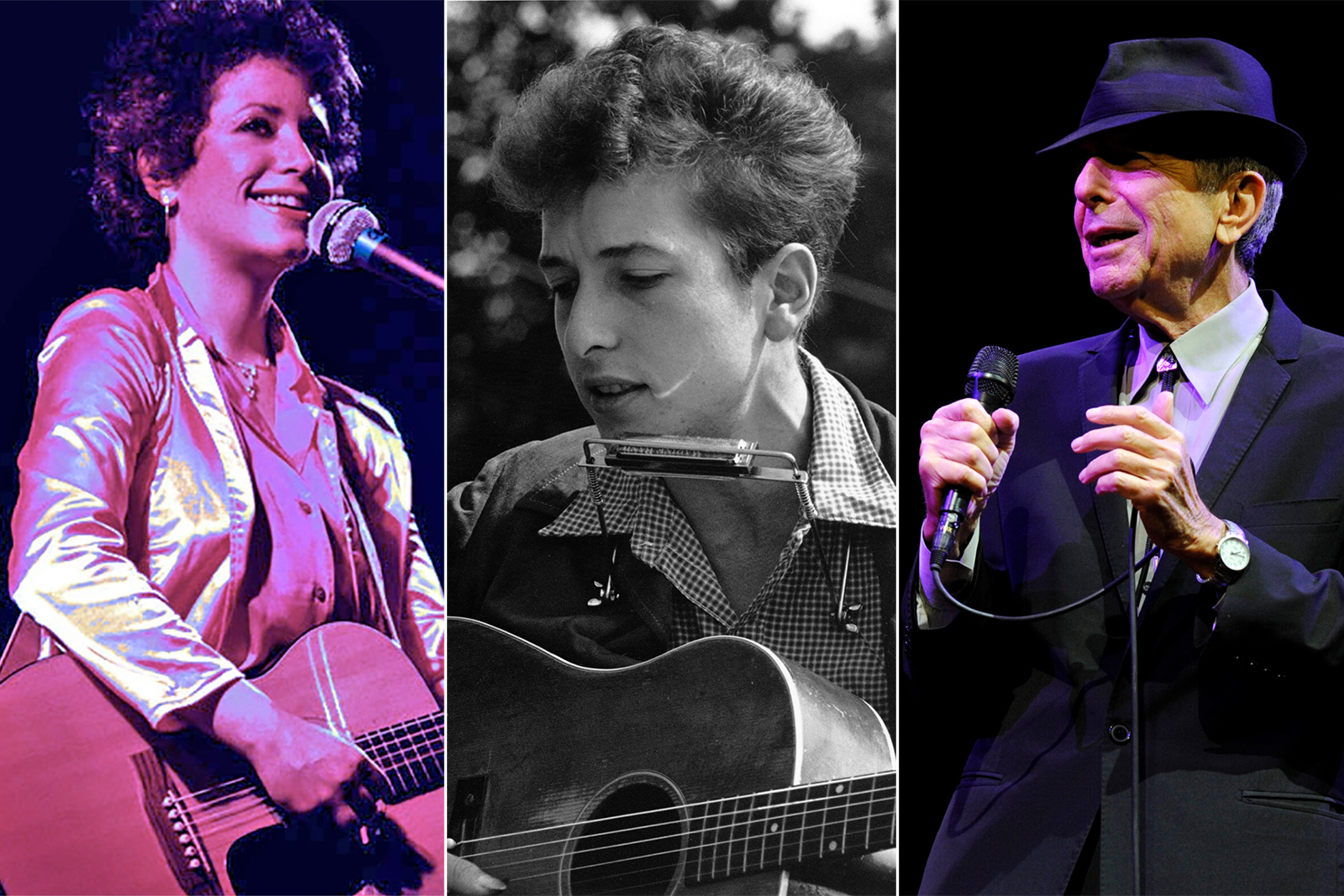
Bob Dylan, “With God On Our Side” (1964)
The song criticizes the centuries-old conceit that warriors believe their cause is just, and that God is on their side. Then comes this startling verse:
“When the second World War
Came to an end
We forgave the Germans
And we were friends.
Though they murdered 6 million
In the ovens they fried
The Germans now too
Have God on their side.”
In 1964, almost no one was talking about the Holocaust. With the exception of “The Diary of Anne Frank,” the Holocaust was practically invisible in popular culture. When Dylan sang about it, it was a significant event in American popular culture.
Leonard Cohen, “Dance Me to the End of Love” (1984)
This song seems to be Cohen’s typical evocation of an erotic escapade. But listen again. The instrumentation is reminiscent of traditional Jewish klezmer.
“Dance me to your beauty with a burning violinDance me through the panic ’til I’m gathered safely inLift me like an olive branch and be my homeward doveDance me to the end of loveDance me to the end of love.Oh, let me see your beauty when the witnesses are goneLet me feel you moving like they do in BabylonShow me slowly what I only know the limits ofDance me to the end of loveDance me to the end of love.”
Cohen interprets the song for us:
“… Beside the crematoria, in certain of the death camps, a string quartet was pressed into performance while this horror was going on. And they would be playing classical music while their fellow prisoners were being killed and burnt. So, that music, ‘Dance me to your beauty with a burning violin,’ meaning the beauty thereof being the consummation of life, the end of this existence and of the passionate element in that consummation.”
Two lovers are singing to each other, in their final embrace, before death in a gas chamber in a concentration camp. But, had Cohen not told us that, we might never know.
Janis Ian, “Tattoo” (1993)
Those of a certain age will remember Janis Ian as a (quite Jewish) teenager with a 1965 hit song about interracial dating, “Society’s Child.” Leonard Bernstein included it in his 1967 documentary on rock music, “Inside Pop: The Rock Revolution.” Decades later, she had another hit, “At Seventeen.”
Ian is the subject of a new documentary, “Janis Ian: Breaking Silence,” named for her first album that featured her out as a lesbian. That 1992 album included “Tattoo”:
“Her new name was tattooed to her wrist
It was longer than the old one
Sealed in the silence with a fist
This night will be a cold one
Centuries live in her eyes
Destiny laughs over jack-booted thighs
‘Work makes us free’ says the sign
Nothing leaves here alive
Tattoo.”
Ian said she had a particular talent for writing songs that make people uncomfortable, and this song most likely does that. The Dutch government has used the song for Holocaust commemorations. “Queen Beatrix herself thanked me for it,” Ian said.
In my opinion, “Tattoo” is an indispensable song about the Holocaust.
The Holocaust has made a few other appearances in popular music:
- “Good Evening Mr. Waldheim,” by the late Lou Reed (1989), referred to Kurt Waldheim, who was the United Nations secretary-general and then elected president of Austria. But he covered up the fact that he had been an SS officer who had known about the murders of Jews in Greece and Yugoslavia.
- “Untitled” by Peter Himmelman (1992), about a ride with a white supremacist, antisemitic cab driver.
- “Yellow Star” by Dan Bern, which goes, “This time I will not go meekly to the slaughter. I am Lenny Bruce with a machine gun.”
However, compared with the number of other protest songs, our age’s greatest atrocity gets little air time. There is no Jewish equivalent of “Strange Fruit,” about Black lynching victims, recorded by Billie Holiday, Nina Simone, Siouxsie and the Banshees, and Jeff Buckley, among others.
So, I return to this day, Yom Hashoah. Its full name is Yom Hashoah v’Hagevurah, to remember not only the slaughter, but the heroic resistance to it.
Eighty years later, here’s some recent heroic resistance from popular Jewish artists.
At Coachella this month, an Irish rap group, Kneecap, delivered an anti-Israel performance, which encouraged thousands of festival goers to chant “F- Israel!”
Himmelman said in reaction:
“They [Kneecap] handed them a chant, a cause and the Jews — a familiar enemy that crops up in the world’s dark imagination every 70 to 100 years. It had all the elements of a movement, minus the need to think. … This was a carefully curated theatrical event in which Israelis — and by extension, the overwhelming majority of Jews around the world who support Israel — were being labeled genocidal.”
Sharon Osbourne, who has a Jewish background and is the wife of rock star Ozzy Osbourne, said about the music festival:
“Coachella 2025 will be remembered as a festival that compromised its moral and spiritual integrity. … Kneecap, an Irish rap group, took their performance to a different level by incorporating aggressive political statements. Their actions included projections of anti-Israel messages and hate speech, and this band openly supports terrorist organizations.”
But overall, as the Rolling Stones put it, “It’s Only Rock ’n’ Roll (But I Like It).”