


Hundreds demand cancellation of Japanese ex-leader's funeral
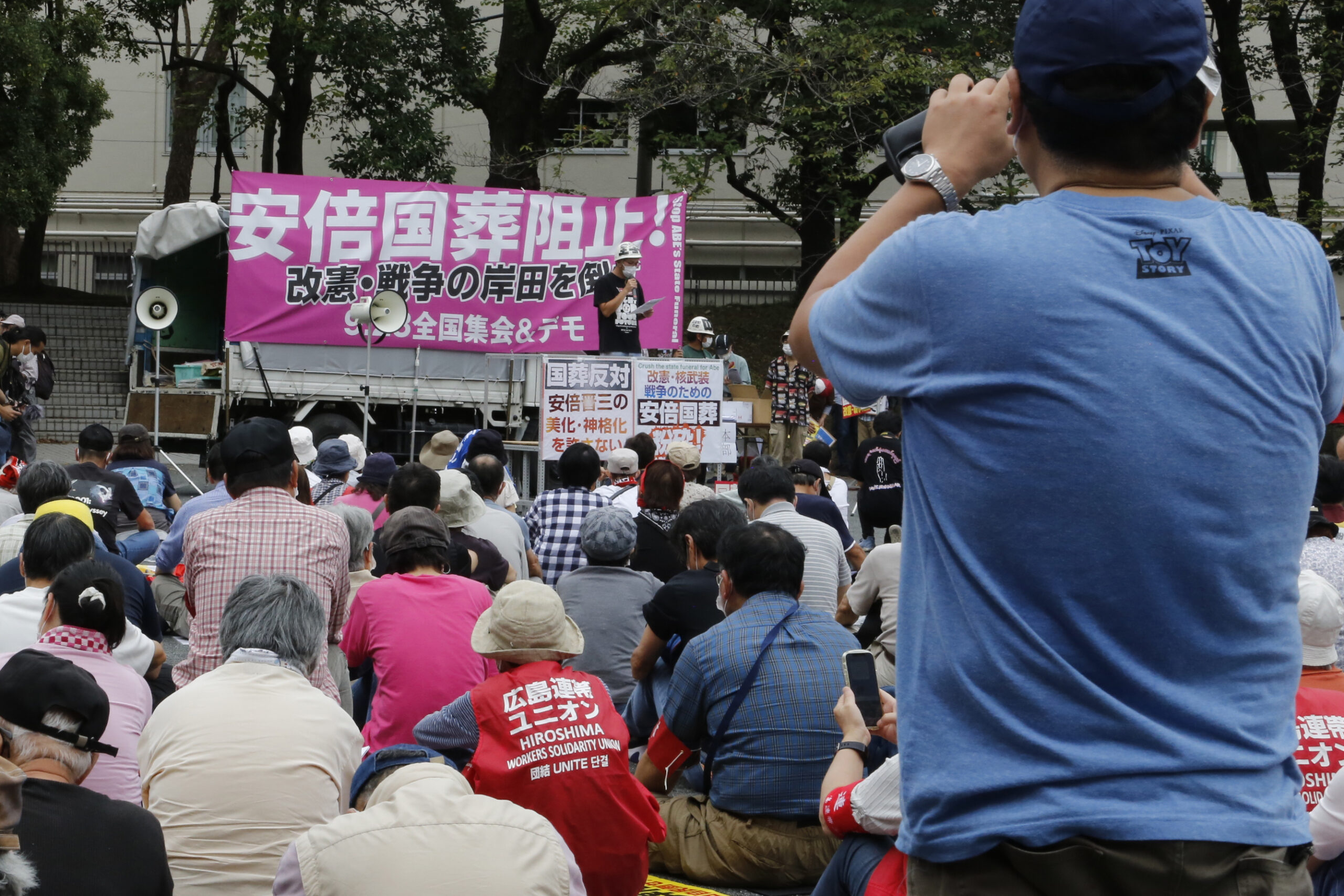


TOKYO (AP) — Several hundred protesters demanded the cancellation of former Japanese Prime Minister Shinzo Abe’s state funeral as they shouted slogans and waved banners Friday in a Tokyo park.
“Abe’s policies supported war,” demonstrator Mayumi Ishida said, noting Abe consistently sought to raise defense spending. Like others at the protest, Ishida said he feared Abe’s views heralded a step back to the days of Japan’s militarism preceding World War II.
Abe, who was assassinated in July, was Japan’s longest-serving leader and one of its most divisive in the postwar period because of his revisionist view of wartime history, support for a stronger military, and what critics call an autocratic approach and cronyism.
Opposition to the state funeral has also grown because of politicians’ close ties to the Unification Church. Social media posts attributed to the suspect in Abe’s assassination show he blamed the church for ruining his life, and police say he targeted Abe over his links to the organization.
The government plan for his state funeral to be held Tuesday has galvanized public opposition against the governing Liberal Democratic party, which has ruled Japan for nearly the entire postwar period.
Protests and marches opposing the state funeral have been popping up nationwide, drawing hundreds of people. Earlier this week, a man set himself on fire by the prime minister’s residence in what was described as a suicide attempt in apparent protest of the funeral.
Yoshiko Kamata, a part-time worker at a convenience store, acknowledged the state funeral couldn’t be stopped, but it was an opportunity to drive home her message that Abe never stood with regular people.
“We want to show where we stand,” she said, noting dictators were being invited to the state funeral. “Just because he is dead, we aren’t going to forgive Abe.”
State funerals in Japan have been historically reserved for the emperor. The decision to hold one for Abe was made by the Cabinet and did not go through parliamentary approval. Some lawyers’ groups have challenged its legality.
The official public tab for the funeral is about 1.7 billion yen ($12 million), but experts note hidden costs such as security add to the total. Police were out in droves at Friday’s protest.
Some politicians have announced they will skip the funeral, including governing party lawmaker Seiichiro Murakami, a former Cabinet minister, who said it had failed to win public backing.
Abe’s state funeral has drawn ample comparisons to the recent state funeral of Queen Elizabeth II in Britain.
Graduate student Daiki Kikuchi, sipping beer at a British pub in Tokyo while watching the queen’s funeral, couldn’t help but draw a contrast.
“I feel the British culture watching this, and there is a royal family that people love,” he said. “But he isn’t a king.”
___
Yuri Kageyama is on Twitter https://twitter.com/yurikageyama