


Cuba holds unusual vote on law allowing same-sex marriage
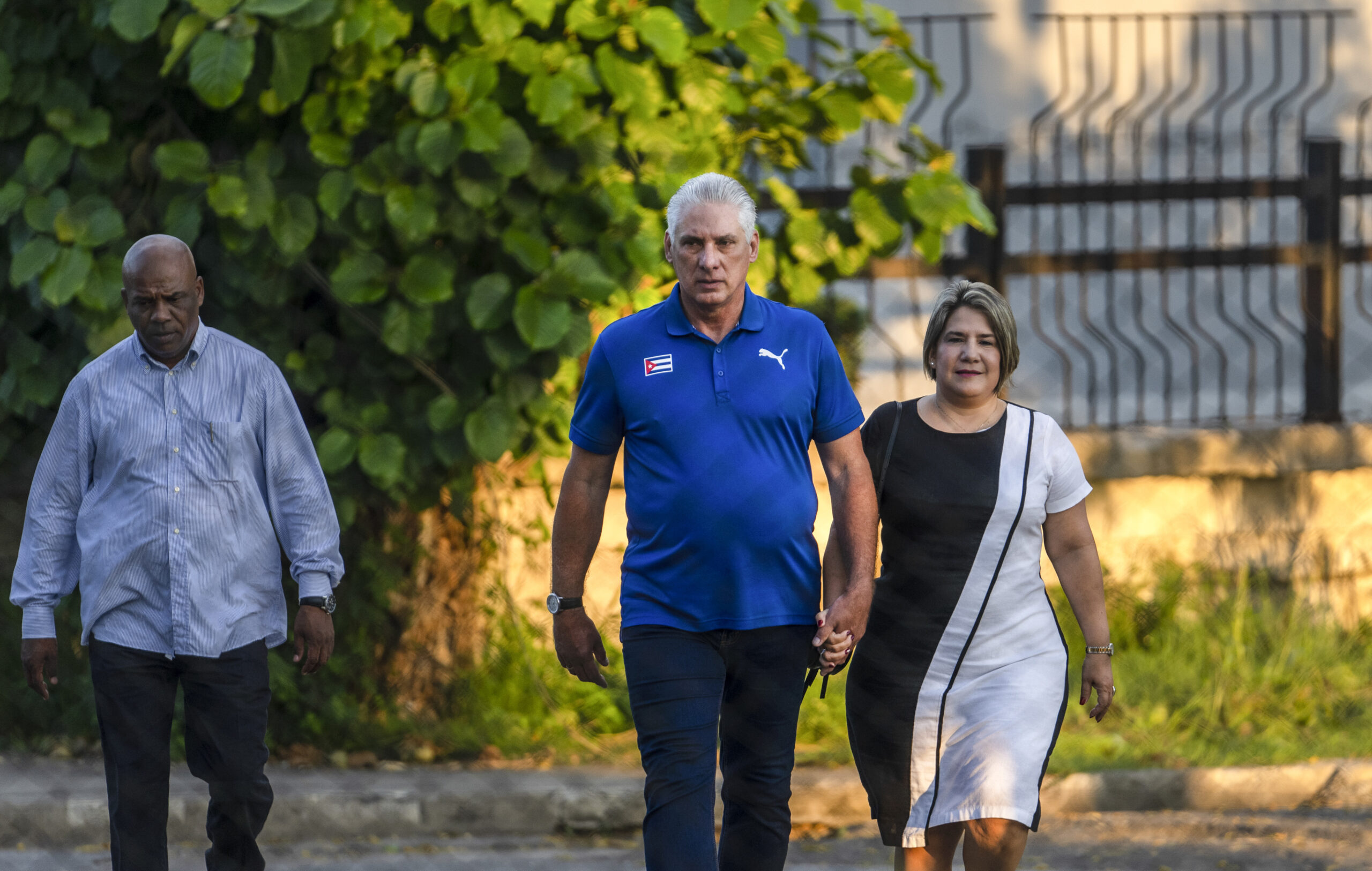


HAVANA (AP) — Cuba held a rare referendum Sunday on an unusually contentious law — a government-backed “family law” code that would allow same-sex couples to marry and adopt, as well as outlining the rights of children and grandparents.
Cuba holds parliamentary elections every two years, though no party other than the Communist is allowed, but seldom has it held referendums on specific laws.
And seldom has an officially backed measure met as much open criticism as the family law of more than 400 articles, which has been questioned by many members of the island’s increasingly vocal evangelical community.
The sweeping code also would allow surrogate pregnancies, broader rights for grandparents in regard to grandchildren, protection of the elderly and measures against gender violence.
President Miguel Díaz-Canel, who has promoted the law acknowledged resistance as he voted on Sunday.
“Most of our people will vote in favor of the code, but it still has issues that our society as a whole does not understand,” he said. Results of the referendum are expected on Monday.
Sixty-four-year-old market vender Miguel Alberto Galindo said he had voted for the measure: “It’s time that homosexuals have the same rights as everyone else,” he said.
But Alejandro Rodríguez, a 33-year-old hardware store worker, said he’d voted against the measure, saying, “Some things in the code are good but others are bad.” He said he did not agree with giving gay couples the same rights as “normal” families.
The measure was approved by Cuba’s Parliament, the National Assembly, following a thousands of government-organized information sessions this year in neighborhoods across the country.
A major supporter of the measure is Mariela Castro, director of the National Center for Sex Education, a promoter of rights for same-sex couples, daughter of former President Raul Castro and niece of his brother Fidel.
But there’s a strong strain of social conservatism in Cuba, where evangelical churches have been growing. Several religious leaders have expressed concern or opposition to the law., worrying it could weaken nuclear families.
While Cuba was officially — and often militantly — atheist for decades after the 1959 revolution led by Fidel Castro — Raul’s brother — it has become more tolerant of religions over the past quarter century. That has meant a greater opening not only the once-dominant Roman Catholic Church, but also to Afro-Cuban religions, protestants and Muslims.
Some of those churches took advantage of the opening in 2018 and 2019 to campaign against another plebiscite which would have rewritten the constitution in a way to allow gay marriage.
The opposition was strong enough that the government at that time backed away.