


Supreme Court will hear case of Rastafarian whose dreadlocks were shaved by Louisiana prison guards
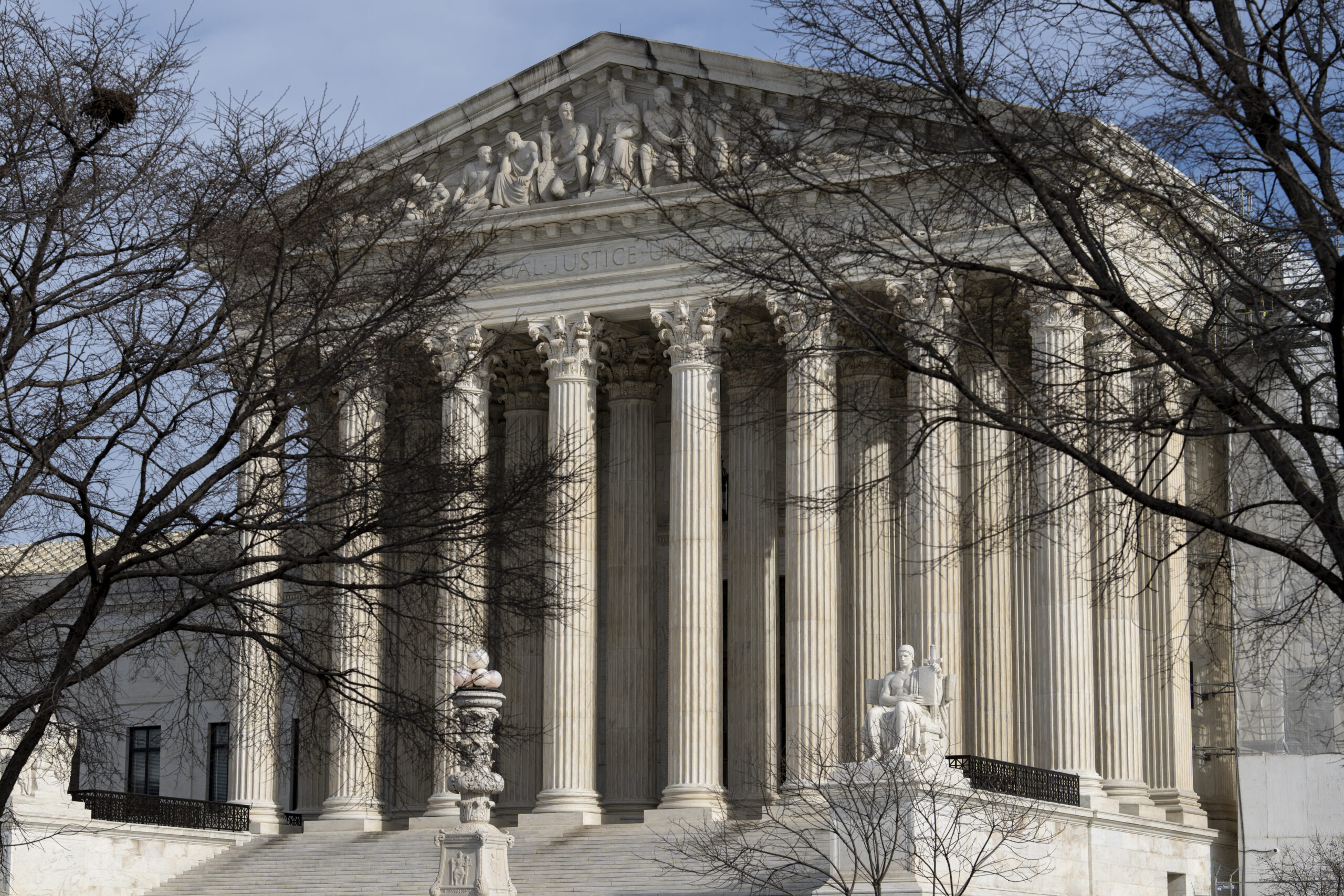


WASHINGTON (AP) — The Supreme Court agreed on Monday to hear the appeal of a former Louisiana prison inmate whose dreadlocks were cut off by prison guards in violation of his religious beliefs.
The justices will review an appellate ruling that held that the former inmate, Damon Landor, could not sue prison officials for money damages under a federal law aimed at protecting prisoners’ religious rights.
Landor, an adherent of the Rastafari religion, even carried a copy of a ruling by the appeals court in another inmate’s case holding that cutting religious prisoners’ dreadlocks violates the Religious Land Use and Institutionalized Persons Act.
Landor hadn’t cut his hair in nearly two decades when he entered Louisiana’s prison system in 2020 on a five-month sentence. At his first two stops, officials respected his beliefs. But things changed when he got to the Raymond Laborde Correctional Center in Cottonport, about 80 miles (130 kilometers) northwest of Baton Rouge, for the final three weeks of his term.
A prison guard took the copy of the ruling Landor carried and tossed it in the trash, according to court records. Then the warden ordered guards to cut his dreadlocks. While two guards restrained him, a third shaved his head to the scalp, the records show.
Landor sued after his release, but lower courts dismissed the case. The 5th U.S. Circuit Court of Appeals lamented Landor’s treatment but said the law doesn’t allow him to hold prison officials liable for damages.
The Supreme Court will hear arguments in the fall.
Landor’s lawyers argue that the court should be guided by its decision in 2021 allowing Muslim men to sue over their inclusion on the FBI’s no-fly list under a sister statute, the Religious Freedom Restoration Act.
President Donald Trump’s Republican administration filed a brief supporting Landor’s right to sue and urged the court to hear the case.
Louisiana asked the justices to reject the appeal, even as it acknowledged Landor’s mistreatment.
Lawyers for the state wrote that “the state has amended its prison grooming policy to ensure that nothing like petitioner’s alleged experience can occur.”
The Rastafari faith is rooted in 1930s Jamaica, growing as a response by Black people to white colonial oppression. Its beliefs are a melding of Old Testament teachings and a desire to return to Africa. Its message was spread across the world in the 1970s by Jamaican music icons Bob Marley and Peter Tosh, two of the faith’s most famous exponents.
The case is Landor v. Louisiana Department of Corrections, 23-1197.