


French-Algerian author Kamel Daoud says Algeria sentenced him to 3 years for award-winning novel
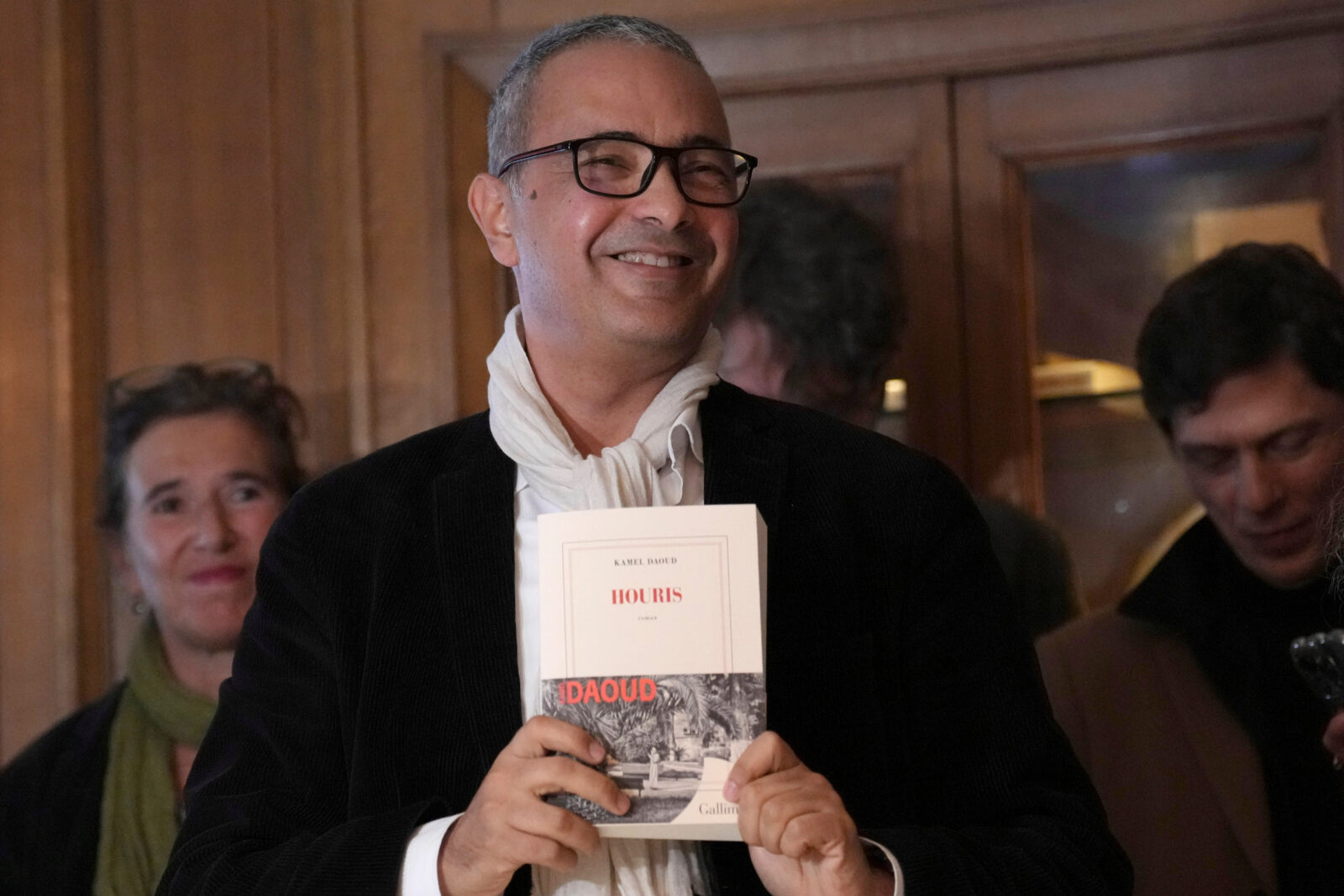


PARIS (AP) — French-Algerian author Kamel Daoud said Wednesday that he has been sentenced to three years in prison in Algeria for his book “Houris,” a recipient of France’s most prestigious literary award.
The writer, who lives in France, announced on X that the verdict was delivered on Tuesday. He said that he was also fined 5 million Algerian dinars ($38,000).
“Houris” (Virgins, in English) focuses of the victims of what Algerians call the “black decade,” when tens of thousands of people were killed as the army fought an Islamist insurgency. The conflict erupted in 1991 after Islamists won a first round of legislative elections, prompting the military-backed government to cancel the second round of voting.
It was awarded the Goncourt Prize, France’s top literary award, in 2024.
Daoud said that he was convicted under what is known as the Charter for Peace and National Reconciliation, a text adopted by referendum in 2005 that offered widespread pardons to both armed Islamists and security forces.
“The text punishes any public mention of the civil war,” Daoud said. “Ten years of war, nearly 200,000 dead according to estimates, thousands of terrorists granted amnesty … and only one guilty party: a writer.”
In addition to the legal action brought by the court in the Algerian city of Oran, Daoud is the target of two international arrest warrants issued by Algeria in May 2025 and is also under threat of being stripped of his Algerian nationality.
Another French-Algerian writer, Boualem Sansal, has faced similar problems.
The author — whose works have been critical of Islam, colonialism and contemporary Algerian leaders — was convicted of undermining national unity and insulting public institutions and was sentenced to five years in prison under Algeria’s anti-terrorism laws.
He was granted a humanitarian pardon in Algeria after an appeal by Germany’s president, and returned to France last year after serving a year in prison.
Daoud’s book “Houris” tells the story of Aube, a young girl who miraculously survives a nighttime terrorist attack in her village of Had Chekala in western Algeria, despite having her throat slit. Following the novel’s publication, an Algerian woman, Saâda Arbane, accused Daoud of “stealing” her story and using it as the basis for his book.
Arbane previously had been treated by Aicha Dahdouh, Daoud’s wife, a psychiatrist at Oran University Hospital and a specialist in trauma linked to violence during the civil war.
“Kamel Daoud and his wife asked for my permission to use my story, and I refused every time,” she said during several appearances on Algerian television, adding that it constituted “an invasion of her privacy.”
A collective of lawyers was subsequently formed in solidarity to defend Arbane, invoking provisions of the Charter for Peace and National Reconciliation, which prohibits even the mere mention of this painful period in Algeria’s history.