




EDITOR’S NOTE: This column originally appeared in Sightings, a publication of the Martin Marty Center at the University of Chicago Divinity School. Sign up here to receive Sightings in your inbox on Mondays and Thursdays. You can also follow us on Facebook and Twitter.
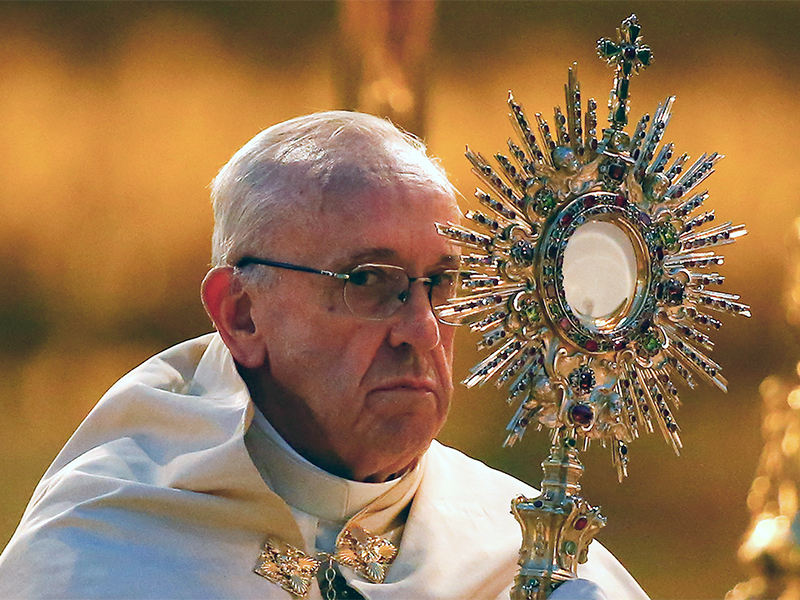
This past June, the Pope spoke critically of the Mafia, and did so in its heartland region in Italy. He threatened to excommunicate anyone who was part of this international crime syndicate. So here we have the unquestioned leader of the largest religious organization/communion in the world, the Roman Catholic Church, taking on the presumably most powerful organizational embodiment of crime, at least in the Western world. Who noticed?
Such a move was crowded off the front pages and out of prime time by other news events. Epochal storms in the form of hurricanes, along with earthquakes and drought, were immediate threats. North Korea created the greatest human-made concern. Blustery acts and words from politicians in a time of governmental chaos no doubt made the Pope-versus-Mafia to-do seem ignorable. Could it not be shelved as an incident which concerned only a single religious group, however large, and one criminal organization, however evil, while non-members of each could go about their business?
Let’s take back the “no one noticed” line. My e-files and clippings baskets do include some disturbing references, but most of these originated among enemies of the Roman Catholic Church, who despise the Pope and wish him ill. They had, and have, plenty to say. They were not ready to pay attention to the positive side of the Vatican’s announced plans to “develop a new legal doctrine for the Catholic Church about ‘excommunication for corruption and mafia association,’” announced after a Vatican conference on fighting these phenomena. The Vatican spoke of its role in the fight for justice and pursuit of the common good. Its enemies were unmoved.
Perhaps this incident, and commentary on it, will inspire fresh inquiry into how evil, whether produced by crime syndicates or other forces, keeps changing shape and inventing new tactics. The Sightings thesis for today is simple: publics can become inured as problems become—dare we call them this?—“commonplace.” Climate change, for example, is commonplace, so publics get used to it, and ignore it, even in the face of connected disasters. Let me be autobiographical for a few lines to illustrate this in respect to organized crime. Indulge me.
I was once a (beginning) parish pastor in the Chicago area, a crime-ridden but beloved (by people like me) place where there were Syndicate signals all around us. Even now, I can look out my window down on a hotel which was a crime-syndicate nest. I pastored in a suburb where Tony Accardo—who was worse than Al Capone—and his kind lived in comfort and attended Mass. We all knew we were part of a corrupt culture. Virgil Peterson, head of the Chicago Crime Commission, was my tutor. When my mother promised a visit, despite her fears of then-Chicago, I asked Peterson whether such-and-such a restaurant was mob-related. He told us the one we mentioned was not, so we took her there. A few days later we learned that he had been unnerved by our choice to go to a non-Mafia-controlled restaurant. Why? “The Syndicate is not going to bomb or burn ‘one of its own.’’’ That year over 50 non-Syndicate-controlled restaurants were burned or bombed. We lived amidst the horror, but it was NIOBY, “not in our back yard,” even though it was just inches away.
So we enter a new season, with new issues, new hopes and fears, new opportunities. There are signs that other-than-Syndicate syndicates have largely replaced the old ones, but there remain plenty of current challenges to the common good. Citizens may not know how to thwart them, but they may be relearning, from the Pope and other people of skill and good will, that inurement and willful ignorance promote a climate where quest for the common good is compromised. In the seasons ahead, we’ll try to focus Sightings on some of these issues, and the people who address them. Worrying about the safety of our local restaurants may not be the most urgent issue, but there will be new occasions, addressable in the spirit of Pope Francis, and evoking our need to pursue the common good.